Allergy, Asthma and Clinical Immunology Associates, Indianapolis, IN, USA.
J Multidiscip Healthc. 2011;4:299-309. doi: 10.2147/JMDH.S22966. Epub 2011 Aug 5.
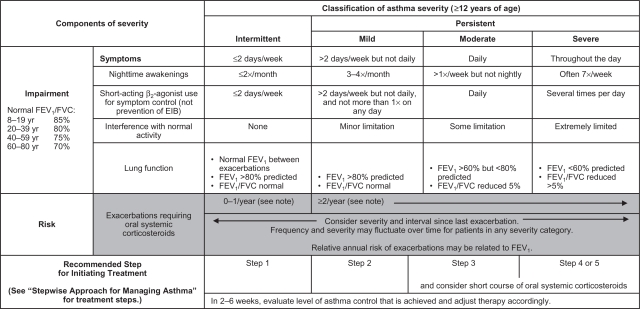
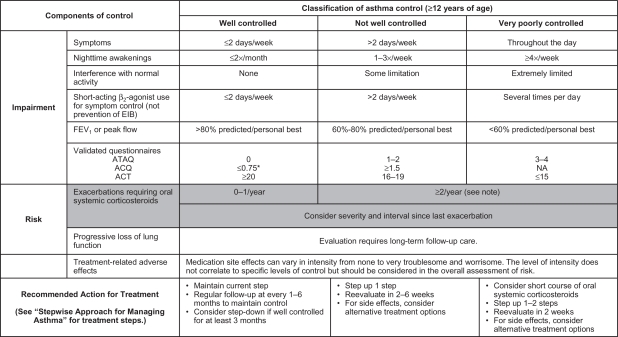
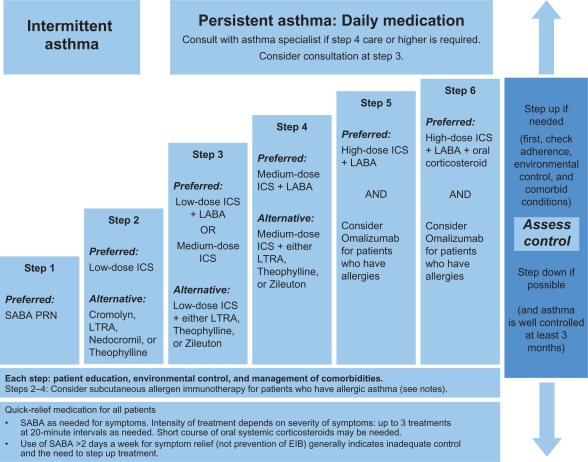
Nurse practitioners (NPs) have a unique opportunity as frontline caregivers and patient educators to recognize, assess, and effectively treat the widespread problem of uncontrolled asthma. This review provides a perspective on the role of the NP in implementing the revised National Asthma Education and Prevention Program (NAEPP) Guidelines put forth by the National Heart, Lung, and Blood Institute, thereby helping patients achieve and maintain asthma control. A literature search of PubMed was performed using the terms asthma, nurse practitioner, asthma control, burden, impact, morbidity, mortality, productivity, quality of life, uncontrolled asthma, NAEPP guidelines, assessment, pharmacotherapy, safety. Despite the increased morbidity and mortality and impaired quality of life attributable to uncontrolled asthma, the 2007 NAEPP asthma guidelines are greatly underused. NPs have an opportunity to identify patients at risk and provide enhanced care and education for asthma control. Often, NPs can prescribe medication for and manage these patients, but it is necessary to be able to discern which patients require referral to a specialist.
护士从业者(NPs)作为一线护理人员和患者教育者,有独特的机会认识、评估和有效治疗广泛存在的哮喘控制不良问题。这篇综述探讨了护士从业者在实施国家心肺血液研究所(National Heart, Lung, and Blood Institute)提出的修订版国家哮喘教育和预防计划(National Asthma Education and Prevention Program,NAEPP)指南方面的作用,从而帮助患者实现并维持哮喘控制。使用术语“哮喘、护士从业者、哮喘控制、负担、影响、发病率、死亡率、生产力、生活质量、哮喘控制不良、NAEPP 指南、评估、药物治疗、安全性”在 PubMed 上进行文献检索。尽管哮喘控制不良导致发病率和死亡率增加以及生活质量受损,但 2007 年 NAEPP 哮喘指南的使用率非常低。护士从业者有机会识别有风险的患者,并为哮喘控制提供强化护理和教育。护士从业者通常可以为这些患者开具药物处方并进行管理,但有必要能够识别出哪些患者需要转介给专家。