School of Biological Sciences, University of Reading, Reading, United Kingdom.
PLoS One. 2011;6(8):e23227. doi: 10.1371/journal.pone.0023227. Epub 2011 Aug 9.
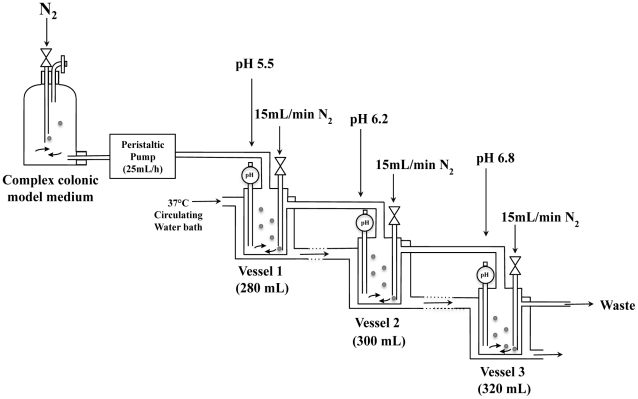
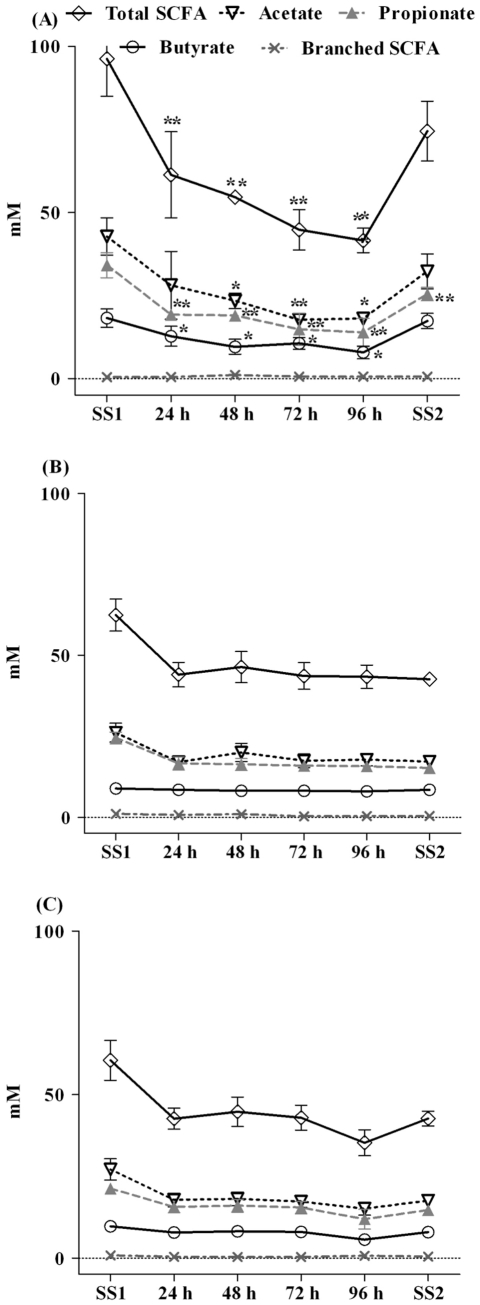
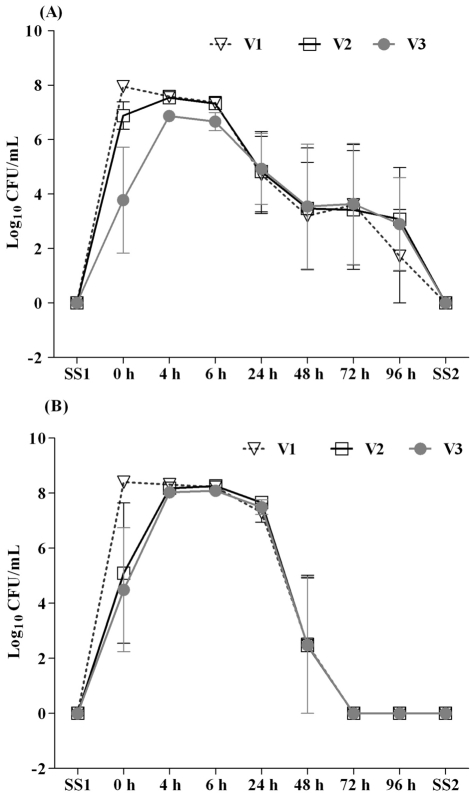
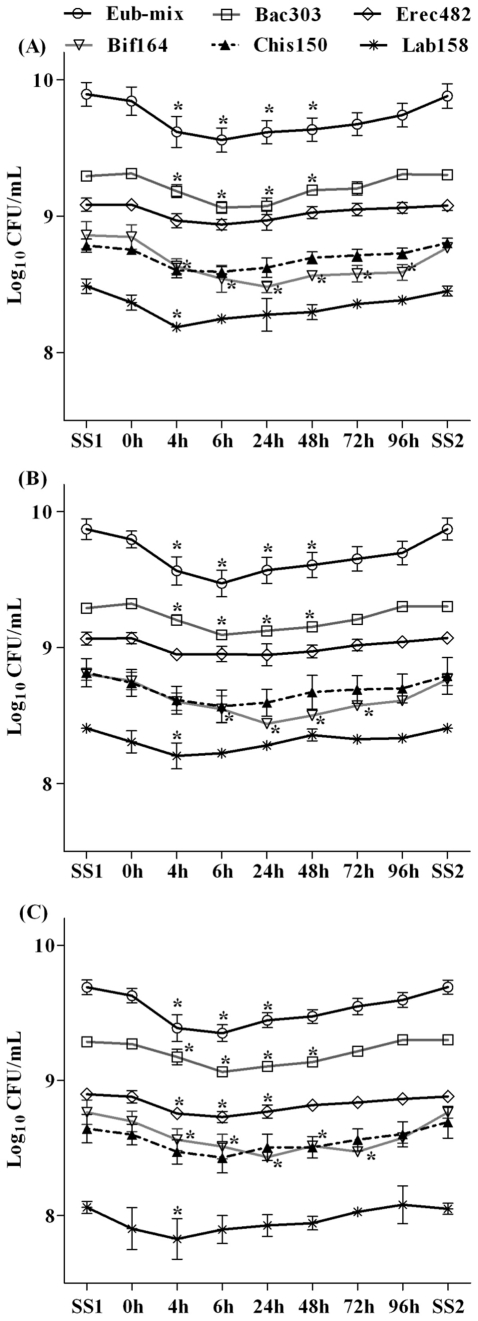
An anaerobic three-stage continuous culture model of the human colon (gut model), which represent different anatomical areas of the large intestine, was used to study the effect of S. aureus infection of the gut on the resident faecal microbiota. Studies on the development of the microbiota in the three vessels were performed and bacteria identified by culture independent fluorescence in situ hybridization (FISH). Furthermore, short chain fatty acids (SCFA), as principal end products of gut bacterial metabolism, were measured along with a quantitative assessment of the predominant microbiota. During steady state conditions, numbers of S. aureus cells stabilised until they were washed out, but populations of indigenous bacteria were transiently altered; thus S. aureus was able to compromise colonisation resistance by the colonic microbiota. Furthermore, the concentration of butyric acid in the vessel representing the proximal colon was significantly decreased by infection. Thus infection by S. aureus appears to be able to alter the overall structure of the human colonic microbiota and the microbial metabolic profiles. This work provides an initial in vitro model to analyse interactions with pathogens.
采用了一种厌氧的三段式连续培养人结肠(肠道模型),代表了大肠的不同解剖区域,以研究肠道金黄色葡萄球菌感染对常驻粪便微生物群的影响。研究了三个容器中微生物群的发育,并通过非培养依赖的荧光原位杂交(FISH)进行细菌鉴定。此外,还测量了短链脂肪酸(SCFA),作为肠道细菌代谢的主要终产物,以及主要微生物群的定量评估。在稳定状态下,金黄色葡萄球菌细胞的数量稳定下来,直到被冲洗掉,但土著细菌的数量暂时发生了变化;因此,金黄色葡萄球菌能够通过结肠微生物群破坏定植抗性。此外,感染使代表近端结肠的容器中的丁酸浓度显著降低。因此,金黄色葡萄球菌的感染似乎能够改变人类结肠微生物群的整体结构和微生物代谢谱。这项工作提供了一个初步的体外模型来分析与病原体的相互作用。