Division of General Thoracic Surgery, Department of Surgery, Mayo Clinic, Rochester, Minnesota, United States of America.
PLoS One. 2011;6(8):e23707. doi: 10.1371/journal.pone.0023707. Epub 2011 Aug 17.
Bronchoalveolar stem cells (BASCs) located in the bronchoalveolar duct junction are thought to regenerate both bronchiolar and alveolar epithelium during homeostatic turnover and in response to injury. The mechanisms directing self-renewal in BASCs are poorly understood.
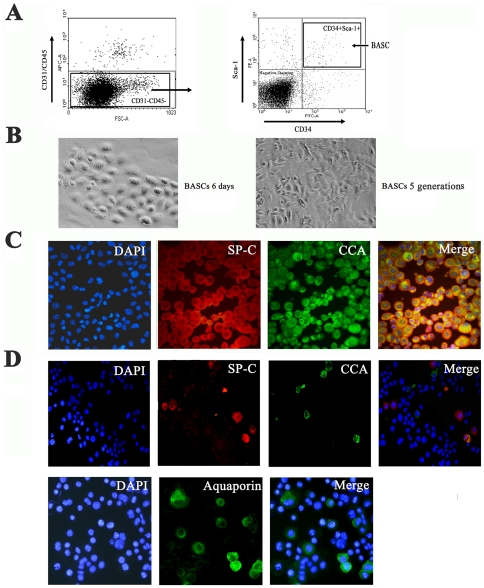
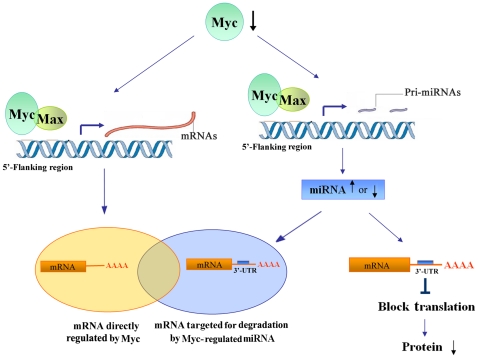
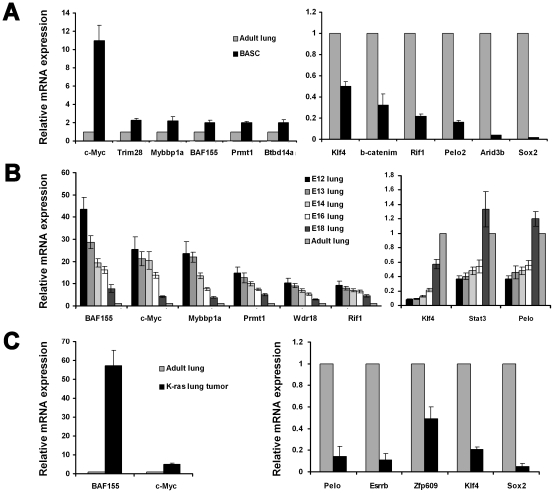
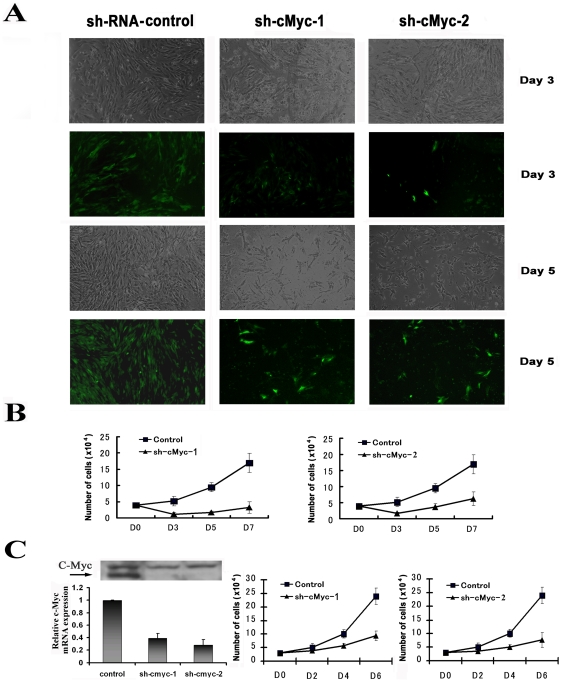
BASCs (Sca-1(+), CD34(+), CD31(-) and, CD45(-)) were isolated from adult mouse lung using FACS, and their capacity for self-renewal and differentiation were demonstrated by immunostaining. A transcription factor network of 53 genes required for pluripotency in embryonic stem cells was assessed in BASCs, Kras-initiated lung tumor tissue, and lung organogenesis by real-time PCR. c-Myc was knocked down in BASCs by infection with c-Myc shRNA lentivirus. Comprehensive miRNA and mRNA profiling for BASCs was performed, and significant miRNAs and mRNAs potentially regulated by c-Myc were identified. We explored a c-Myc regulatory network in BASCs using a number of statistical and computational approaches through two different strategies; 1) c-Myc/Max binding sites within individual gene promoters, and 2) miRNA-regulated target genes.
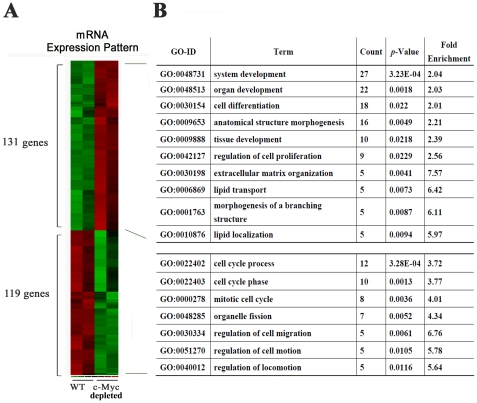
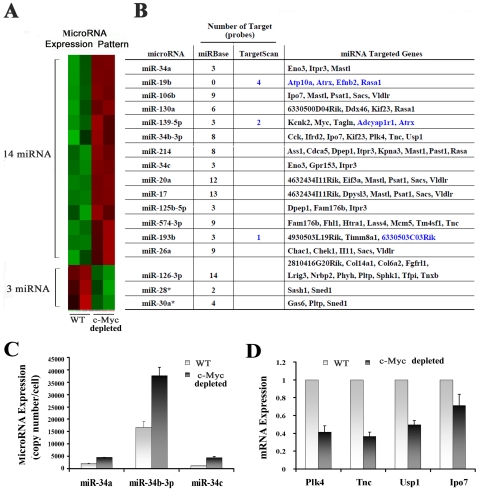
c-Myc expression was upregulated in BASCs and downregulated over the time course of lung organogenesis in vivo. The depletion of c-Myc in BASCs resulted in decreased proliferation and cell death. Multiple mRNAs and miRNAs were dynamically regulated in c-Myc depleted BASCs. Among a total of 250 dynamically regulated genes in c-Myc depleted BASCs, 57 genes were identified as potential targets of miRNAs through miRBase and TargetScan-based computational mapping. A further 88 genes were identified as potential downstream targets through their c-Myc binding motif.
c-Myc plays a critical role in maintaining the self-renewal capacity of lung bronchoalveolar stem cells through a combination of miRNA and transcription factor regulatory networks.
位于支气管肺泡导管交界处的支气管肺泡干细胞(BASCs)被认为在稳态更新和应对损伤时可再生细支气管和肺泡上皮。指导 BASCs 自我更新的机制尚未完全了解。
使用 FACS 从成年小鼠肺中分离 BASCs(Sca-1(+)、CD34(+)、CD31(-)和 CD45(-)),通过免疫染色证明其自我更新和分化能力。通过实时 PCR 在 BASCs、Kras 引发的肺肿瘤组织和肺发生中评估胚胎干细胞多能性所需的 53 个转录因子网络。通过感染 c-Myc shRNA 慢病毒将 c-Myc 敲低 BASCs。对 BASCs 进行全面的 miRNA 和 mRNA 谱分析,并鉴定出可能受 c-Myc 调控的显著 miRNA 和 mRNA。我们通过两种不同策略,即 1)单个基因启动子内的 c-Myc/Max 结合位点和 2)miRNA 调控的靶基因,使用多种统计和计算方法探索了 BASCs 中的 c-Myc 调控网络。
c-Myc 在 BASCs 中表达上调,并在体内肺发生过程中随时间推移而下调。BASCs 中 c-Myc 的耗竭导致增殖减少和细胞死亡。c-Myc 耗竭的 BASCs 中多种 mRNA 和 miRNA 动态调节。在 c-Myc 耗竭的 BASCs 中总共 250 个动态调节基因中,通过 miRBase 和 TargetScan 计算映射,有 57 个基因被鉴定为 miRNA 的潜在靶基因。通过其 c-Myc 结合基序,进一步鉴定了 88 个潜在的下游靶基因。
c-Myc 通过 miRNA 和转录因子调控网络在维持肺支气管肺泡干细胞的自我更新能力方面发挥关键作用。