Computational Biology Group, Indian Association for the Cultivation of Science, Calcutta, India.
PLoS One. 2009 Nov 13;4(11):e7837. doi: 10.1371/journal.pone.0007837.
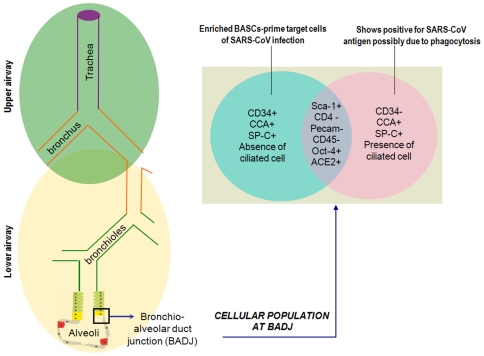
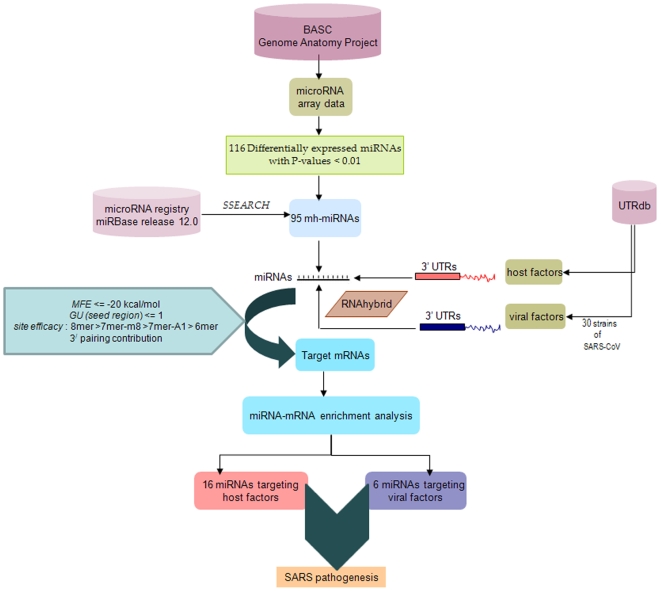
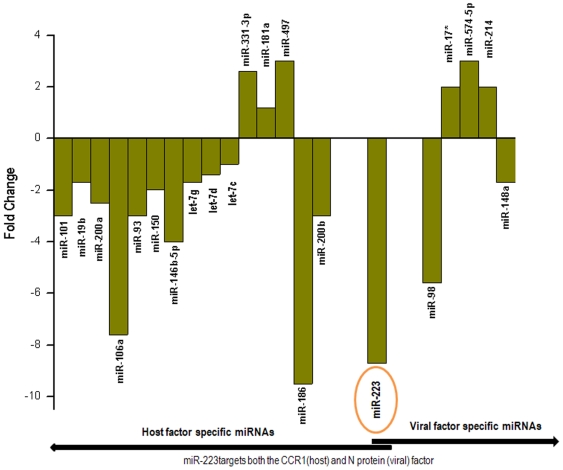
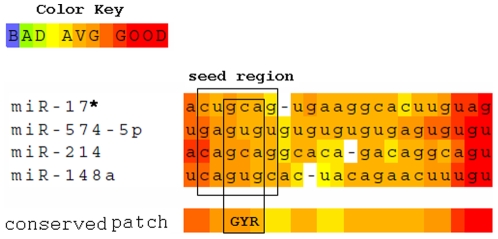
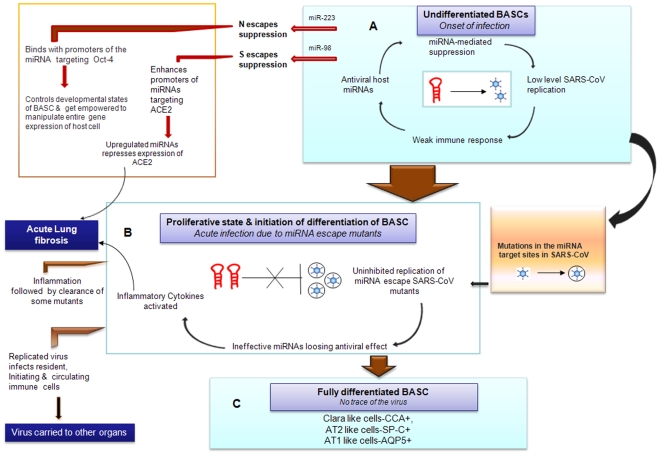
Severe acute respiratory syndrome (SARS), caused by the coronavirus SARS-CoV, is an acute infectious disease with significant mortality. A typical clinical feature associated with SARS is pulmonary fibrosis and associated lung failure. In the aftermath of the SARS epidemic, although significant progress towards understanding the underlying molecular mechanism of the infection has been made, a large gap still remains in our knowledge regarding how SARS-CoV interacts with the host cell at the onset of infection. The rapidly changing viral genome adds another variable to this equation. We have focused on a novel concept of microRNA (miRNA)-mediated host-virus interactions in bronchoalveolar stem cells (BASCs) at the onset of infection by correlating the "BASC-microRNome" with their targets within BASCs and viral genome. This work encompasses miRNA array data analysis, target prediction, and miRNA-mRNA enrichment analysis and develops a complex interaction map among disease-related factors, miRNAs, and BASCs in SARS pathway, which will provide some clues for diagnostic markers to view an overall interplay leading to disease progression. Our observation reveals the BASCs (Sca-1+ CD34+ CD45- Pecam-), a subset of Oct-4+ ACE2+ epithelial colony cells at the broncho-alveolar duct junction, to be the prime target cells of SARS-CoV infection. Upregulated BASC miRNAs-17*, -574-5p, and -214 are co-opted by SARS-CoV to suppress its own replication and evade immune elimination until successful transmission takes place. Viral Nucleocapsid and Spike protein targets seem to co-opt downregulated miR-223 and miR-98 respectively within BASCs to control the various stages of BASC differentiation, activation of inflammatory chemokines, and downregulation of ACE2. All these effectively accounts for a successful viral transmission and replication within BASCs causing continued deterioration of lung tissues and apparent loss of capacity for lung repair. Overall, this investigation reveals another mode of exploitation of cellular miRNA machinery by virus to their own advantage.
严重急性呼吸综合征(SARS)由冠状病毒 SARS-CoV 引起,是一种具有显著死亡率的急性传染病。SARS 的一个典型临床特征是肺纤维化和相关的肺衰竭。在 SARS 疫情过后,尽管在理解感染的潜在分子机制方面取得了重大进展,但我们对 SARS-CoV 在感染开始时与宿主细胞相互作用的了解仍存在很大差距。快速变化的病毒基因组为这个问题增加了另一个变量。我们专注于在感染开始时,通过将“BASC-microRNome”与 BASCs 及其病毒基因组中的靶标相关联,研究新型 miRNA 介导的宿主-病毒相互作用的概念,以研究感染过程中的宿主细胞。这项工作包括 miRNA 芯片数据分析、靶标预测和 miRNA-mRNA 富集分析,并在 SARS 通路中开发了疾病相关因素、miRNA 和 BASCs 之间的复杂相互作用图,这将为诊断标志物提供一些线索,以观察导致疾病进展的整体相互作用。我们的观察结果表明,BASCs(Sca-1+CD34+CD45-Pecam-),即肺泡导管交界处的 Oct-4+ACE2+上皮集落细胞的一个亚群,是 SARS-CoV 感染的主要靶细胞。上调的 BASC miRNA-17*、-574-5p 和 -214 被 SARS-CoV 利用来抑制自身复制并逃避免疫清除,直到成功传播。病毒核衣壳和刺突蛋白靶似乎分别利用 BASCs 中的下调的 miR-223 和 miR-98 来控制 BASCs 分化的各个阶段、炎症趋化因子的激活和 ACE2 的下调。所有这些都有效地解释了病毒在 BASCs 内成功传播和复制,导致肺组织持续恶化和肺修复能力明显丧失。总的来说,这项研究揭示了病毒利用细胞 miRNA 机制为自身谋取利益的另一种模式。