Genetic Epidemiology Research Branch, Intramural Research Program, National Institute of Mental Health, USA.
J Am Acad Child Adolesc Psychiatry. 2011 Sep;50(9):870-80. doi: 10.1016/j.jaac.2011.06.005. Epub 2011 Jul 23.
Social phobia typically develops during the adolescent years, yet no nationally representative studies in the United States have examined the rates and features of this condition among youth in this age range. The objectives of this investigation were to: (1) present the lifetime prevalence, sociodemographic and clinical correlates, and comorbidity of social phobia in a large, nationally representative sample of U.S. adolescents; and (2) examine differences in the rates and features of social phobia across the proposed DSM-5 social phobia subtypes.
The National Comorbidity Survey Replication-Adolescent Supplement is a nationally representative face-to-face survey of 10,123 adolescents 13 to 18 years of age in the continental United States.
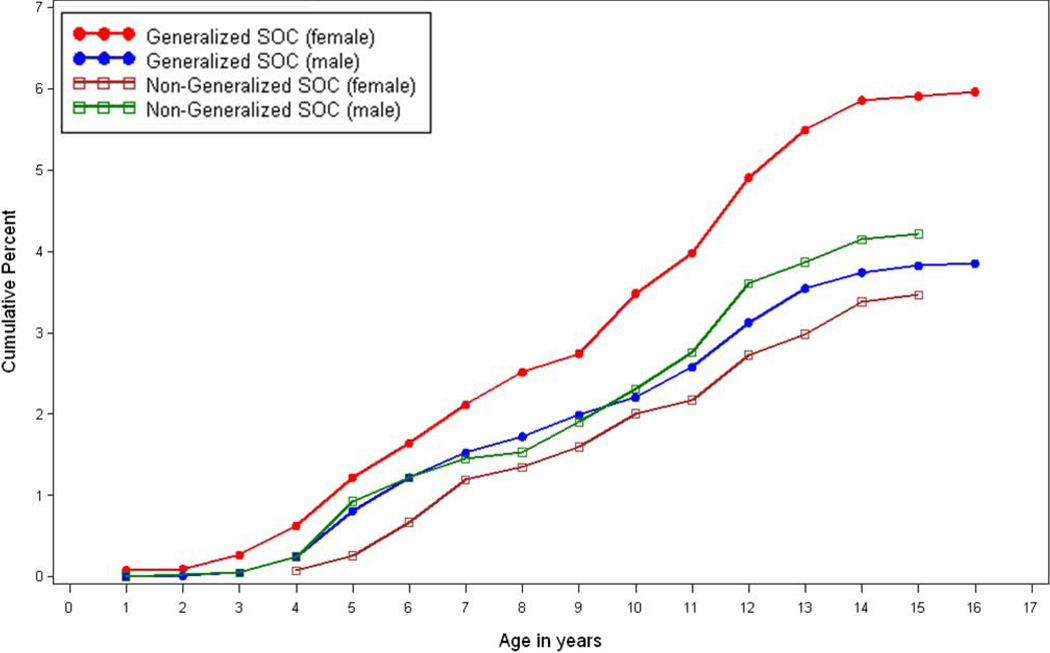
Approximately 9% of adolescents met criteria for any social phobia in their lifetime. Of these adolescents, 55.8% were affected with the generalized subtype and 44.2% exhibited nongeneralized social phobia. Only 0.7% met criteria for the proposed DSM-5 performance-only subtype. Generalized social phobia was more common among female adolescents and risk for this subtype increased with age. Adolescents with generalized social phobia also had a younger age of onset, higher levels of disability and clinical severity, and a greater degree of comorbidity relative to adolescents with nongeneralized forms of the disorder.
This study indicates that social phobia is a highly prevalent, persistent, and impairing psychiatric disorder among adolescent youth. Results of this study also provide evidence for the clinical utility of the generalized subtype and highlight the importance of considering the heterogeneity of social phobia in this age group.
社交恐惧症通常在青少年时期发展,但美国没有全国代表性的研究调查过该年龄段青少年的社交恐惧症发生率和特征。本研究的目的是:(1)在一个具有代表性的美国青少年大样本中,描述社交恐惧症的终身患病率、社会人口学和临床特征以及共病情况;(2)研究不同 DSM-5 社交恐惧症亚型的发生率和特征。
国家共病调查-青少年增补版是一项针对美国大陆 13 至 18 岁青少年的全国代表性面对面调查,共纳入 10123 名青少年。
大约 9%的青少年在其一生中符合任何社交恐惧症的标准。在这些青少年中,55.8%为广泛性社交恐惧症,44.2%为非广泛性社交恐惧症。仅有 0.7%符合 DSM-5 中仅表现型的社交恐惧症的诊断标准。广泛性社交恐惧症在女性青少年中更为常见,且随着年龄的增长,这种亚型的发病风险也会增加。患有广泛性社交恐惧症的青少年发病年龄更早,残疾程度和临床严重程度更高,且与患有非广泛性社交恐惧症的青少年相比,共病率更高。
本研究表明,社交恐惧症是青少年中一种高患病率、高持续性和致残性精神障碍。本研究结果还为广泛性亚型的临床实用性提供了证据,并强调了在该年龄段考虑社交恐惧症异质性的重要性。