UMR 177, IRD-CIRAD, CIRAD TA A-17/G, Campus International de Baillarguet, Montpellier, France.
PLoS Negl Trop Dis. 2011 Aug;5(8):e1281. doi: 10.1371/journal.pntd.0001281. Epub 2011 Aug 23.
Previous studies have shown substantial differences in Sodalis glossinidius and trypanosome infection rates between Glossina palpalis palpalis populations from two Cameroonian foci of human African trypanosomiasis (HAT), Bipindi and Campo. We hypothesized that the geographical isolation of the two foci may have induced independent evolution in the two areas, resulting in the diversification of symbiont genotypes.
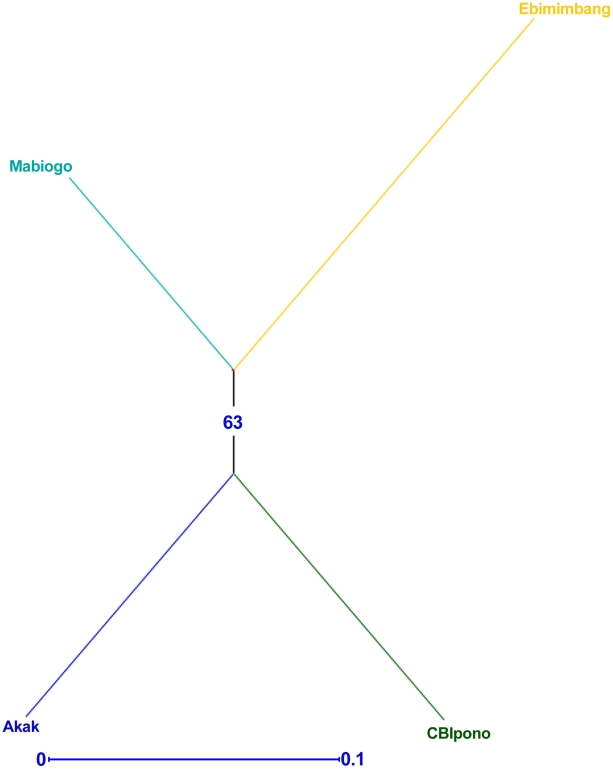
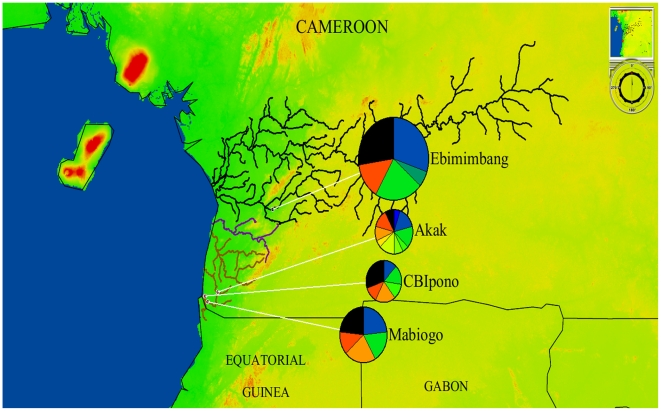
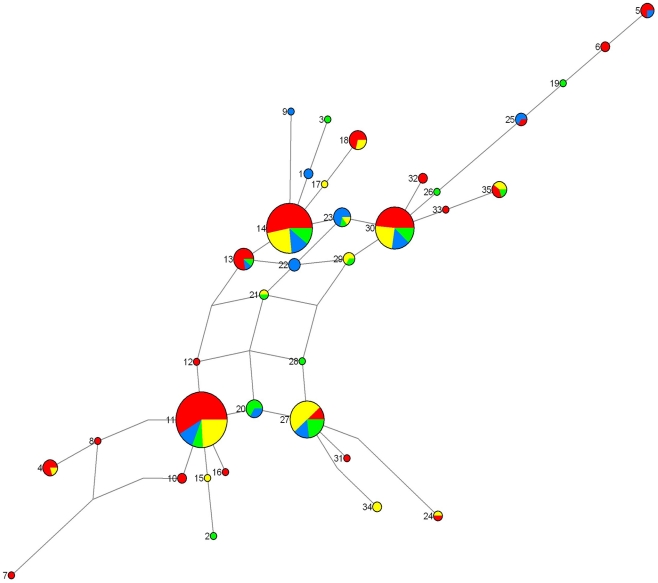
METHODOLOGY/PRINCIPAL FINDINGS: To test this hypothesis, we investigated the symbiont genetic structure using the allelic size variation at four specific microsatellite loci. Classical analysis of molecular variance (AMOVA) and differentiation statistics revealed that most of the genetic diversity was observed among individuals within populations and frequent haplotypes were shared between populations. The structure of genetic diversity varied at different geographical scales, with almost no differentiation within the Campo HAT focus and a low but significant differentiation between the Campo and Bipindi HAT foci.
CONCLUSIONS/SIGNIFICANCE: The data provided new information on the genetic diversity of the secondary symbiont population revealing mild structuring. Possible interactions between S. glossinidius subpopulations and Glossina species that could favor tsetse fly infections by a given trypanosome species should be further investigated.
先前的研究表明,在来自喀麦隆两个人类非洲锥虫病(HAT)流行区的舌蝇种群中,Sodalis glossinidius 和锥虫感染率存在显著差异,这两个流行区分别是比平迪和坎波。我们假设这两个流行区的地理隔离可能导致两个地区的独立进化,从而导致共生体基因型的多样化。
方法/主要发现:为了验证这一假设,我们使用四个特定微卫星基因座的等位基因大小变化来研究共生体的遗传结构。分子方差分析(AMOVA)和分化统计分析表明,大多数遗传多样性存在于种群内个体之间,并且在种群之间共享频繁的单倍型。遗传多样性的结构在不同的地理尺度上有所不同,坎波 HAT 流行区内部几乎没有分化,而坎波和比平迪 HAT 流行区之间存在低但显著的分化。
结论/意义:该数据提供了有关次要共生体种群遗传多样性的新信息,揭示了轻度的结构。应该进一步研究 S. glossinidius 亚群与舌蝇种之间的可能相互作用,这可能有利于特定锥虫种对舌蝇的感染。