Brain and Ageing Research Program, School of Psychiatry, Faculty of Medicine, University of New South Wales, Sydney, Australia.
PLoS One. 2011;6(8):e23960. doi: 10.1371/journal.pone.0023960. Epub 2011 Aug 24.
The capacity of visual working memory (WM) is substantially limited and only a fraction of what we see is maintained as a temporary trace. The process of binding visual features has been proposed as an adaptive means of minimising information demands on WM. However the neural mechanisms underlying this process, and its modulation by task and load effects, are not well understood.
To investigate the neural correlates of feature binding and its modulation by WM load during the sequential phases of encoding, maintenance and retrieval.
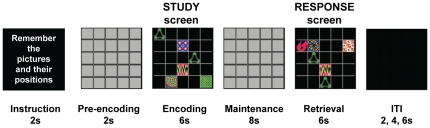
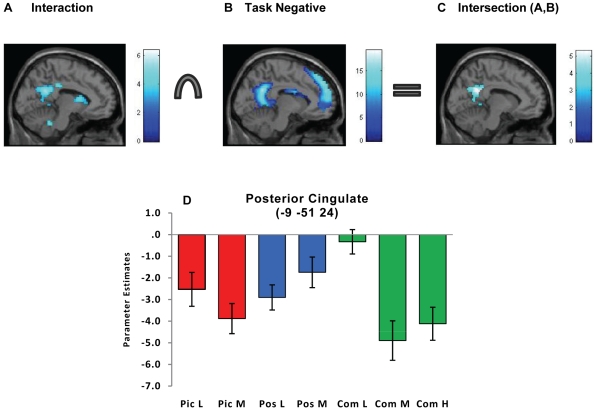
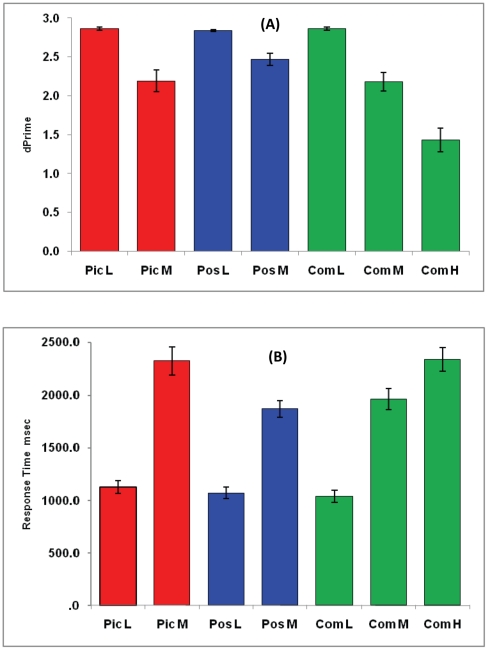
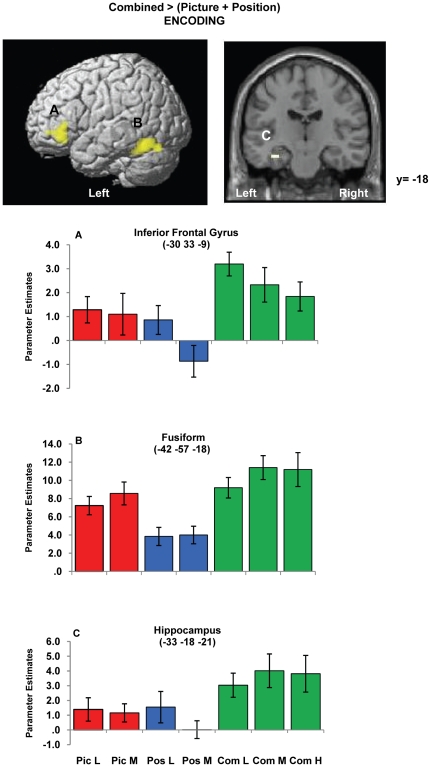
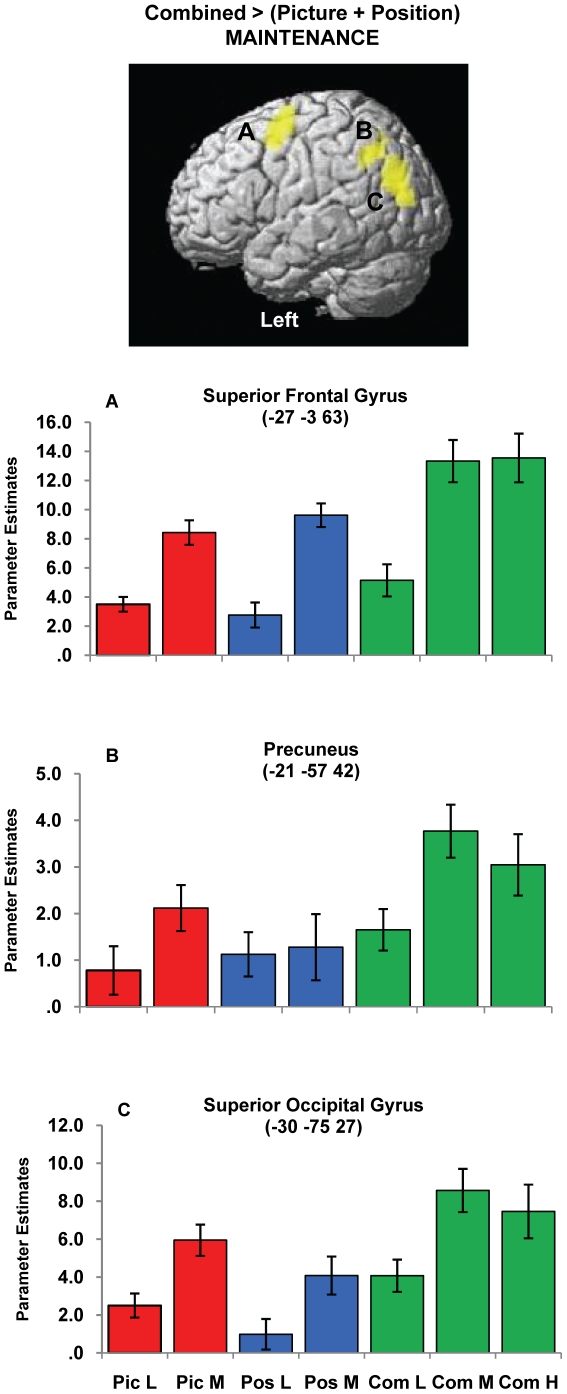
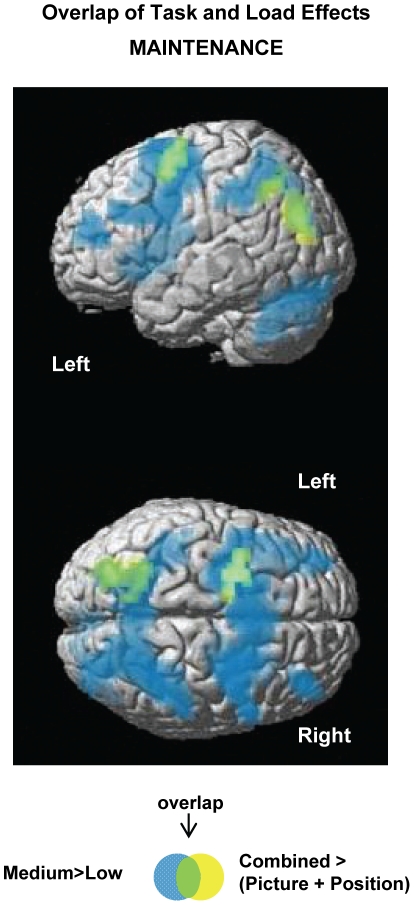
18 young healthy participants performed a visuospatial WM task with independent factors of load and feature conjunction (object identity and position) in an event-related functional MRI study. During stimulus encoding, load-invariant conjunction-related activity was observed in left prefrontal cortex and left hippocampus. During maintenance, greater activity for task demands of feature conjunction versus single features, and for increased load was observed in left-sided regions of the superior occipital cortex, precuneus and superior frontal cortex. Where these effects were expressed in overlapping cortical regions, their combined effect was additive. During retrieval, however, an interaction of load and feature conjunction was observed. This modulation of feature conjunction activity under increased load was expressed through greater deactivation in medial structures identified as part of the default mode network.
The relationship between memory load and feature binding qualitatively differed through each phase of the WM task. Of particular interest was the interaction of these factors observed within regions of the default mode network during retrieval which we interpret as suggesting that at low loads, binding processes may be 'automatic' but at higher loads it becomes a resource-intensive process leading to disengagement of activity in this network. These findings provide new insights into how feature binding operates within the capacity-limited WM system.
视觉工作记忆(WM)的容量实质上是有限的,我们所看到的只有一小部分被作为临时痕迹保留下来。将视觉特征绑定在一起的过程被认为是一种适应方式,可以最大限度地减少 WM 对信息的需求。然而,这个过程的神经机制及其受任务和负载效应的调节,尚不清楚。
研究特征绑定的神经相关性及其在编码、维持和检索的顺序阶段中受 WM 负载的调节。
18 名年轻健康的参与者在一项与任务相关的 fMRI 研究中进行了一项视觉空间 WM 任务,其独立因素为负载和特征结合(物体身份和位置)。在刺激编码期间,观察到左侧前额叶皮质和左侧海马体中的负载不变的结合相关活动。在维持阶段,对于任务对特征结合的需求的活动大于对于单一特征的需求,并且对于增加的负载,在左侧顶枕叶、楔前叶和额上回的区域中观察到更大的活动。在这些区域中表达了这些影响,如果它们重叠,则它们的组合效应是累加的。然而,在检索期间,观察到负载和特征结合的相互作用。在增加的负载下,特征结合活动的这种调节通过内侧结构的更大去激活来表达,这些内侧结构被确定为默认模式网络的一部分。
记忆负载和特征结合之间的关系在 WM 任务的每个阶段都有质的不同。特别有趣的是,在检索过程中观察到这些因素在默认模式网络区域内的相互作用,我们将其解释为表明在低负载下,绑定过程可能是“自动的”,但在更高负载下,它成为一个资源密集型的过程,导致该网络中活动的脱离。这些发现为特征绑定如何在容量有限的 WM 系统中运行提供了新的见解。