Section of Microbiology, Imperial College London, London, United Kingdom.
PLoS Pathog. 2011 Sep;7(9):e1002217. doi: 10.1371/journal.ppat.1002217. Epub 2011 Sep 1.
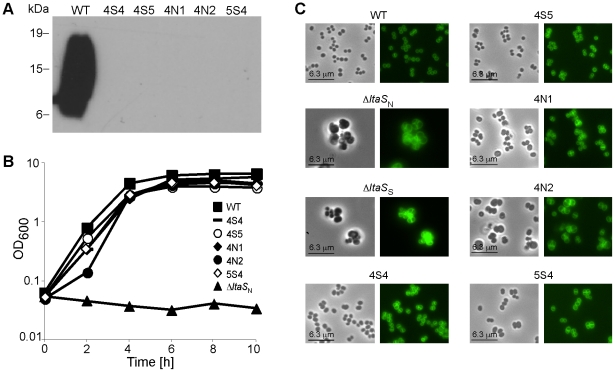
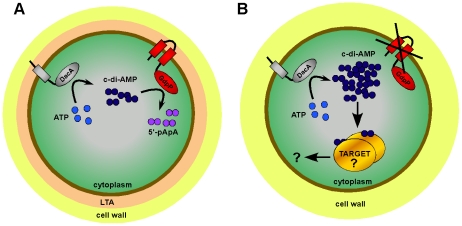
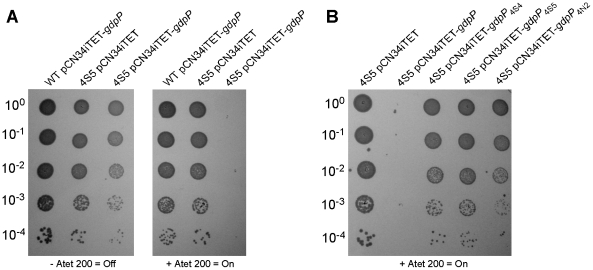
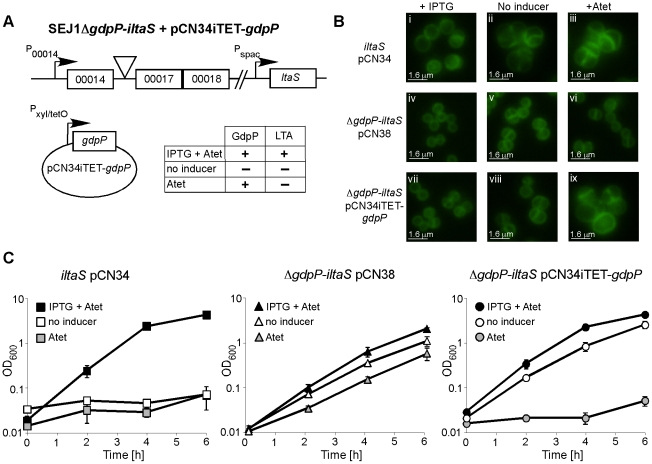
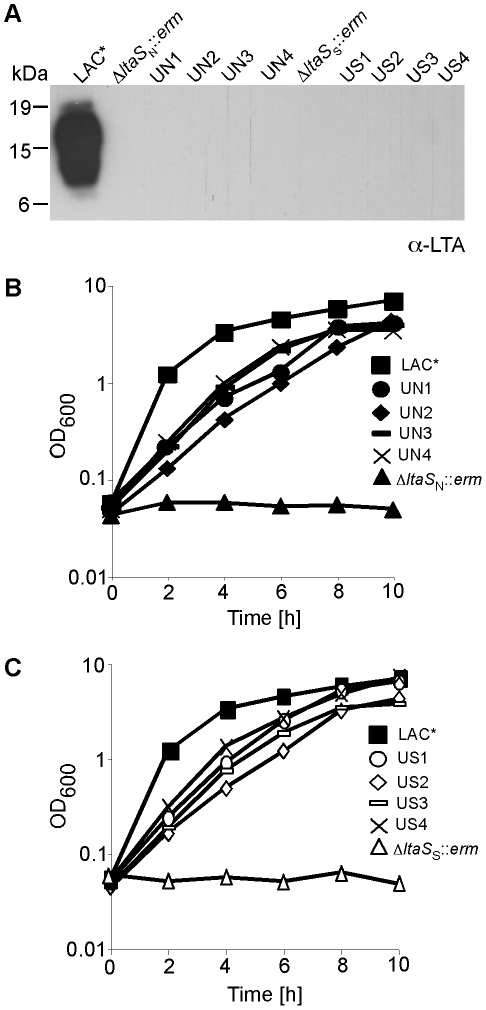
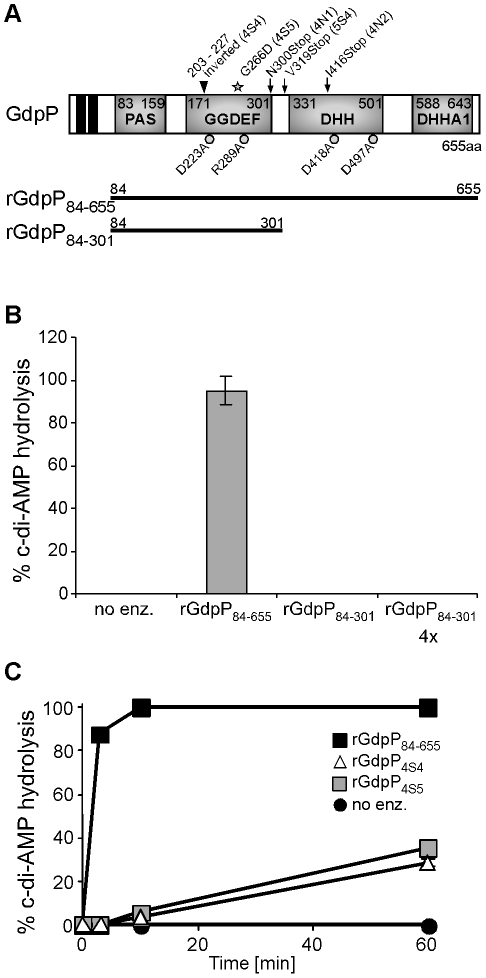
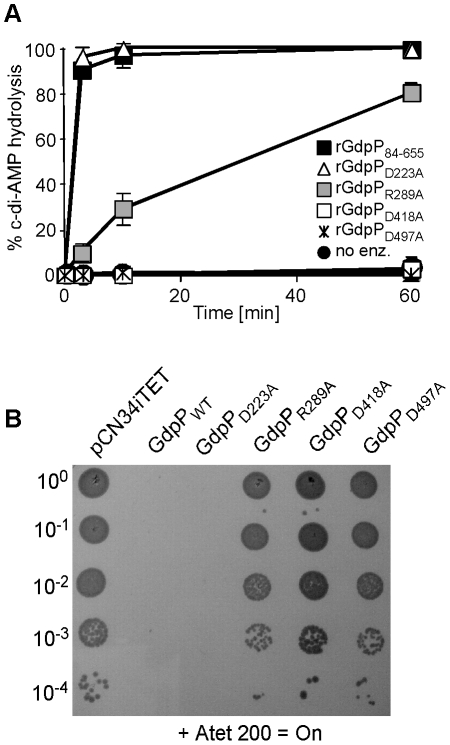
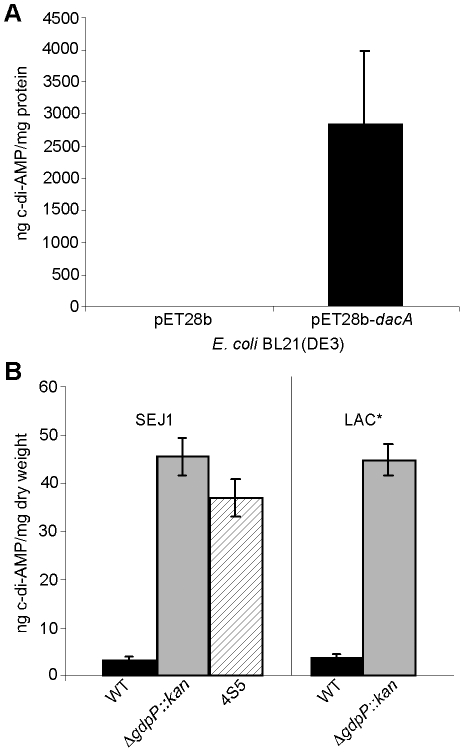
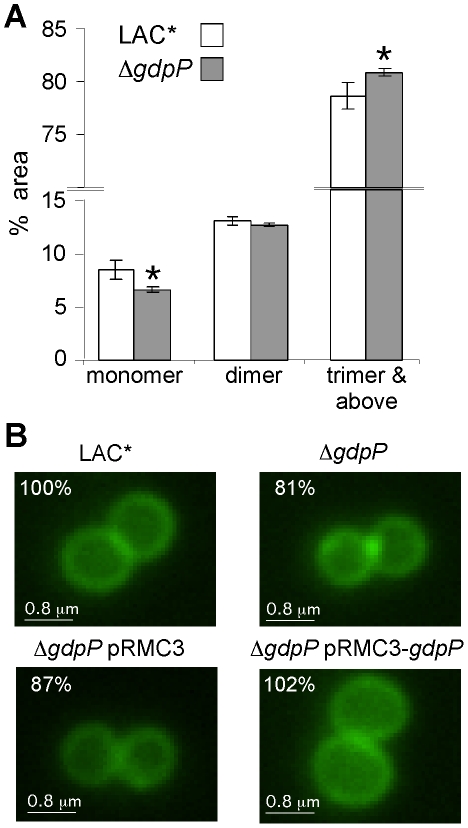
The cell wall is a vital and multi-functional part of bacterial cells. For Staphylococcus aureus, an important human bacterial pathogen, surface proteins and cell wall polymers are essential for adhesion, colonization and during the infection process. One such cell wall polymer, lipoteichoic acid (LTA), is crucial for normal bacterial growth and cell division. Upon depletion of this polymer bacteria increase in size and a misplacement of division septa and eventual cell lysis is observed. In this work, we describe the isolation and characterization of LTA-deficient S. aureus suppressor strains that regained the ability to grow almost normally in the absence of this cell wall polymer. Using a whole genome sequencing approach, compensatory mutations were identified and revealed that mutations within one gene, gdpP (GGDEF domain protein containing phosphodiesterase), allow both laboratory and clinical isolates of S. aureus to grow without LTA. It was determined that GdpP has phosphodiesterase activity in vitro and uses the cyclic dinucleotide c-di-AMP as a substrate. Furthermore, we show for the first time that c-di-AMP is produced in S. aureus presumably by the S. aureus DacA protein, which has diadenylate cyclase activity. We also demonstrate that GdpP functions in vivo as a c-di-AMP-specific phosphodiesterase, as intracellular c-di-AMP levels increase drastically in gdpP deletion strains and in an LTA-deficient suppressor strain. An increased amount of cross-linked peptidoglycan was observed in the gdpP mutant strain, a cell wall alteration that could help bacteria compensate for the lack of LTA. Lastly, microscopic analysis of wild-type and gdpP mutant strains revealed a 13-22% reduction in the cell size of bacteria with increased c-di-AMP levels. Taken together, these data suggest a function for this novel secondary messenger in controlling cell size of S. aureus and in helping bacteria to cope with extreme membrane and cell wall stress.
细胞壁是细菌细胞的一个重要的多功能部分。对于金黄色葡萄球菌(一种重要的人类细菌病原体)来说,表面蛋白和细胞壁聚合物对于粘附、定植和感染过程至关重要。细胞壁聚合物中的一种,脂磷壁酸(LTA),对于正常细菌生长和细胞分裂至关重要。当这种聚合物耗尽时,细菌会增大,并且观察到分裂隔膜的错位和最终的细胞裂解。在这项工作中,我们描述了 LTA 缺陷型金黄色葡萄球菌抑制菌株的分离和表征,这些菌株在没有这种细胞壁聚合物的情况下几乎恢复了正常生长的能力。使用全基因组测序方法,鉴定出了补偿性突变,并表明一个基因 gdpP(含有磷酸二酯酶的 GGDEF 结构域蛋白)内的突变使实验室和临床分离株金黄色葡萄球菌能够在没有 LTA 的情况下生长。确定 GdpP 在体外具有磷酸二酯酶活性,并且使用环二核苷酸 c-di-AMP 作为底物。此外,我们首次表明 c-di-AMP 是由金黄色葡萄球菌 DacA 蛋白产生的,该蛋白具有二腺苷酸环化酶活性。我们还证明 GdpP 在体内作为 c-di-AMP 特异性磷酸二酯酶发挥作用,因为 gdpP 缺失菌株和 LTA 缺陷抑制菌株中的细胞内 c-di-AMP 水平急剧增加。在 gdpP 突变株中观察到交联肽聚糖的量增加,细胞壁的这种改变可以帮助细菌补偿 LTA 的缺乏。最后,对野生型和 gdpP 突变菌株的显微镜分析表明,c-di-AMP 水平增加的细菌的细胞大小减少了 13-22%。总之,这些数据表明这种新型第二信使在控制金黄色葡萄球菌细胞大小和帮助细菌应对极端膜和细胞壁压力方面具有功能。