Centre for Geographical Health Research, Geography and Environment, University of Southampton, Highfield, Southampton, UK.
Int J Health Geogr. 2011 Sep 26;10:51. doi: 10.1186/1476-072X-10-51.
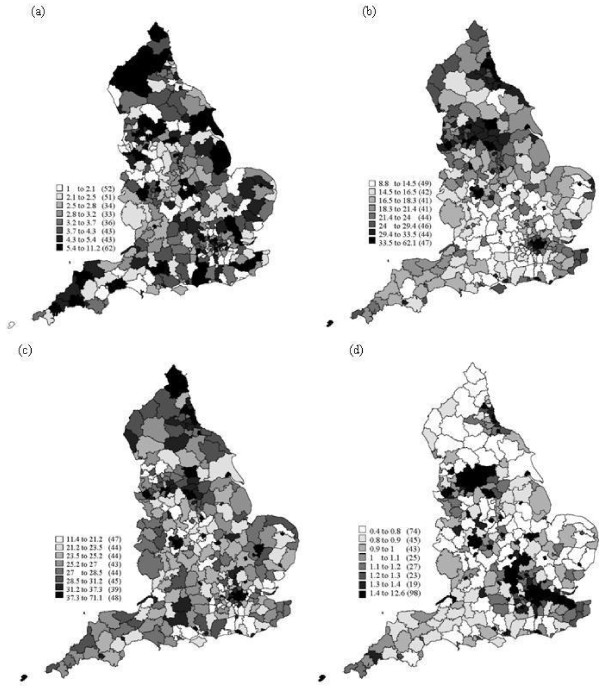
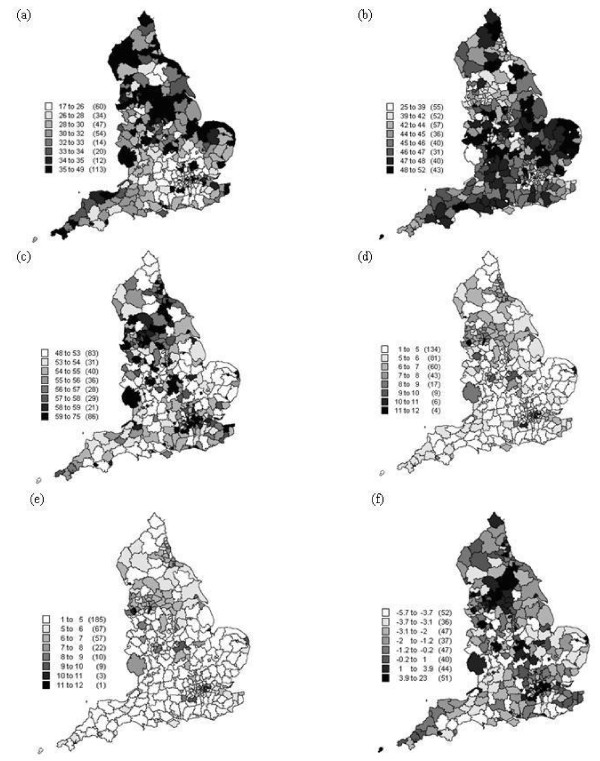
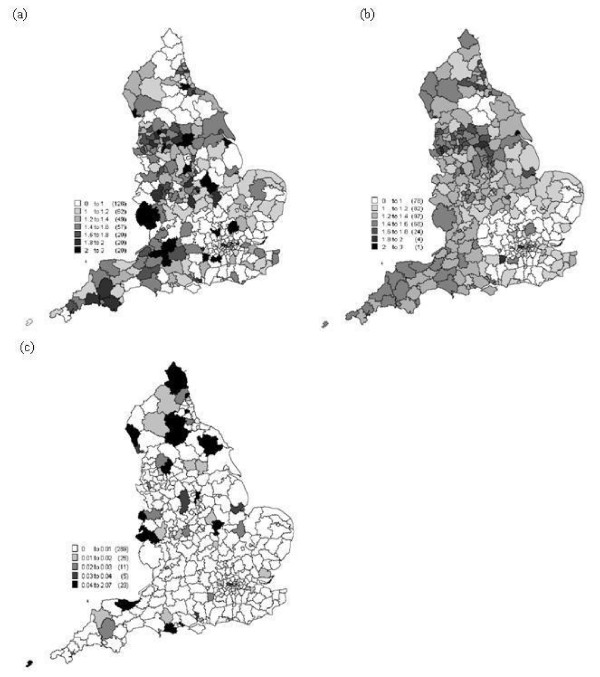
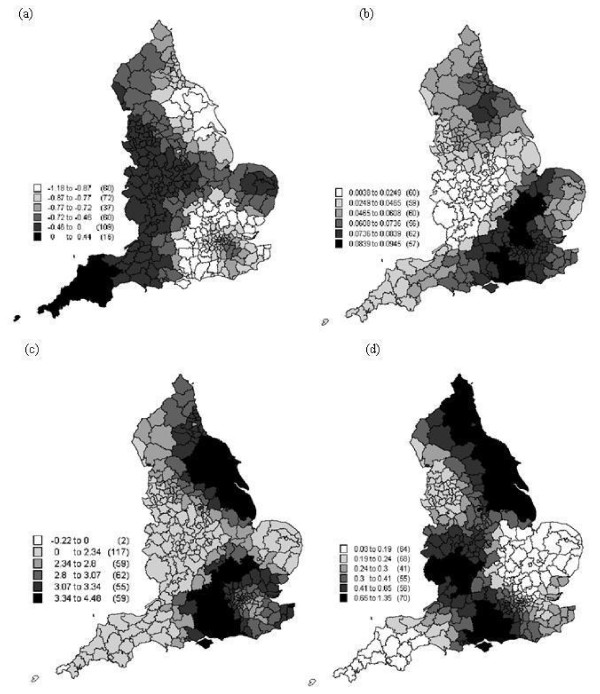
Geographically weighted Poisson regression (GWPR) was applied to the relation between cervical cancer disease incidence rates in England and socio-economic deprivation, social status and family structure covariates. Local parameters were estimated which describe the spatial variation in the relations between incidence and socio-economic covariates.
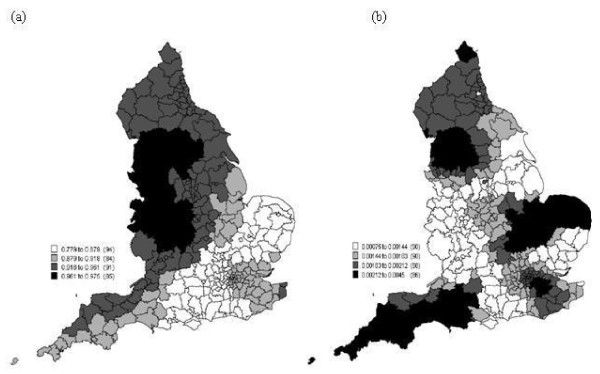
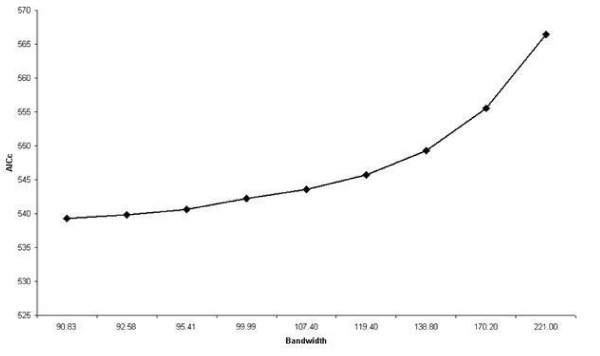
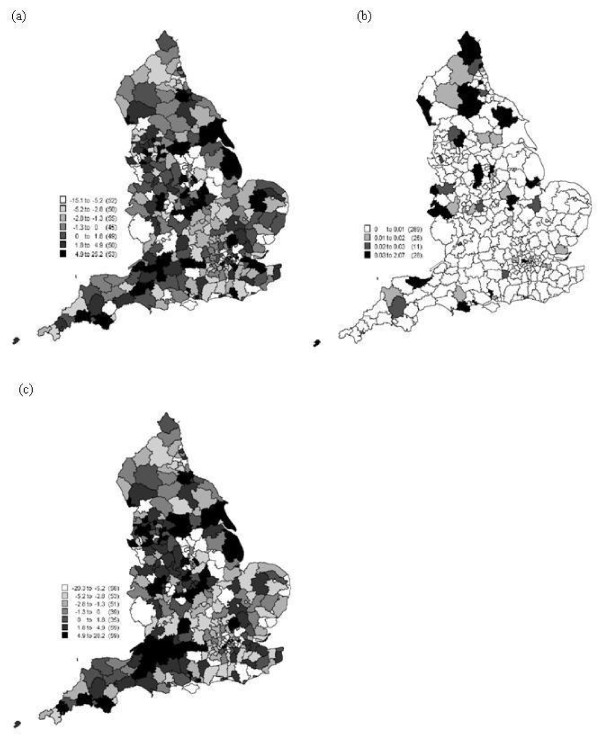
A global (stationary) regression model revealed a significant correlation between cervical cancer incidence rates and social status. However, a local (non-stationary) GWPR model provided a better fit with less spatial correlation (positive autocorrelation) in the residuals. Moreover, the GWPR model was able to represent local variation in the relations between cervical cancer incidence and socio-economic covariates across space, whereas the global model represented only the overall (or average) relation for the whole of England. The global model could lead to misinterpretation of the relations between cervical cancer incidence and socio-economic covariates locally.
Cervical cancer incidence was shown to have a non-stationary relationship with spatially varying covariates that are available through national datasets. As a result, it was shown that if low social status sectors of the population are to be targeted preferentially, this targeting should be done on a region-by-region basis such as to optimize health outcomes. While such a strategy may be difficult to implement in practice, the research does highlight the inequalities inherent in a uniform intervention approach.
地理加权泊松回归(GWPR)被应用于英格兰宫颈癌发病率与社会经济剥夺、社会地位和家庭结构协变量之间的关系。局部参数被估计,这些参数描述了发病率与社会经济协变量之间关系的空间变化。
全局(静止)回归模型揭示了宫颈癌发病率与社会地位之间存在显著相关性。然而,局部(非静止)GWPR 模型提供了更好的拟合,残差的空间相关性(正自相关)更小。此外,GWPR 模型能够代表宫颈癌发病率与社会经济协变量之间关系的局部变化,而全局模型仅代表整个英格兰的总体(或平均)关系。全局模型可能导致对宫颈癌发病率与社会经济协变量之间关系的局部误解。
研究表明,宫颈癌发病率与通过国家数据集获得的空间变化协变量之间存在非静态关系。因此,研究表明,如果要优先针对社会地位较低的人群,那么这种靶向治疗应该在区域基础上进行,以优化健康结果。尽管这种策略在实践中可能难以实施,但研究确实强调了统一干预方法所固有的不平等。