Nath S T, Nayak D P
Department of Microbiology and Immunology, Jonsson Comprehensive Cancer Center, University of California-Los Angeles School of Medicine 90024-1747.
Mol Cell Biol. 1990 Aug;10(8):4139-45. doi: 10.1128/mcb.10.8.4139-4145.1990.
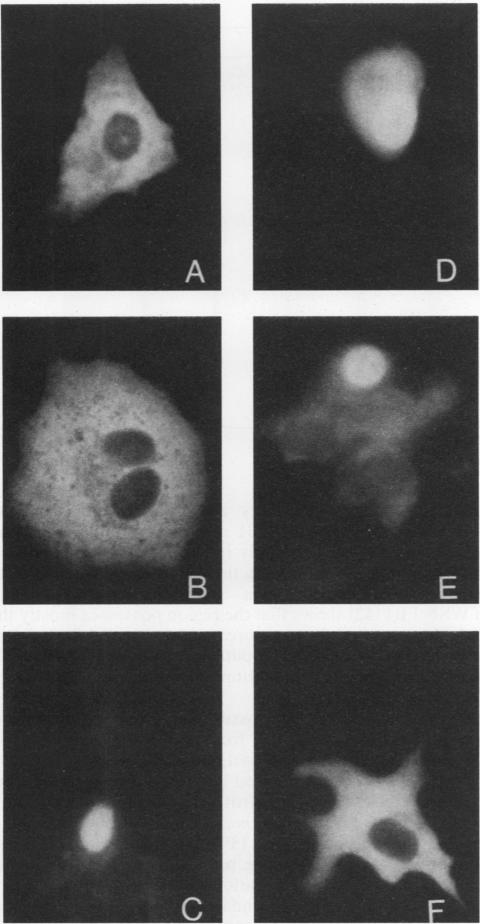
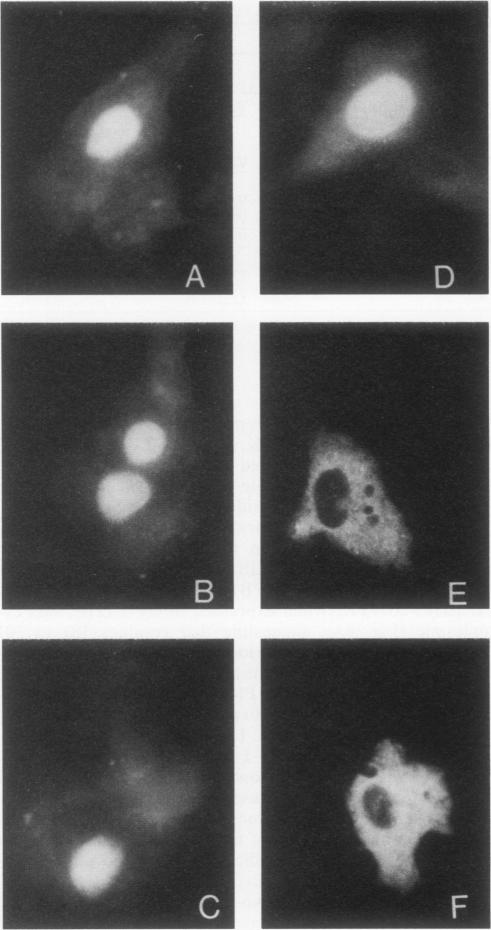
Polymerase basic protein 1 (PB1) of influenza virus (A/WSN/33), when expressed from cloned cDNA in the absence of other viral proteins, accumulates in the nucleus. We have examined the location and nature of the nuclear localization signal of PB1 by using deletion mutants and chimeric constructions with chicken muscle pyruvate kinase, a cytoplasmic protein. Our studies showed some novel features of the nuclear localization signal of PB1. The signal was present internally within residues 180 to 252 of PB1. Moreover, unlike most nuclear localization signals, it was not a single stretch of contiguous amino acids. Instead, it possessed two discontinuous regions separated by an intervening sequence which could be deleted without affecting its nuclear localization property. On the other hand, deletion of either of the two signal regions rendered the protein cytoplasmic, indicating that the function of both regions is required for nuclear localization and that one region alone is not sufficient. Both of these signal regions contained short stretches of basic residues. Possible ways by which this novel bipartite signal can function in nuclear localization are discussed.
流感病毒(A/WSN/33)的聚合酶碱性蛋白1(PB1)在没有其他病毒蛋白的情况下从克隆的cDNA表达时,会在细胞核中积累。我们通过使用缺失突变体以及与鸡肌肉丙酮酸激酶(一种细胞质蛋白)的嵌合构建体,研究了PB1核定位信号的位置和性质。我们的研究揭示了PB1核定位信号的一些新特征。该信号存在于PB1的180至252位残基内部。此外,与大多数核定位信号不同,它不是一段连续的氨基酸序列。相反,它具有两个不连续的区域,中间由一个间隔序列隔开,该间隔序列删除后不影响其核定位特性。另一方面,两个信号区域中的任何一个缺失都会使蛋白质定位于细胞质,这表明两个区域的功能对于核定位都是必需的,仅一个区域是不够的。这两个信号区域都包含短的碱性残基序列。本文讨论了这种新型二分信号在核定位中发挥作用的可能方式。