Filipov Orlin
Department of Orthopaedics, Vitosha Hospital, 108-B Simeonovsko Shose Str, 1700 Sofia, Bulgaria.
Eur J Orthop Surg Traumatol. 2011 Oct;21(7):539-543. doi: 10.1007/s00590-010-0747-9. Epub 2011 Jan 5.
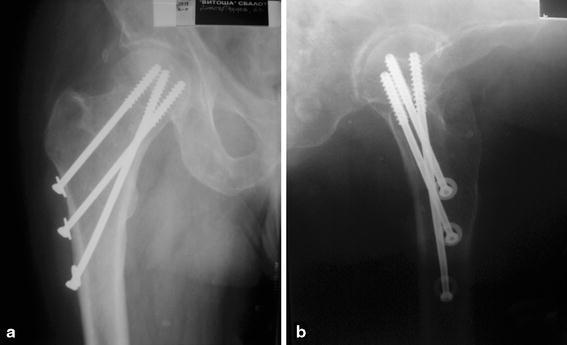
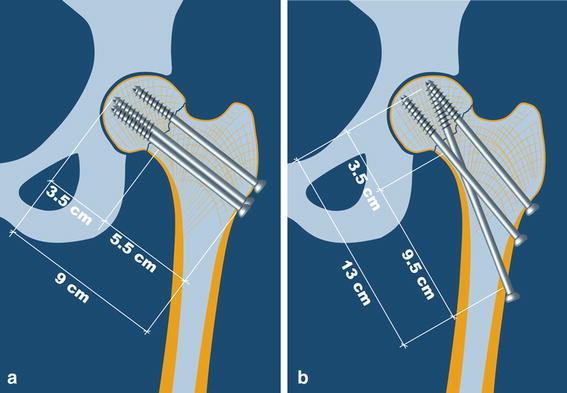
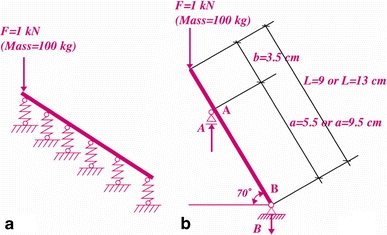
The present work introduces a method of screw fixation of femoral neck fractures in the presence of osteoporosis, according to an original concept of the establishment of two supporting points for the implants and their biplane positioning in the femoral neck and head. The provision of two steady supporting points for the implants and the highly increased (obtuse) angle at which they are positioned allow the body weight to be transferred successfully from the head fragment onto the diaphysis, thanks to the strength of the screws, with the patient's bone quality being of least importance. The position of the screws allows them to slide under stress with a minimal risk of displacement. The method was developed in search of a solution for those patients for whom primary arthroplasty is contraindicated. The method has been analysed in relation to biomechanics and statics. For the first time, a new function is applied to a screw fixation-the implant is presented as a simple beam with an overhanging end.
本研究介绍了一种在骨质疏松情况下股骨颈骨折的螺钉固定方法,该方法基于为植入物建立两个支撑点并使其在股骨颈和股骨头中进行双平面定位的原创概念。为植入物提供两个稳定支撑点以及它们所成的高度增加(钝角)角度,使得体重能够借助螺钉的强度成功地从股骨头碎片转移至骨干,而患者的骨质重要性最低。螺钉的位置使其在应力作用下能够滑动且位移风险最小。该方法是为那些禁忌一期关节成形术的患者寻找解决方案而研发的。已对该方法进行了生物力学和静力学分析。首次将一种新功能应用于螺钉固定——将植入物呈现为具有悬臂端的简单梁。