• 文献检索
  • 文档翻译
  • 深度研究
  • 学术资讯
  • Suppr Zotero 插件Zotero 插件
  • 邀请有礼
  • 套餐&价格
  • 历史记录
应用&插件
Suppr Zotero 插件Zotero 插件浏览器插件Mac 客户端Windows 客户端微信小程序
定价
高级版会员购买积分包购买API积分包
服务
文献检索文档翻译深度研究API 文档MCP 服务
关于我们
关于 Suppr公司介绍联系我们用户协议隐私条款
关注我们

Suppr 超能文献

核心技术专利:CN118964589B侵权必究
粤ICP备2023148730 号-1Suppr @ 2026

文献检索

告别复杂PubMed语法,用中文像聊天一样搜索,搜遍4000万医学文献。AI智能推荐,让科研检索更轻松。

立即免费搜索

文件翻译

保留排版,准确专业,支持PDF/Word/PPT等文件格式,支持 12+语言互译。

免费翻译文档

深度研究

AI帮你快速写综述,25分钟生成高质量综述,智能提取关键信息,辅助科研写作。

立即免费体验

定量描述纳米结构表面的纳米形貌对细菌黏附及生物膜形成的影响。

Quantitative characterization of the influence of the nanoscale morphology of nanostructured surfaces on bacterial adhesion and biofilm formation.

机构信息

European School of Molecular Medicine, IFOM-IEO, Milan, Italy.

出版信息

PLoS One. 2011;6(9):e25029. doi: 10.1371/journal.pone.0025029. Epub 2011 Sep 26.

DOI:10.1371/journal.pone.0025029
PMID:21966403
原文链接:https://pmc.ncbi.nlm.nih.gov/articles/PMC3180288/
Abstract

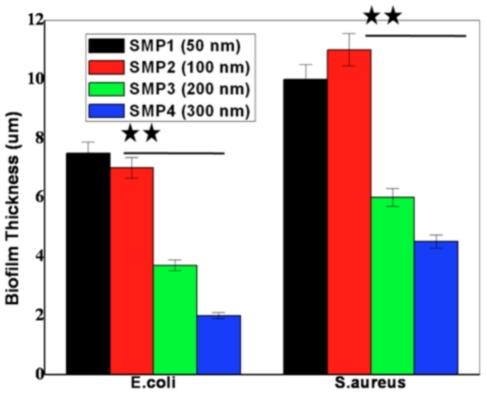
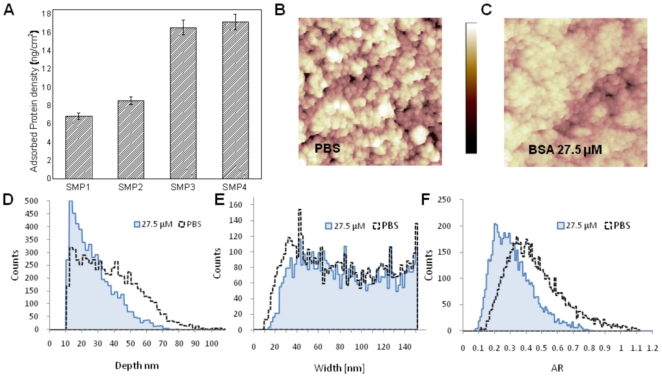
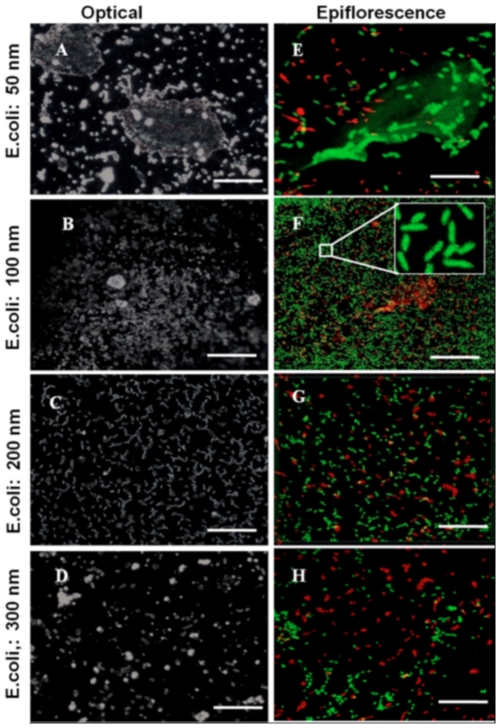
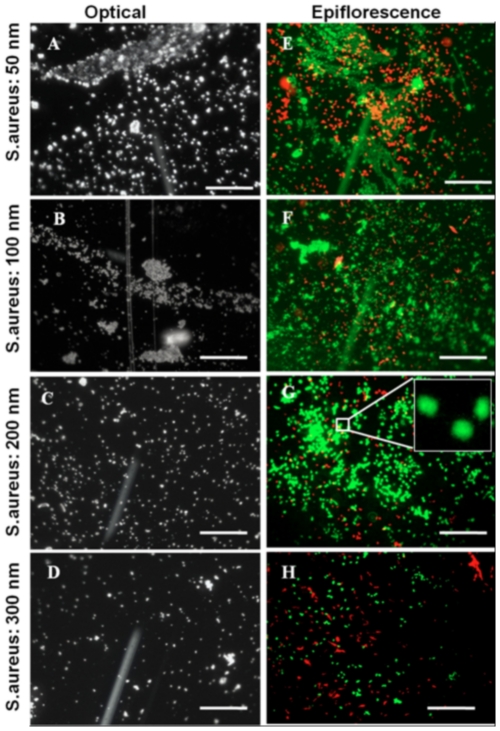
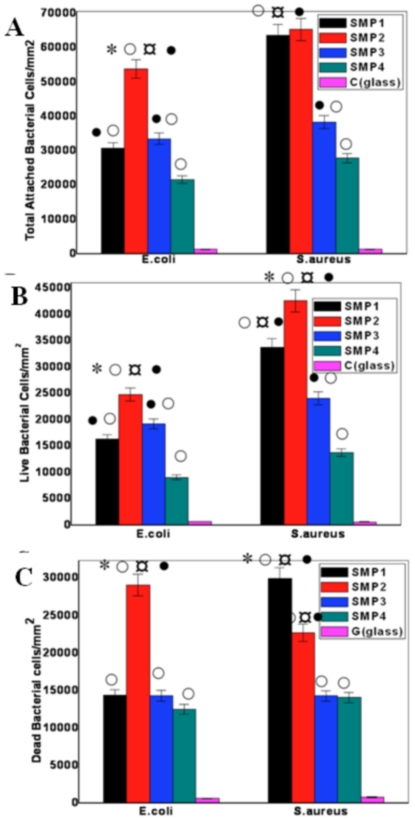
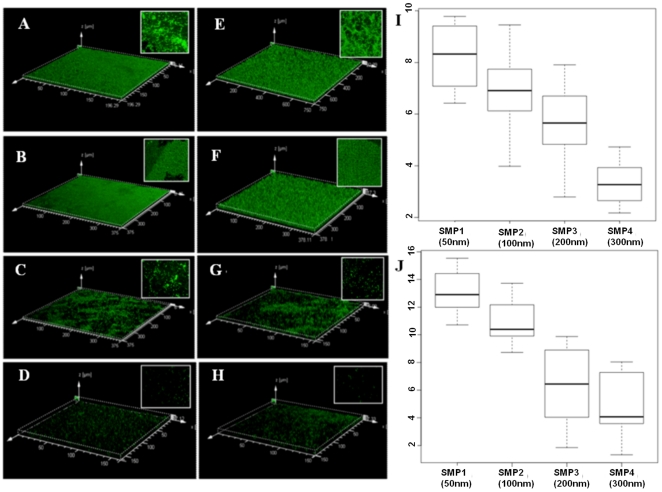
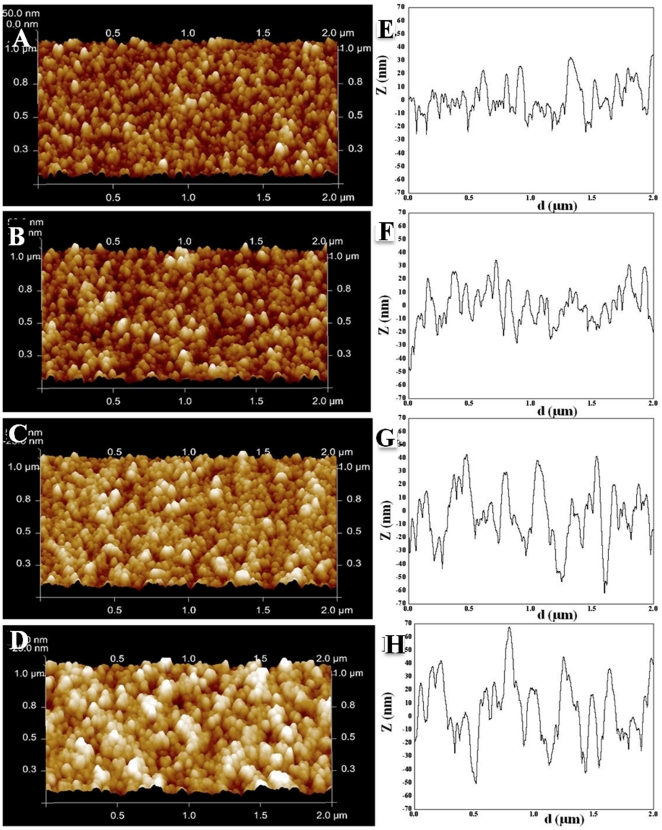
Bacterial infection of implants and prosthetic devices is one of the most common causes of implant failure. The nanostructured surface of biocompatible materials strongly influences the adhesion and proliferation of mammalian cells on solid substrates. The observation of this phenomenon has led to an increased effort to develop new strategies to prevent bacterial adhesion and biofilm formation, primarily through nanoengineering the topology of the materials used in implantable devices. While several studies have demonstrated the influence of nanoscale surface morphology on prokaryotic cell attachment, none have provided a quantitative understanding of this phenomenon. Using supersonic cluster beam deposition, we produced nanostructured titania thin films with controlled and reproducible nanoscale morphology respectively. We characterized the surface morphology; composition and wettability by means of atomic force microscopy, X-ray photoemission spectroscopy and contact angle measurements. We studied how protein adsorption is influenced by the physico-chemical surface parameters. Lastly, we characterized Escherichia coli and Staphylococcus aureus adhesion on nanostructured titania surfaces. Our results show that the increase in surface pore aspect ratio and volume, related to the increase of surface roughness, improves protein adsorption, which in turn downplays bacterial adhesion and biofilm formation. As roughness increases up to about 20 nm, bacterial adhesion and biofilm formation are enhanced; the further increase of roughness causes a significant decrease of bacterial adhesion and inhibits biofilm formation. We interpret the observed trend in bacterial adhesion as the combined effect of passivation and flattening effects induced by morphology-dependent protein adsorption. Our findings demonstrate that bacterial adhesion and biofilm formation on nanostructured titanium oxide surfaces are significantly influenced by nanoscale morphological features. The quantitative information, provided by this study about the relation between surface nanoscale morphology and bacterial adhesion points towards the rational design of implant surfaces that control or inhibit bacterial adhesion and biofilm formation.

摘要

植入物和假体装置的细菌感染是植入物失效的最常见原因之一。生物相容性材料的纳米结构表面强烈影响哺乳动物细胞在固体基底上的黏附和增殖。观察到这一现象促使人们加大力度开发新策略来防止细菌黏附和生物膜形成,主要是通过对植入装置所用材料的拓扑结构进行纳米工程处理。虽然有几项研究表明纳米级表面形态对原核细胞黏附的影响,但没有一项研究提供对此现象的定量理解。我们使用超声速团束沉积法分别制备了具有可控和可重复纳米级形态的纳米结构化二氧化钛薄膜。我们通过原子力显微镜、X 射线光电子能谱和接触角测量来表征表面形态、组成和润湿性。我们研究了蛋白质吸附如何受物理化学表面参数的影响。最后,我们研究了大肠杆菌和金黄色葡萄球菌在纳米结构化二氧化钛表面的黏附。我们的结果表明,表面孔径纵横比和体积的增加与表面粗糙度的增加有关,这改善了蛋白质吸附,从而抑制了细菌黏附和生物膜形成。当粗糙度增加到约 20nm 时,细菌黏附和生物膜形成增强;进一步增加粗糙度会导致细菌黏附显著减少并抑制生物膜形成。我们将观察到的细菌黏附趋势解释为形态依赖性蛋白质吸附引起的钝化和平整效应的综合作用。我们的研究结果表明,纳米结构化氧化钛表面上的细菌黏附和生物膜形成受到纳米级形态特征的显著影响。本研究提供的关于表面纳米级形态与细菌黏附之间关系的定量信息,为控制或抑制细菌黏附和生物膜形成的植入物表面的合理设计提供了依据。
https://cdn.ncbi.nlm.nih.gov/pmc/blobs/4732/3180288/31e95ba305ba/pone.0025029.g007.jpg
https://cdn.ncbi.nlm.nih.gov/pmc/blobs/4732/3180288/8640ffd13039/pone.0025029.g001.jpg
https://cdn.ncbi.nlm.nih.gov/pmc/blobs/4732/3180288/91a3df368afa/pone.0025029.g002.jpg
https://cdn.ncbi.nlm.nih.gov/pmc/blobs/4732/3180288/5e4ddbe9f08a/pone.0025029.g003.jpg
https://cdn.ncbi.nlm.nih.gov/pmc/blobs/4732/3180288/510c5ec491ac/pone.0025029.g004.jpg
https://cdn.ncbi.nlm.nih.gov/pmc/blobs/4732/3180288/bb6e4e3bed46/pone.0025029.g005.jpg
https://cdn.ncbi.nlm.nih.gov/pmc/blobs/4732/3180288/9531129eb101/pone.0025029.g006.jpg
https://cdn.ncbi.nlm.nih.gov/pmc/blobs/4732/3180288/31e95ba305ba/pone.0025029.g007.jpg
https://cdn.ncbi.nlm.nih.gov/pmc/blobs/4732/3180288/8640ffd13039/pone.0025029.g001.jpg
https://cdn.ncbi.nlm.nih.gov/pmc/blobs/4732/3180288/91a3df368afa/pone.0025029.g002.jpg
https://cdn.ncbi.nlm.nih.gov/pmc/blobs/4732/3180288/5e4ddbe9f08a/pone.0025029.g003.jpg
https://cdn.ncbi.nlm.nih.gov/pmc/blobs/4732/3180288/510c5ec491ac/pone.0025029.g004.jpg
https://cdn.ncbi.nlm.nih.gov/pmc/blobs/4732/3180288/bb6e4e3bed46/pone.0025029.g005.jpg
https://cdn.ncbi.nlm.nih.gov/pmc/blobs/4732/3180288/9531129eb101/pone.0025029.g006.jpg
https://cdn.ncbi.nlm.nih.gov/pmc/blobs/4732/3180288/31e95ba305ba/pone.0025029.g007.jpg

相似文献

1
Quantitative characterization of the influence of the nanoscale morphology of nanostructured surfaces on bacterial adhesion and biofilm formation.定量描述纳米结构表面的纳米形貌对细菌黏附及生物膜形成的影响。
PLoS One. 2011;6(9):e25029. doi: 10.1371/journal.pone.0025029. Epub 2011 Sep 26.
2
Interaction of bacterial cells with cluster-assembled nanostructured titania surfaces: an atomic force microscopy study.细菌细胞与团簇组装纳米结构二氧化钛表面的相互作用:一项原子力显微镜研究。
J Nanosci Nanotechnol. 2013 Jan;13(1):77-85. doi: 10.1166/jnn.2013.6727.
3
Biofilm formation on nanostructured titanium oxide surfaces and a micro/nanofabrication-based preventive strategy using colloidal lithography.纳米结构氧化钛表面生物膜的形成及基于胶体光刻的微纳制造预防策略。
Biofabrication. 2012 Jun;4(2):025001. doi: 10.1088/1758-5082/4/2/025001. Epub 2012 Mar 12.
4
Quantitative Control of Protein and Cell Interaction with Nanostructured Surfaces by Cluster Assembling.通过簇组装对纳米结构表面上的蛋白质和细胞相互作用进行定量控制。
Acc Chem Res. 2017 Feb 21;50(2):231-239. doi: 10.1021/acs.accounts.6b00433. Epub 2017 Jan 24.
5
Impact of nanoscale roughness of titanium thin film surfaces on bacterial retention.钛薄膜表面纳米级粗糙度对细菌滞留的影响。
Langmuir. 2010 Feb 2;26(3):1973-82. doi: 10.1021/la902623c.
6
Atomic layer deposition of nano-TiO thin films with enhanced biocompatibility and antimicrobial activity for orthopedic implants.用于骨科植入物的具有增强生物相容性和抗菌活性的纳米TiO薄膜的原子层沉积。
Int J Nanomedicine. 2017 Dec 8;12:8711-8723. doi: 10.2147/IJN.S148065. eCollection 2017.
7
Biofilm formation on nanostructured hydroxyapatite-coated titanium.纳米结构羟基磷灰石涂层钛上的生物膜形成。
J Biomed Mater Res A. 2014 Apr;102(4):1063-70. doi: 10.1002/jbm.a.34757. Epub 2013 Jun 12.
8
Bacterial adhesion on amorphous and crystalline metal oxide coatings.细菌在非晶态和晶态金属氧化物涂层上的附着。
Mater Sci Eng C Mater Biol Appl. 2015 Dec 1;57:88-99. doi: 10.1016/j.msec.2015.07.031. Epub 2015 Jul 20.
9
The influence of nanostructured features on bacterial adhesion and bone cell functions on severely shot peened 316L stainless steel.严重喷丸处理 316L 不锈钢的纳米结构特征对细菌黏附及成骨细胞功能的影响。
Biomaterials. 2015 Dec;73:185-97. doi: 10.1016/j.biomaterials.2015.09.019. Epub 2015 Sep 12.
10
Three-species biofilm model onto plasma-treated titanium implant surface.三种细菌生物膜在经等离子体处理的钛种植体表面的模型
Colloids Surf B Biointerfaces. 2017 Apr 1;152:354-366. doi: 10.1016/j.colsurfb.2017.01.035. Epub 2017 Jan 21.

引用本文的文献

1
The Hidden Fortress: A Comprehensive Review of Fungal Biofilms with Emphasis on .《隐秘堡垒:关于真菌生物膜的全面综述,重点在于……》 (原文此处不完整)
J Fungi (Basel). 2025 Mar 19;11(3):236. doi: 10.3390/jof11030236.
2
Environmental stressor assessment of hydrocarbonoclastic bacteria biofilms from a marine oil spill.海洋石油泄漏中烃分解菌生物膜的环境应激源评估
Biotechnol Rep (Amst). 2024 Mar 8;42:e00834. doi: 10.1016/j.btre.2024.e00834. eCollection 2024 Jun.
3
Influence of a nanoscale coating on plucking fingers and stainless steel on attachment and detachment of Salmonella Enteritidis, Escherichia coli and Campylobacter jejuni.

本文引用的文献

1
Impact of nanoscale topography on genomics and proteomics of adherent bacteria.纳米级形貌对贴壁细菌的基因组学和蛋白质组学的影响。
ACS Nano. 2011 Mar 22;5(3):1865-76. doi: 10.1021/nn102692m. Epub 2011 Feb 23.
2
High-throughput tools for the study of protein-nanostructured surface interaction.用于研究蛋白质与纳米结构表面相互作用的高通量工具。
Comb Chem High Throughput Screen. 2011 Mar 1;14(3):205-16.
3
Role of wettability and nanoroughness on interactions between osteoblast and modified silicon surfaces.润湿性和纳米粗糙度对成骨细胞与改性硅表面相互作用的影响。
纳米级涂层对拔毛手指和不锈钢对肠炎沙门氏菌、大肠杆菌和空肠弯曲菌附着和脱落的影响。
Folia Microbiol (Praha). 2024 Dec;69(6):1221-1228. doi: 10.1007/s12223-024-01162-3. Epub 2024 Apr 9.
4
Nanotopography and oral bacterial adhesion on titanium surfaces: in vitro and in vivo studies.纳米形貌和口腔细菌在钛表面的黏附:体外和体内研究。
Braz Oral Res. 2024 Mar 11;38:e021. doi: 10.1590/1807-3107bor-2024.vol38.0021. eCollection 2024.
5
Poly-Gamma-Glutamic Acid Nanopolymer Effect against Bacterial Biofilms: In Vitro and In Vivo Study.聚γ-谷氨酸纳米聚合物对细菌生物膜的作用:体外和体内研究
Biomedicines. 2024 Jan 23;12(2):251. doi: 10.3390/biomedicines12020251.
6
Impact of nanoscale silicon dioxide coating of stainless-steel surfaces on Listeria monocytogenes.不锈钢表面纳米级二氧化硅涂层对单增李斯特菌的影响。
Folia Microbiol (Praha). 2024 Feb;69(1):173-180. doi: 10.1007/s12223-023-01089-1. Epub 2023 Sep 9.
7
The Potential of Surface-Immobilized Antimicrobial Peptides for the Enhancement of Orthopaedic Medical Devices: A Review.表面固定抗菌肽增强骨科医疗器械的潜力:综述
Antibiotics (Basel). 2023 Jan 19;12(2):211. doi: 10.3390/antibiotics12020211.
8
Exploring multielement nanogranular coatings to forestall implant-related infections.探索多元纳米颗粒涂层以预防植入物相关感染。
Front Cell Infect Microbiol. 2023 Feb 7;13:1128822. doi: 10.3389/fcimb.2023.1128822. eCollection 2023.
9
Anodized Nanostructured 316L Stainless Steel Enhances Osteoblast Functions and Exhibits Anti-Fouling Properties.经阳极氧化处理的纳米结构化 316L 不锈钢可增强成骨细胞功能并具有抗污特性。
ACS Biomater Sci Eng. 2023 Feb 13;9(2):693-704. doi: 10.1021/acsbiomaterials.2c01072. Epub 2023 Jan 24.
10
Evaluating the adhesive potential of the newly isolated bacterial strains in research exploitation of plant microbial interaction.在植物与微生物相互作用的研究利用中评估新分离细菌菌株的黏附潜力。
Front Plant Sci. 2022 Oct 21;13:1004331. doi: 10.3389/fpls.2022.1004331. eCollection 2022.
Acta Biomater. 2011 Feb;7(2):771-8. doi: 10.1016/j.actbio.2010.08.024. Epub 2010 Aug 31.
4
Cell interaction with nanopatterned surface of implants.细胞与植入物纳米图案表面的相互作用。
Nanomedicine (Lond). 2010 Aug;5(6):937-47. doi: 10.2217/nnm.10.54.
5
The effect of surface nanometre-scale morphology on protein adsorption.表面纳米级形貌对蛋白质吸附的影响。
PLoS One. 2010 Jul 29;5(7):e11862. doi: 10.1371/journal.pone.0011862.
6
Nanomaterials in preventive dentistry.预防牙科中的纳米材料。
Nat Nanotechnol. 2010 Aug;5(8):565-9. doi: 10.1038/nnano.2010.83. Epub 2010 Jun 27.
7
Ex vivo expansion of human circulating myogenic progenitors on cluster-assembled nanostructured TiO2.在组装成簇的纳米结构 TiO2 上体外扩增人循环成肌祖细胞。
Biomaterials. 2010 Jul;31(20):5385-96. doi: 10.1016/j.biomaterials.2010.03.021. Epub 2010 Apr 15.
8
The interaction of cells and bacteria with surfaces structured at the nanometre scale.细胞和细菌与纳米尺度结构表面的相互作用。
Acta Biomater. 2010 Oct;6(10):3824-46. doi: 10.1016/j.actbio.2010.04.001. Epub 2010 Apr 4.
9
The influence of nano-scale surface roughness on bacterial adhesion to ultrafine-grained titanium.纳米级表面粗糙度对超微晶粒钛细菌附着的影响。
Biomaterials. 2010 May;31(13):3674-83. doi: 10.1016/j.biomaterials.2010.01.071. Epub 2010 Feb 16.
10
The relationship between the nanostructure of titanium surfaces and bacterial attachment.钛表面的纳米结构与细菌附着的关系。
Biomaterials. 2010 Feb;31(4):706-13. doi: 10.1016/j.biomaterials.2009.09.081. Epub 2009 Oct 30.