Bioinformatics, National Cancer Research Institute (IST), Genoa, Italy.
Brief Bioinform. 2011 Nov;12(6):549-61. doi: 10.1093/bib/bbr055. Epub 2011 Oct 7.
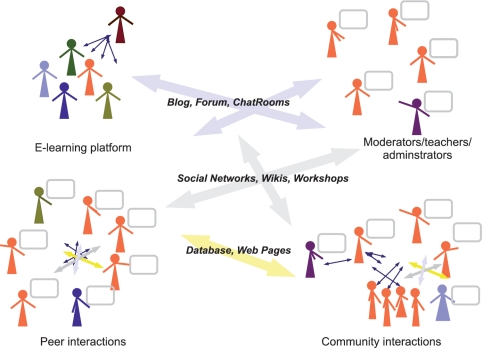
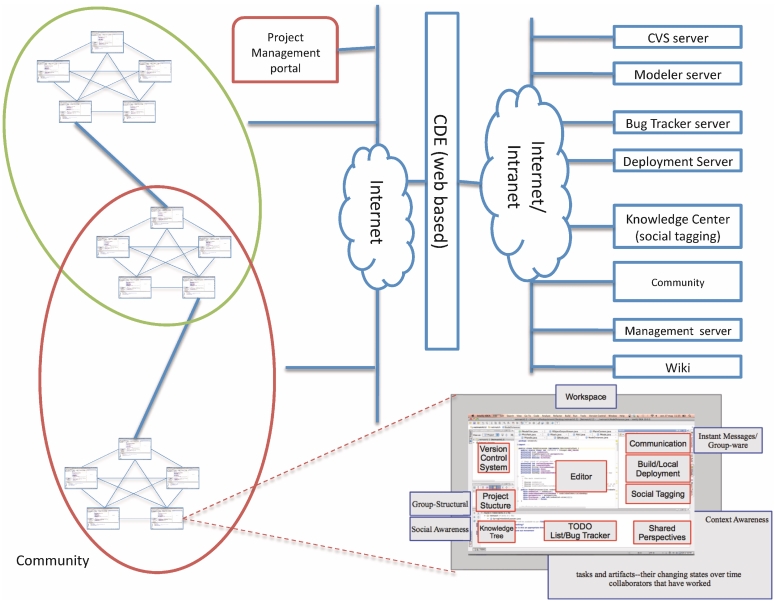
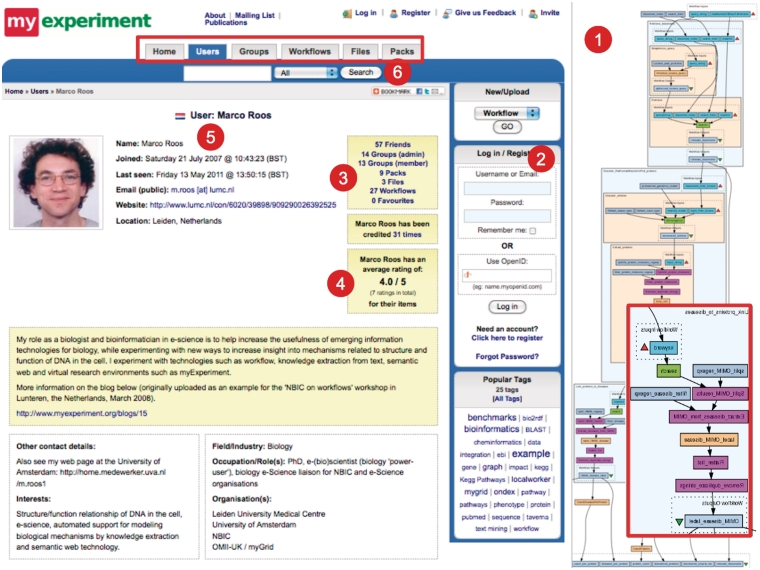
Advanced research requires intensive interaction among a multitude of actors, often possessing different expertise and usually working at a distance from each other. The field of collaborative research aims to establish suitable models and technologies to properly support these interactions. In this article, we first present the reasons for an interest of Bioinformatics in this context by also suggesting some research domains that could benefit from collaborative research. We then review the principles and some of the most relevant applications of social networking, with a special attention to networks supporting scientific collaboration, by also highlighting some critical issues, such as identification of users and standardization of formats. We then introduce some systems for collaborative document creation, including wiki systems and tools for ontology development, and review some of the most interesting biological wikis. We also review the principles of Collaborative Development Environments for software and show some examples in Bioinformatics. Finally, we present the principles and some examples of Learning Management Systems. In conclusion, we try to devise some of the goals to be achieved in the short term for the exploitation of these technologies.
高级研究需要众多参与者之间的密集互动,这些参与者通常具有不同的专业知识,并且通常彼此远距离工作。协作研究领域旨在建立合适的模型和技术来适当支持这些交互。在本文中,我们首先通过提出一些可能受益于协作研究的研究领域来介绍生物信息学对此类研究感兴趣的原因。然后,我们回顾了社交网络的原则和一些最相关的应用,特别关注支持科学协作的网络,同时还强调了一些关键问题,例如用户识别和格式标准化。然后,我们介绍了一些用于协作文档创建的系统,包括维基系统和本体开发工具,并回顾了一些最有趣的生物维基。我们还回顾了软件协作开发环境的原理,并展示了生物信息学中的一些示例。最后,我们介绍了学习管理系统的原理和一些示例。总之,我们试图为短期内利用这些技术制定一些要实现的目标。