Department of Medicine, National Jewish Health, Denver, Colorado, United States of America.
PLoS One. 2011;6(10):e25704. doi: 10.1371/journal.pone.0025704. Epub 2011 Oct 3.
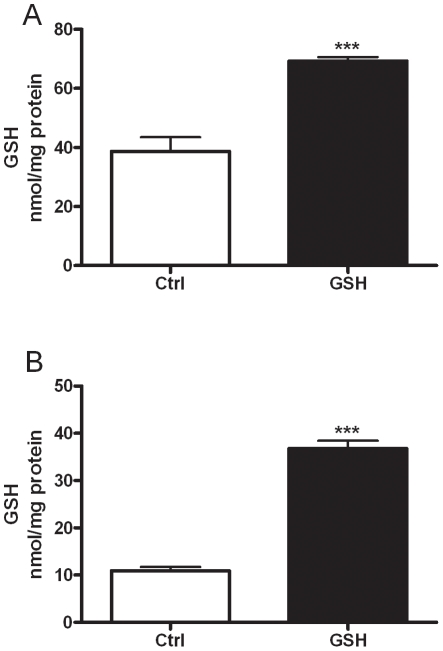
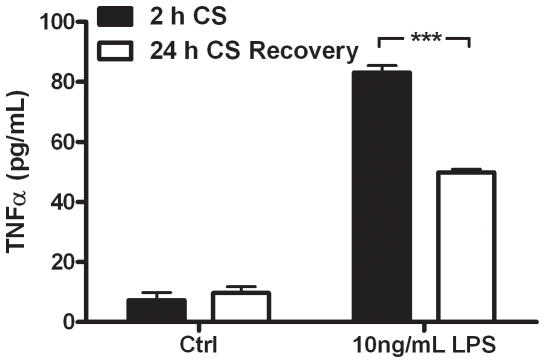
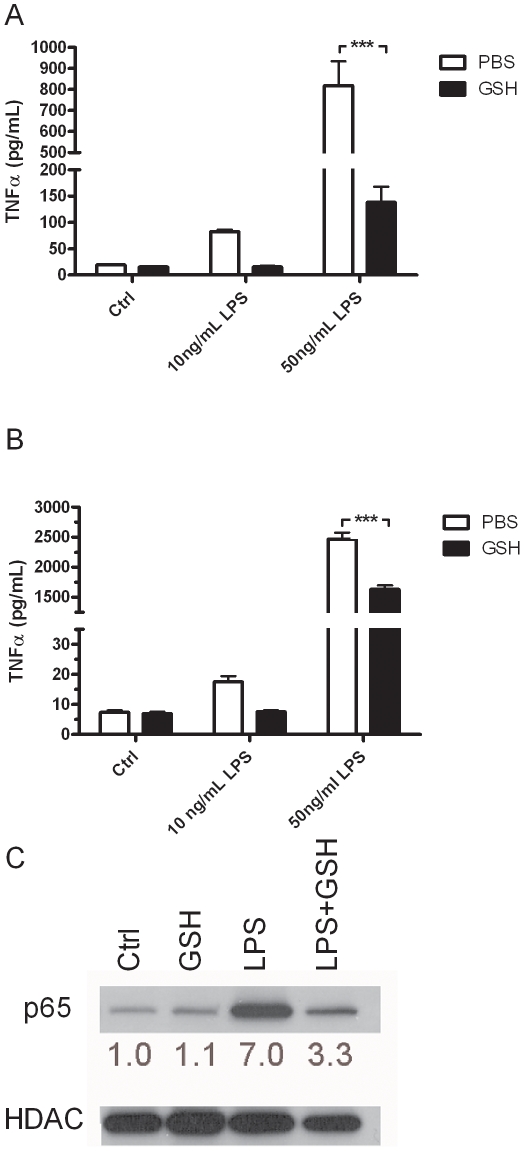
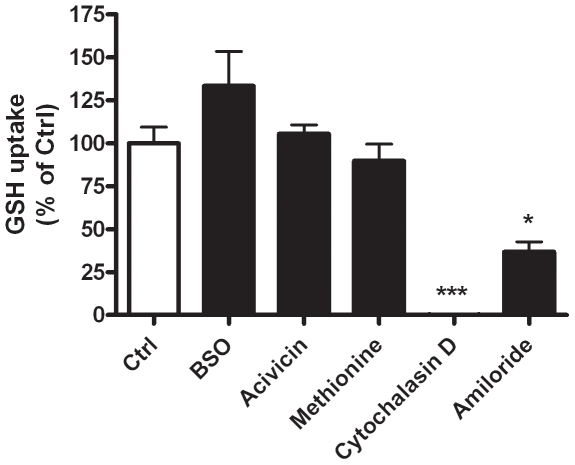
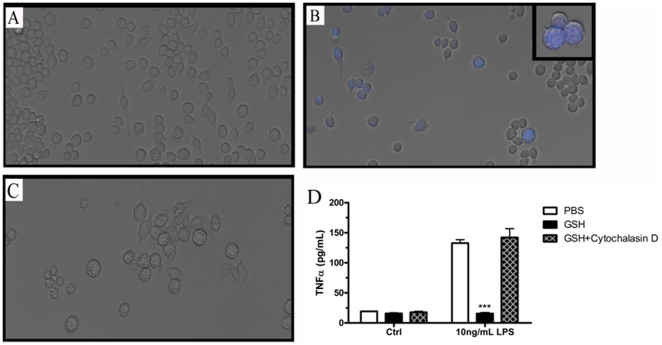
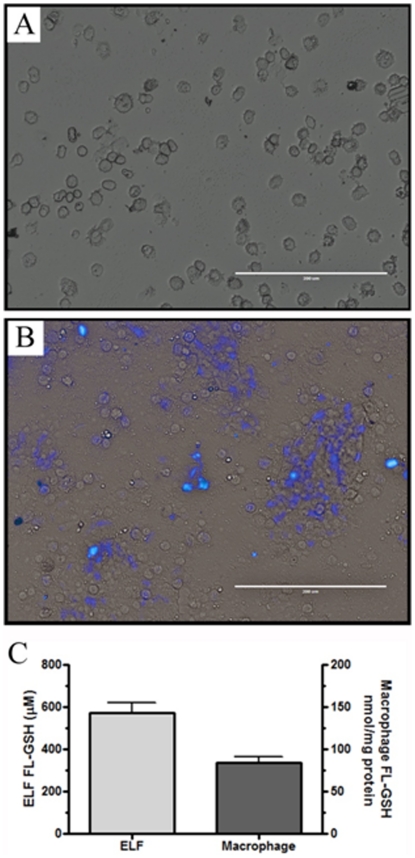
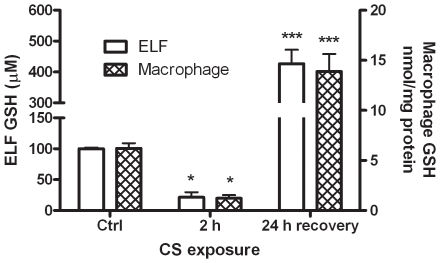
A number of inflammatory lung diseases have abnormally low glutathione (GSH) levels in the airway fluids. Lung macrophages are common mediators of inflammation, make up the majority of cells that are found in the airway epithelial lining fluid (ELF), and are commonly elevated in many lung diseases. Several animal models with altered ELF GSH levels are associated with similar alterations in the intracellular GSH levels of bronchoalveolar lavage (BAL) cells. The possible mechanisms and outcomes for this association between ELF GSH levels and intracellular BAL cell GSH are unknown. To investigate these issues, macrophages were grown in media supplemented with 500 µM GSH. GSH supplementation resulted in a 2-3 fold increase in macrophage intracellular GSH levels. The increase in macrophage intracellular GSH levels was associated with a significant reduction in NF-κB nuclear translocation and tumor necrosis factor α (TNFα) release upon LPS stimulation. Furthermore, co-treatment of macrophages with GSH and inhibitors of GSH breakdown or synthesis did not block GSH accumulation. In contrast, treatment with cytochalasin D, an inhibitor of actin dependent endocytosis, and amiloride, an inhibitor of macropinocytosis blocked, at least in part, GSH uptake. Furthermore, using two cigarette smoke exposure paradigms that result in two different GSH levels in the ELF and thus in the BAL cells resulted in modulation of cytokine release when stimulated with LPS ex vivo. These data suggest that macrophages are able to utilize extracellular GSH which can then modulate inflammatory signaling in response to proinflammatory stimuli. This data also suggests the lung can modulate inflammatory responses triggered by proinflammatory stimuli by altering ELF GSH levels and may help explain the dysregulated inflammation associated with lung diseases that have low ELF GSH levels.
一些炎症性肺病的气道液中谷胱甘肽(GSH)水平异常降低。肺巨噬细胞是炎症的常见介质,构成气道上皮衬里液(ELF)中发现的大多数细胞,并在许多肺部疾病中普遍升高。几种改变 ELF GSH 水平的动物模型与支气管肺泡灌洗液(BAL)细胞中细胞内 GSH 水平的类似改变有关。ELF GSH 水平与细胞内 BAL 细胞 GSH 之间这种关联的可能机制和结果尚不清楚。为了研究这些问题,将巨噬细胞在补充有 500µM GSH 的培养基中培养。GSH 补充导致巨噬细胞细胞内 GSH 水平增加 2-3 倍。巨噬细胞细胞内 GSH 水平的增加与 LPS 刺激时 NF-κB 核易位和肿瘤坏死因子α(TNFα)释放的显著减少有关。此外,GSH 与 GSH 分解或合成抑制剂的共同处理并没有阻止 GSH 积累。相比之下,细胞松弛素 D(一种肌动蛋白依赖性内吞作用抑制剂)和氨氯吡咪(一种巨胞饮抑制剂)的处理至少部分阻断了 GSH 的摄取。此外,使用两种导致 ELF 中 GSH 水平不同的香烟烟雾暴露范式,从而导致 BAL 细胞中 GSH 水平不同,在体外用 LPS 刺激时导致细胞因子释放的调节。这些数据表明,巨噬细胞能够利用细胞外 GSH,然后可以调节对促炎刺激的炎症信号。这些数据还表明,通过改变 ELF GSH 水平,肺部可以调节由促炎刺激引发的炎症反应,并可能有助于解释与 ELF GSH 水平降低的肺部疾病相关的失调炎症。