Institute of Virology and Immunoprophylaxis, Sensemattstrasse 293, CH-3147 Mittelhäusern, Switzerland.
Institute of Virology, Philipps University, Hans-Meerwein-Str. 2, 35043 Marburg, Germany.
Viruses. 2011 Apr;3(4):312-330. doi: 10.3390/v3040312. Epub 2011 Mar 30.
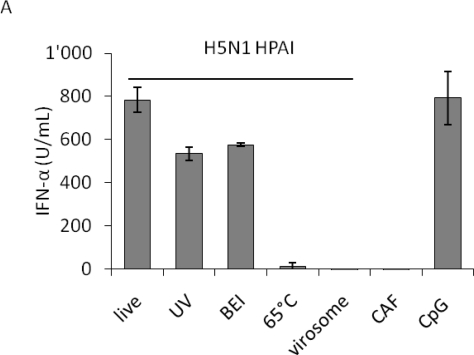
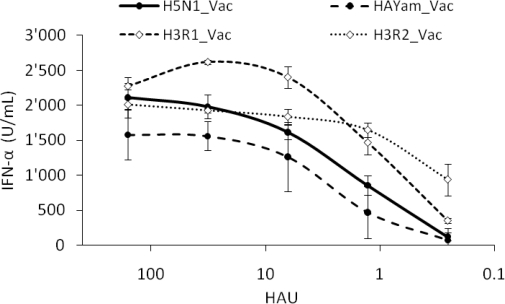
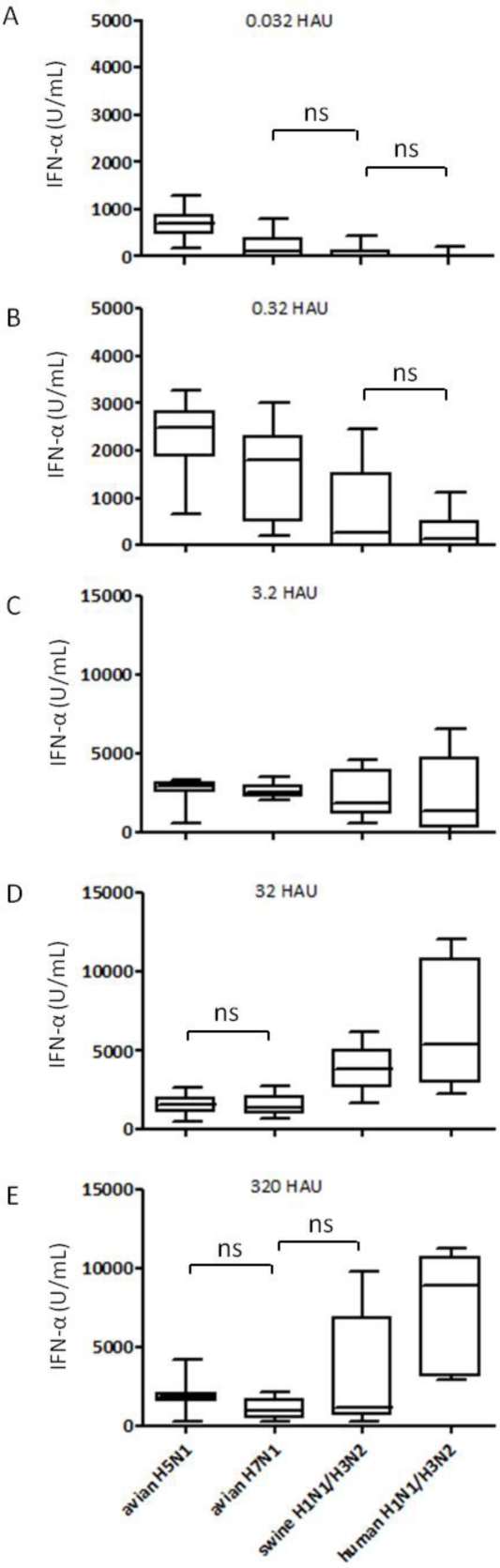
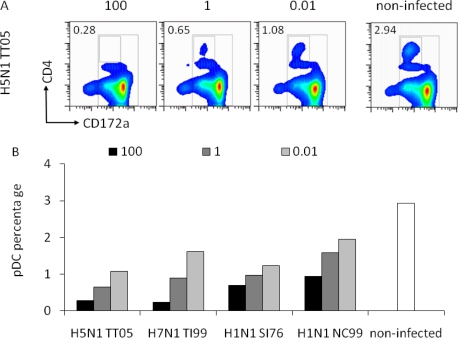
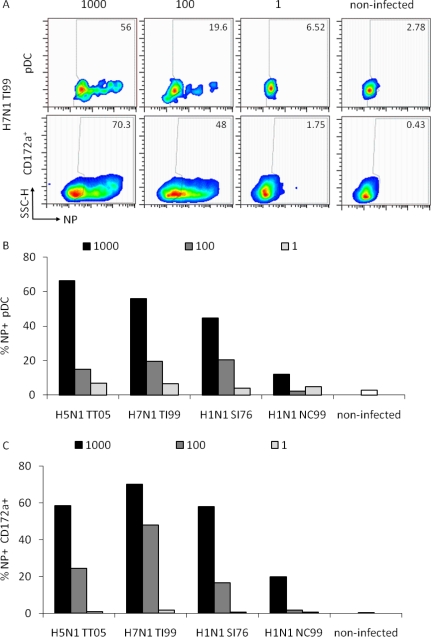
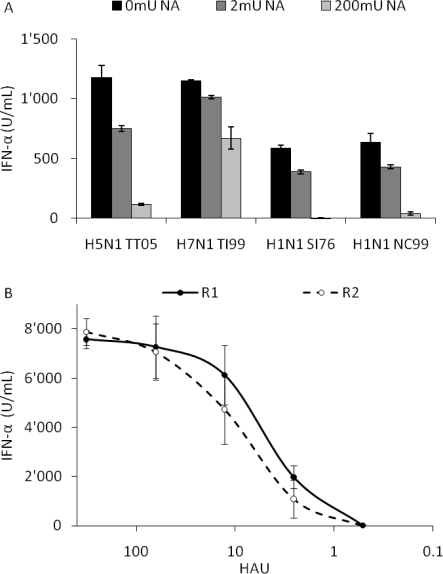
H5N1 influenza A virus (IAV) infections in human remain rare events but have been associated with severe disease and a higher mortality rate compared to infections with seasonal strains. An excessive release of pro-inflammatory cytokine together with a greater virus dissemination potential have been proposed to explain the high virulence observed in human and other mammalian and avian species. Among the cells involved in the cytokine storm, plasmacytoid dendritic cells (pDC) could play an important role considering their unique capacity to secrete massive amounts of type I interferon (IFN). Considering the role of IFN as a major component of antiviral responses as well as in priming inflammatory responses, we aimed to characterize the induction of IFN-α release upon infection with IAV originating from various avian and mammalian species in a comparative way. In our porcine pDC model, we showed that the viral components triggering IFN responses related to the ability to hemagglutinate, although virosomes devoid of viral RNA were non-stimulatory. Heat-treatment at 65 °C but not chemical inactivation destroyed the ability of IAV to stimulate pDC. All IAV tested induced IFN-α but at different levels and showed different dose-dependencies. H5 and H7 subtypes, in particular H5N1, stimulated pDC at lower doses when compared to mammalian IAV. At high viral doses, IFN-α levels reached by some mammalian IAV surpassed those induced by avian isolates. Although sialic acid-dependent entry was demonstrated, the α-2,3 or α-2,6 binding specificity alone did not explain the differences observed. Furthermore, we were unable to identify a clear role of the hemagglutinin, as the IFN-α doses-response profiles did not clearly differ when viruses with all genes of identical avian origin but different HA were compared. This was found with IAV bearing an HA derived from either a low, a high pathogenic H5N1, or a human H3. Stimulation of pDC was associated with pDC depletion within the cultures. Taken together and considering the efficient sensing of H5N1 at low dose, pDC on one side may play a role in the cytokine storm observed during severe disease, on the other hand could participate in early antiviral responses limiting virus replication.
H5N1 流感病毒(IAV)在人类中的感染仍然是罕见事件,但与季节性毒株感染相比,它与严重疾病和更高的死亡率相关。过度释放促炎细胞因子以及更大的病毒传播潜力被认为可以解释在人类和其他哺乳动物和禽类中观察到的高毒力。在参与细胞因子风暴的细胞中,浆细胞样树突状细胞(pDC)可能发挥重要作用,因为它们具有分泌大量 I 型干扰素(IFN)的独特能力。考虑到 IFN 作为抗病毒反应的主要组成部分以及引发炎症反应的作用,我们旨在以比较的方式表征源自各种禽类和哺乳动物物种的 IAV 感染时 IFN-α释放的诱导。在我们的猪 pDC 模型中,我们表明触发与血凝能力相关的 IFN 反应的病毒成分,尽管没有病毒 RNA 的病毒体没有刺激作用。在 65°C 下加热处理但不进行化学失活会破坏 IAV 刺激 pDC 的能力。所有测试的 IAV 都诱导 IFN-α,但水平不同,且表现出不同的剂量依赖性。与哺乳动物 IAV 相比,H5 和 H7 亚型,特别是 H5N1,在较低剂量下刺激 pDC。在高病毒剂量下,一些哺乳动物 IAV 诱导的 IFN-α水平超过了禽类分离株。尽管证明了依赖唾液酸的进入,但单独的α-2,3 或α-2,6 结合特异性并不能解释观察到的差异。此外,我们无法确定血凝素的明确作用,因为当比较具有相同禽类来源但不同 HA 的病毒时,IFN-α剂量反应谱没有明显差异。这在具有源自低致病性、高致病性 H5N1 或人类 H3 的 HA 的 IAV 中得到了证实。pDC 的刺激与培养物中 pDC 的耗竭有关。总的来说,考虑到在低剂量下对 H5N1 的有效感知,pDC 一方面可能在严重疾病期间观察到的细胞因子风暴中发挥作用,另一方面可能参与限制病毒复制的早期抗病毒反应。