Hughes Stuart W, Lőrincz Magor L, Blethyn Kate, Kékesi Katalin A, Juhász Gábor, Turmaine Mark, Parnavelas John G, Crunelli Vincenzo
Neuroscience Division, School of Biosciences, Cardiff University Cardiff, UK.
Front Psychol. 2011 Aug 22;2:193. doi: 10.3389/fpsyg.2011.00193. eCollection 2011.
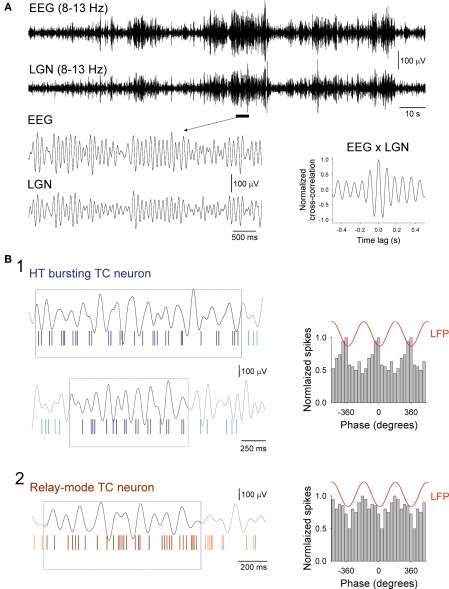
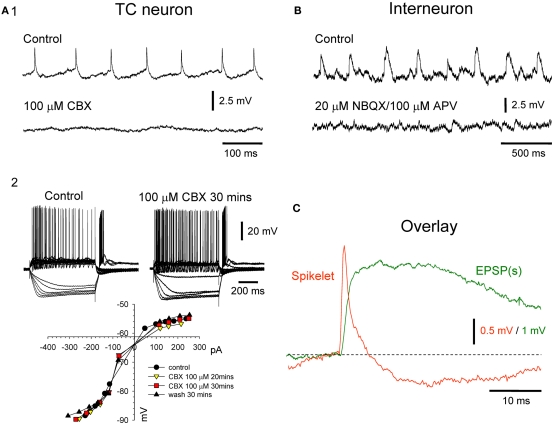
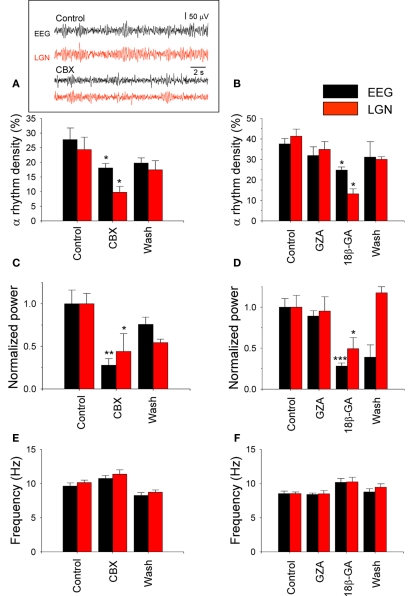
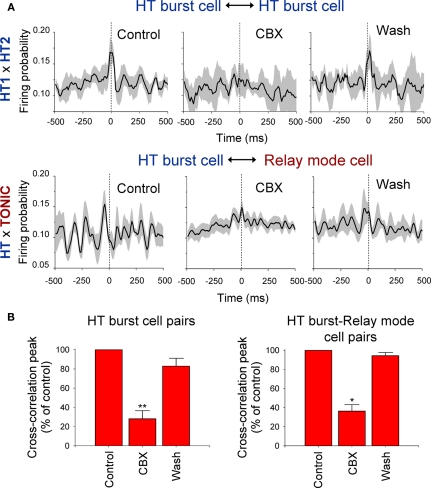
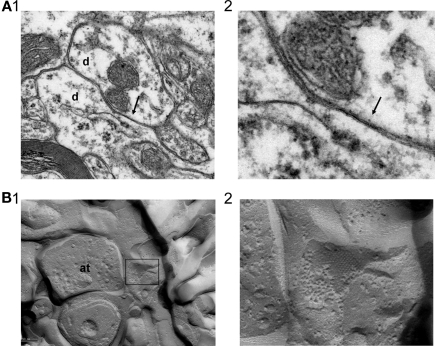
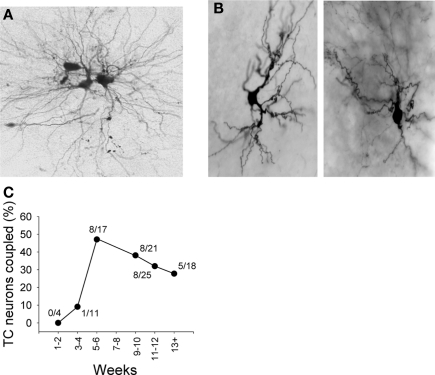
Although EEG alpha (α; 8-13 Hz) rhythms are often considered to reflect an "idling" brain state, numerous studies indicate that they are also related to many aspects of perception. Recently, we outlined a potential cellular substrate by which such aspects of perception might be linked to basic α rhythm mechanisms. This scheme relies on a specialized subset of rhythmically bursting thalamocortical (TC) neurons (high-threshold bursting cells) in the lateral geniculate nucleus (LGN) which are interconnected by gap junctions (GJs). By engaging GABAergic interneurons, that in turn inhibit conventional relay-mode TC neurons, these cells can lead to an effective temporal framing of thalamic relay-mode output. Although the role of GJs is pivotal in this scheme, evidence for their involvement in thalamic α rhythms has thus far mainly derived from experiments in in vitro slice preparations. In addition, direct anatomical evidence of neuronal GJs in the LGN is currently lacking. To address the first of these issues we tested the effects of the GJ inhibitors, carbenoxolone (CBX), and 18β-glycyrrhetinic acid (18β-GA), given directly to the LGN via reverse microdialysis, on spontaneous LGN and EEG α rhythms in behaving cats. We also examined the effect of CBX on α rhythm-related LGN unit activity. Indicative of a role for thalamic GJs in these activities, 18β-GA and CBX reversibly suppressed both LGN and EEG α rhythms, with CBX also decreasing neuronal synchrony. To address the second point, we used electron microscopy to obtain definitive ultrastructural evidence for the presence of GJs between neurons in the cat LGN. As interneurons show no phenotypic evidence of GJ coupling (i.e., dye-coupling and spikelets) we conclude that these GJs must belong to TC neurons. The potential significance of these findings for relating macroscopic changes in α rhythms to basic cellular processes is discussed.
尽管脑电图α(α;8 - 13赫兹)节律通常被认为反映了一种“闲置”的脑状态,但大量研究表明它们也与感知的许多方面有关。最近,我们概述了一种潜在的细胞基质,通过它,感知的这些方面可能与基本的α节律机制相联系。该方案依赖于外侧膝状体核(LGN)中一组特殊的节律性爆发丘脑皮质(TC)神经元(高阈值爆发细胞),它们通过缝隙连接(GJ)相互连接。通过激活γ-氨基丁酸能中间神经元,进而抑制传统中继模式的TC神经元,这些细胞可导致丘脑中继模式输出的有效时间框架。尽管GJ在该方案中起关键作用,但迄今为止,其参与丘脑α节律的证据主要来自体外脑片制备实验。此外,目前缺乏LGN中神经元GJ的直接解剖学证据。为了解决这些问题中的第一个,我们通过反向微透析直接将GJ抑制剂甘珀酸(CBX)和18β-甘草次酸(18β-GA)注入LGN,测试其对行为猫自发LGN和脑电图α节律的影响。我们还研究了CBX对与α节律相关的LGN单位活动的影响。18β-GA和CBX可逆性地抑制了LGN和脑电图α节律,表明丘脑GJ在这些活动中起作用,CBX还降低了神经元同步性。为了解决第二个问题,我们使用电子显微镜获得了猫LGN中神经元之间存在GJ的明确超微结构证据。由于中间神经元没有GJ耦合的表型证据(即染料耦合和棘波),我们得出结论,这些GJ一定属于TC神经元。我们讨论了这些发现对于将α节律的宏观变化与基本细胞过程联系起来的潜在意义。