Max Planck Institute of Molecular Cell Biology and Genetics, Pfotenhauerstr. 108, Dresden 01307, Germany.
Nat Commun. 2011 Oct 18;2:503. doi: 10.1038/ncomms1511.
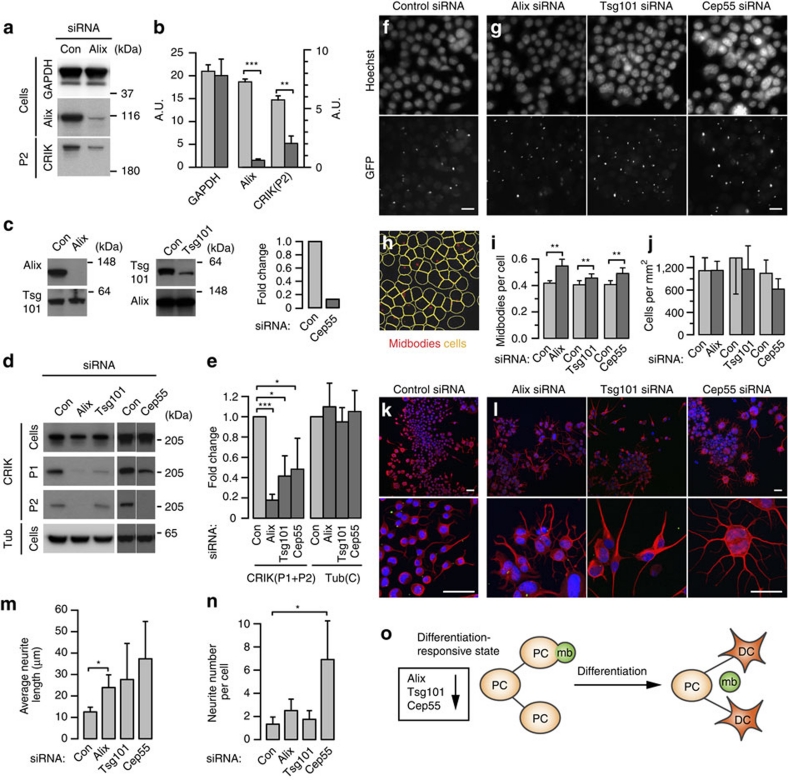
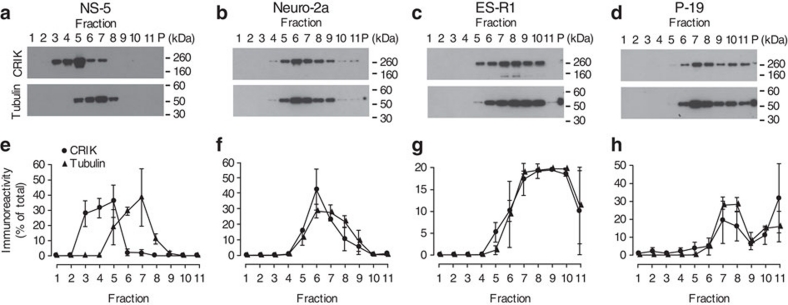
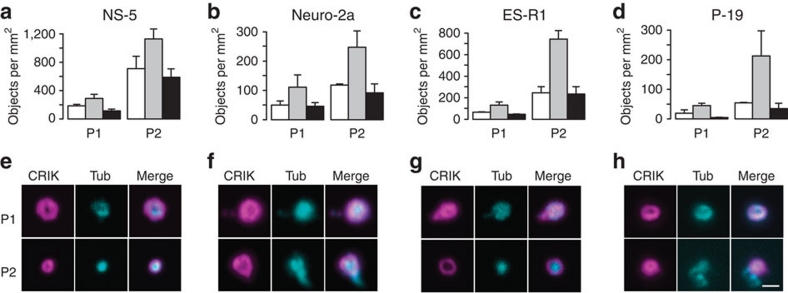
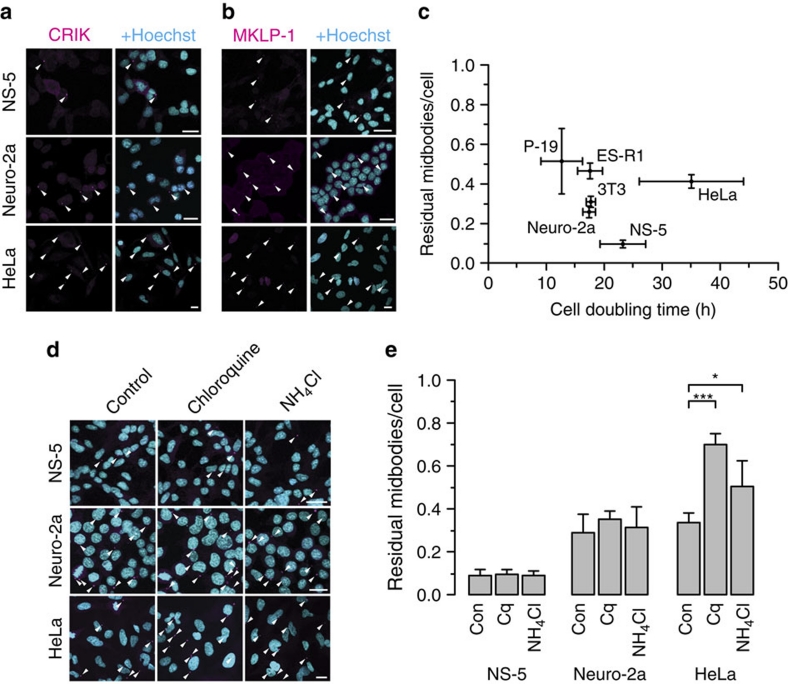
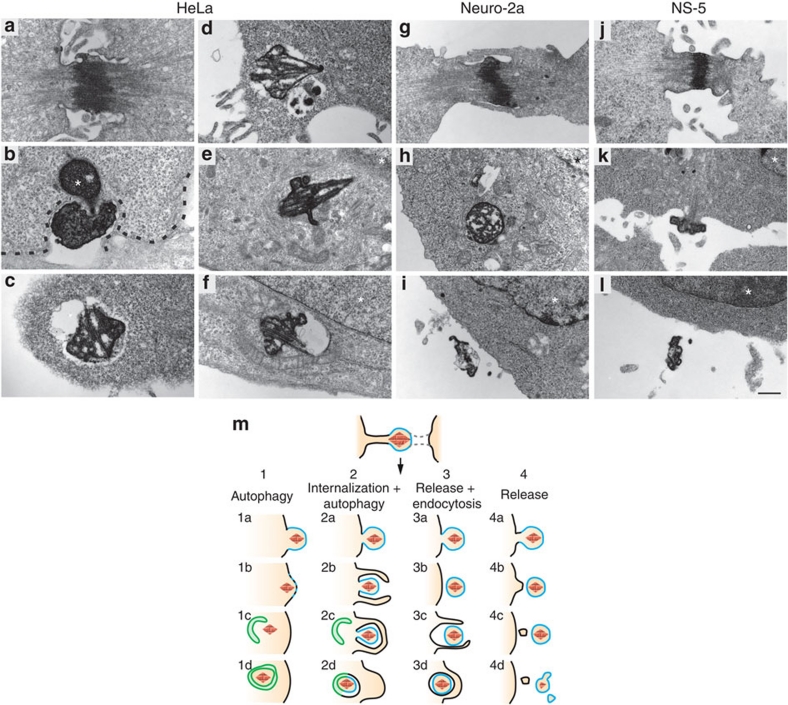
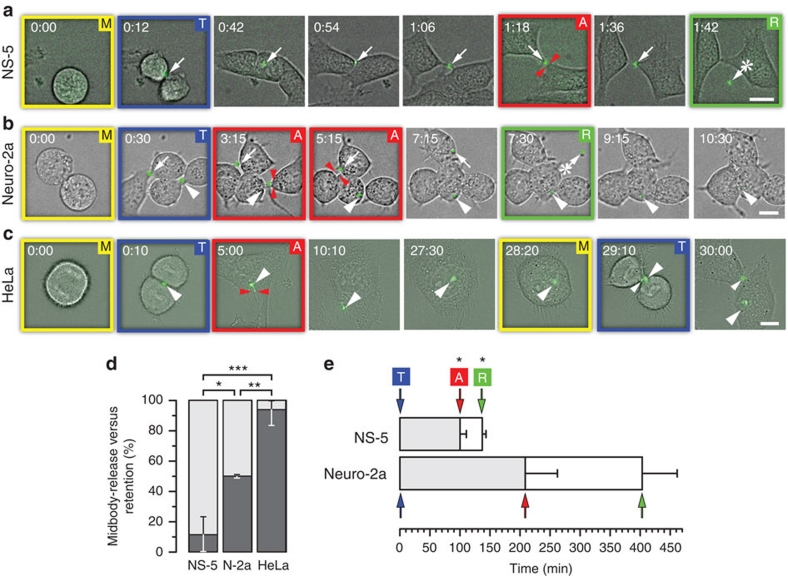
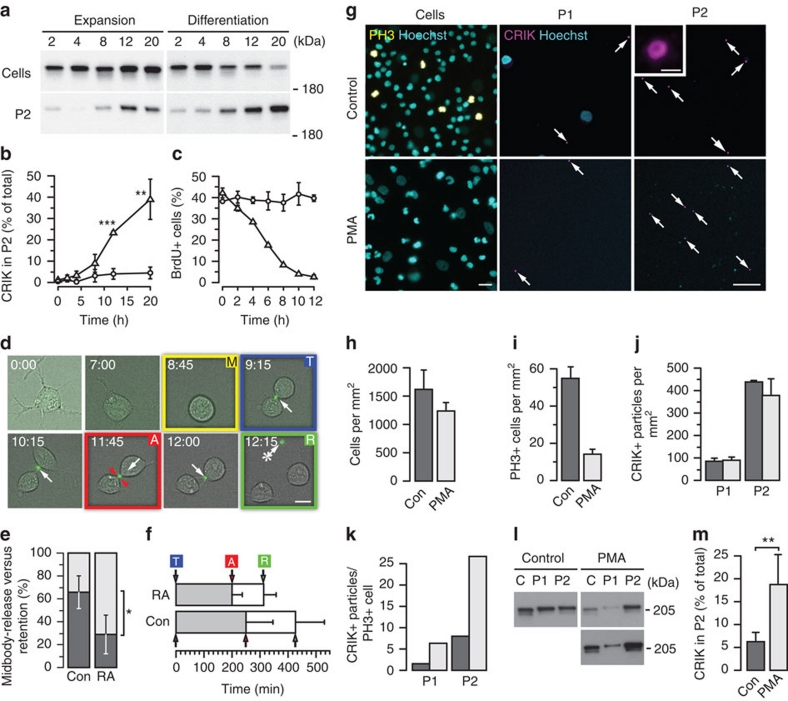
The central portion of the midbody, a cytoplasmic bridge between nascent daughter cells at the end of cell division, has generally been thought to be retained by one of the daughter cells, but has, recently, also been shown to be released into the extracellular space. The significance of midbody-retention versus -release is unknown. Here we show, by quantitatively analysing midbody-fate in various cell lines under different growth conditions, that the extent of midbody-release is significantly greater in stem cells than cancer-derived cells. Induction of cell differentiation is accompanied by an increase in midbody-release. Knockdown of the endosomal sorting complex required for transport family members, Alix and tumour-suppressor gene 101, or of their interaction partner, centrosomal protein 55, impairs midbody-release, suggesting mechanistic similarities to abscission. Cells with such impaired midbody-release exhibit enhanced responsiveness to a differentiation stimulus. Taken together, midbody-release emerges as a characteristic feature of cells capable of differentiation.
细胞分裂末期,在两个新生子细胞之间有一个位于细胞中部的桥状结构,即中体,它通常被认为会被其中一个子细胞保留,但最近也有研究表明中体可以被释放到细胞外空间。中体保留或释放的意义尚不清楚。在这里,我们通过定量分析不同生长条件下各种细胞系中的中体命运,发现中体释放的程度在干细胞中明显大于癌细胞。细胞分化的诱导伴随着中体释放的增加。内体分选复合物必需的运输家族成员 Alix 和抑癌基因 101,或它们的相互作用伙伴中心体蛋白 55 的敲低,会损害中体释放,这表明其机制类似于胞质分裂。中体释放受损的细胞对分化刺激表现出增强的反应性。综上所述,中体释放成为具有分化能力的细胞的一个特征。