Department of Psychology, Stony Brook University, Stony Brook, NY 11794-2500, USA.
Biol Psychol. 2012 Jan;89(1):156-62. doi: 10.1016/j.biopsycho.2011.10.004. Epub 2011 Oct 18.
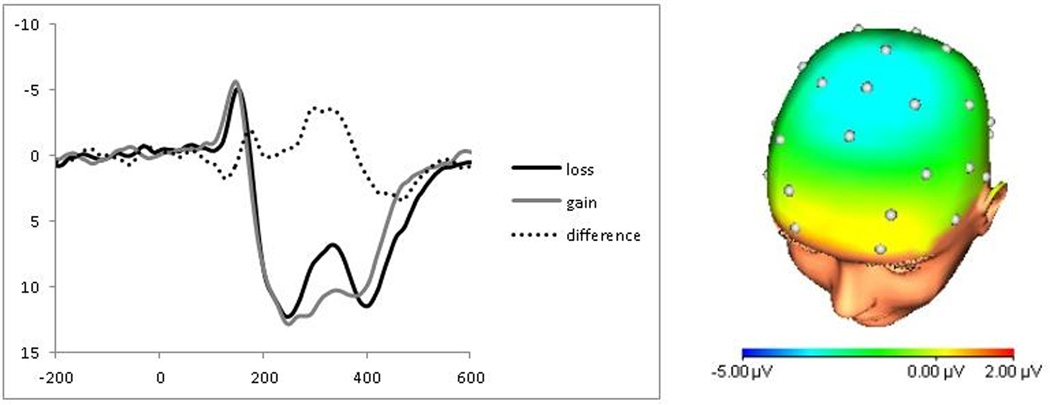
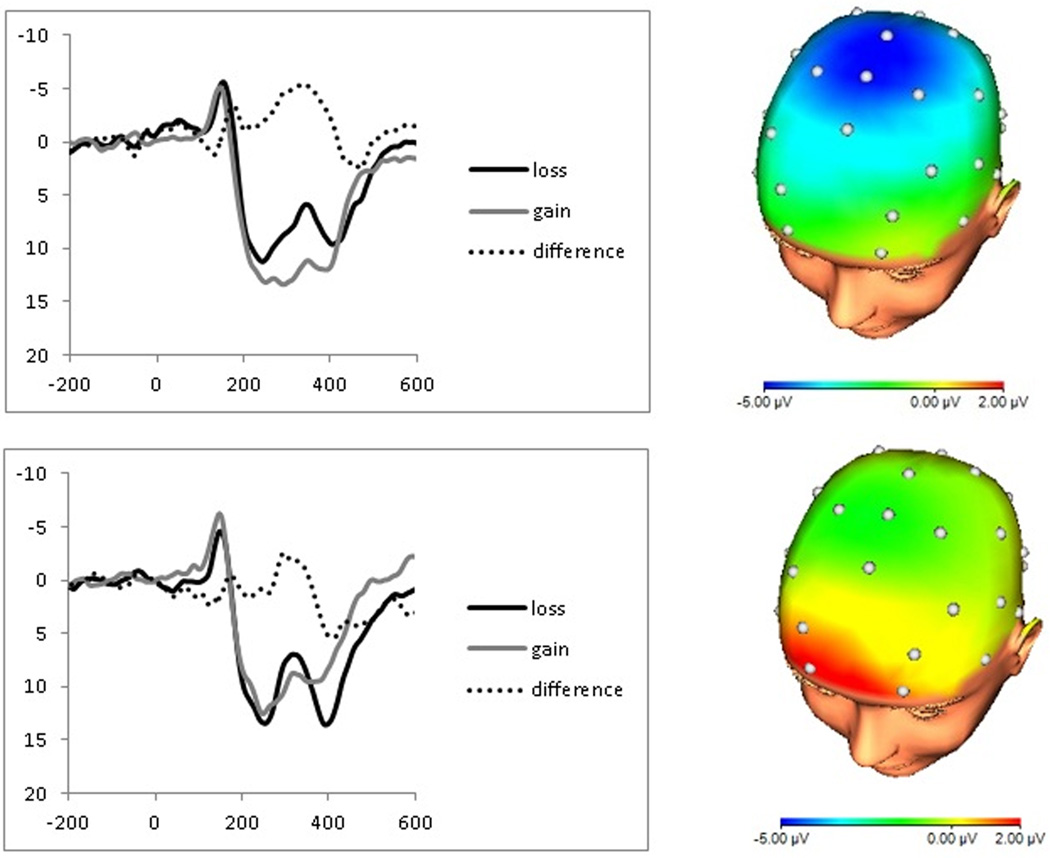
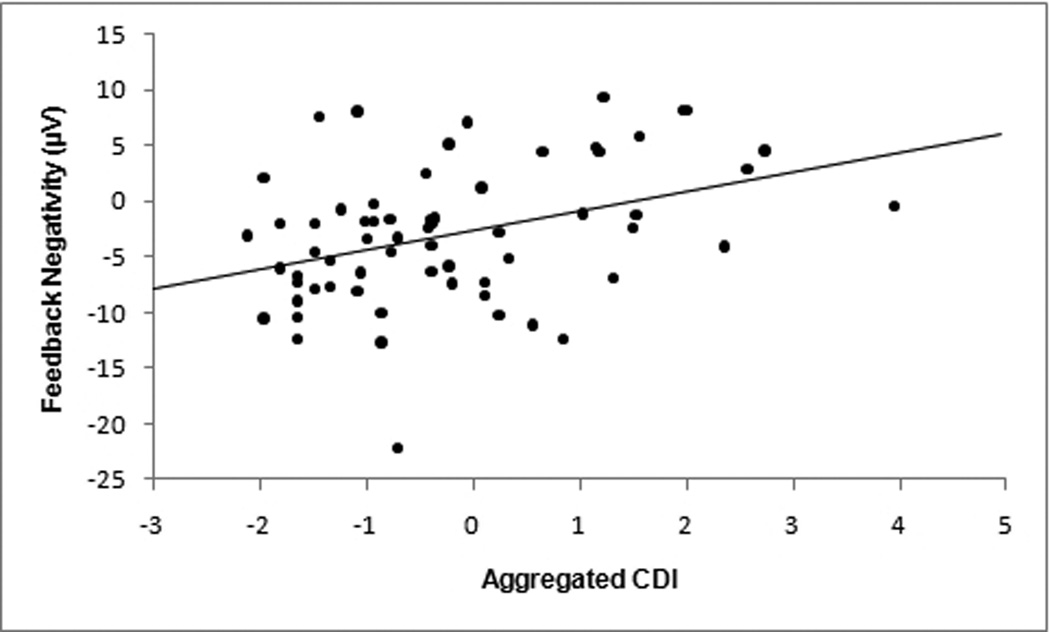
Depression is a major public health concern, and the period from late childhood through early adolescence is a critical time in the development of depressive symptoms. In adults, depression and depressive symptoms are associated with a reduction in the feedback negativity (FN), an ERP component elicited by feedback indicating rewards versus losses. The current study sought to extend these findings to a sample of 64 children aged 8-13, and to examine developmental differences in the FN. Consistent with previous work in adults, higher depressive symptom scores were associated with a blunted FN across the sample. When responses to losses and gains were examined separately, only reduction in the response to monetary gain was associated with increased depressive symptoms. In the current study, the vast majority of children were pre-pubertal, and the FN was unrelated to both age and pubertal development. The FN may be an ideal biomarker for studying changes in reward sensitivity and depression that emerge as children transition through puberty.
抑郁是一个主要的公共卫生关注点,从儿童晚期到青少年早期是发展抑郁症状的关键时期。在成年人中,抑郁和抑郁症状与反馈负性(FN)减少有关,FN 是一种由反馈表示奖励与损失引起的 ERP 成分。本研究旨在将这些发现扩展到 64 名 8-13 岁的儿童样本,并研究 FN 的发展差异。与之前在成年人中的研究一致,较高的抑郁症状评分与整个样本中 FN 的迟钝有关。当分别检查对损失和收益的反应时,只有对货币收益的反应减少与抑郁症状的增加有关。在本研究中,绝大多数儿童处于青春期前,FN 与年龄和青春期发育均无关。FN 可能是研究儿童在青春期过渡期间出现的奖励敏感性和抑郁变化的理想生物标志物。