Clinic of Operative Dentistry, Periodontology and Preventive Dentistry, Saarland University Hospital, Homburg/Saar, Germany.
PLoS One. 2011;6(10):e25893. doi: 10.1371/journal.pone.0025893. Epub 2011 Oct 10.
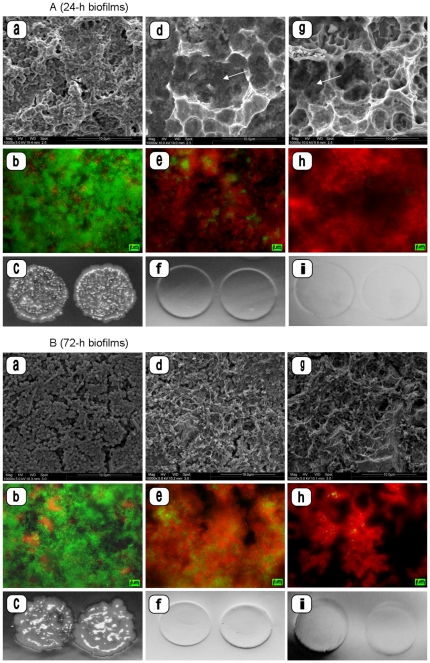
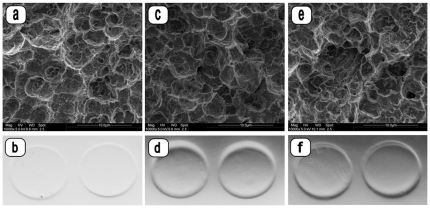
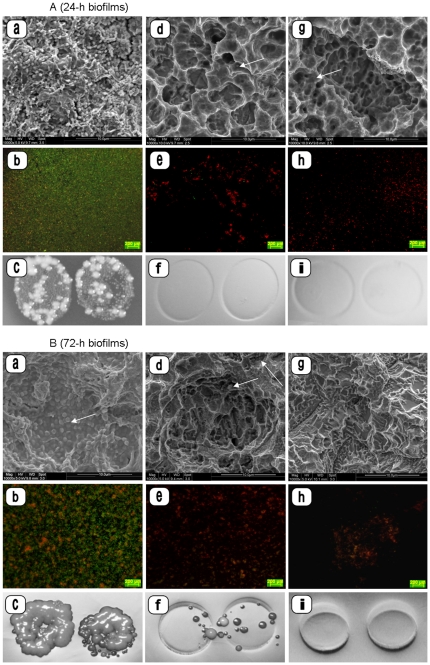
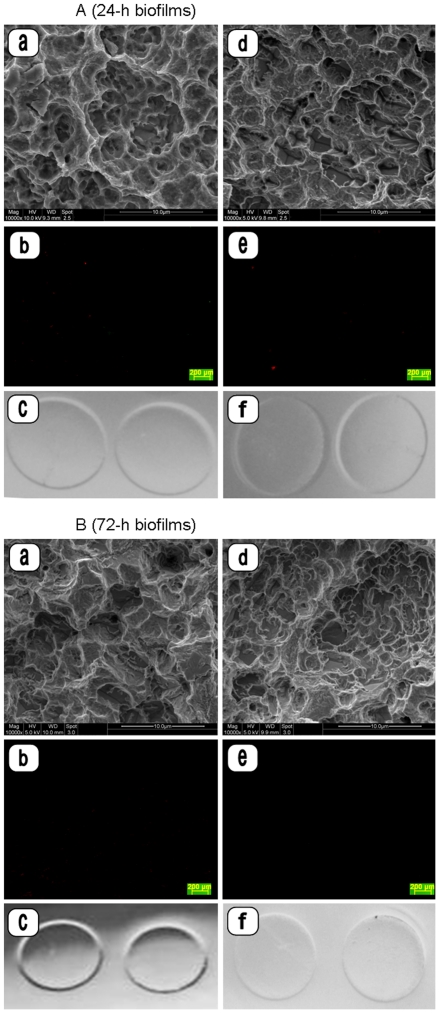
The removal of biofilms from microstructured titanium used for dental implants is a still unresolved challenge. This experimental study investigated disinfection and removal of in situ formed biofilms from microstructured titanium using cold atmospheric plasma in combination with air/water spray. Titanium discs (roughness (Ra): 1.96 µm) were exposed to human oral cavities for 24 and 72 hours (n = 149 each) to produce biofilms. Biofilm thickness was determined using confocal laser scanning microscopy (n = 5 each). Plasma treatment of biofilms was carried out ex vivo using a microwave-driven pulsed plasma source working at temperatures from 39 to 43°C. Following plasma treatment, one group was air/water spray treated before re-treatment by second plasma pulses. Vital microorganisms on the titanium surfaces were identified by contact culture (Rodac agar plates). Biofilm presence and bacterial viability were quantified by fluorescence microscopy. Morphology of titanium surfaces and attached biofilms was visualized by scanning electron microscopy (SEM). Total protein amounts of biofilms were colorimetrically quantified. Untreated and air/water treated biofilms served as controls. Cold plasma treatment of native biofilms with a mean thickness of 19 µm (24 h) to 91 µm (72 h) covering the microstructure of the titanium surface caused inactivation of biofilm bacteria and significant reduction of protein amounts. Total removal of biofilms, however, required additional application of air/water spray, and a second series of plasma treatment. Importantly, the microstructure of the titanium discs was not altered by plasma treatment. The combination of atmospheric plasma and non-abrasive air/water spray is applicable for complete elimination of oral biofilms from microstructured titanium used for dental implants and may enable new routes for the therapy of periimplant disease.
从用于牙种植体的微结构化钛中去除生物膜仍然是一个未解决的挑战。本实验研究了使用冷等离子体结合空气/水喷雾对原位形成的微结构化钛生物膜进行消毒和去除。将钛盘(粗糙度(Ra):1.96 µm)暴露于人体口腔中 24 和 72 小时(n = 149 个)以产生生物膜。使用共聚焦激光扫描显微镜(n = 5 个)确定生物膜厚度。使用微波驱动的脉冲等离子体源在 39 至 43°C 的温度下对生物膜进行离体等离子体处理。等离子体处理后,一组在进行第二次等离子体脉冲再处理之前用空气/水喷雾处理。通过接触培养(Rodac 琼脂平板)鉴定钛表面上的存活微生物。通过荧光显微镜定量生物膜的存在和细菌活力。通过扫描电子显微镜(SEM)观察钛表面和附着生物膜的形态。通过比色法定量生物膜的总蛋白含量。未处理和空气/水处理的生物膜作为对照。对覆盖钛表面微观结构的天然生物膜(24 h 时厚度为 19 µm,72 h 时为 91 µm)进行冷等离子体处理,导致生物膜细菌失活和蛋白含量显著降低。然而,需要额外应用空气/水喷雾和第二系列等离子体处理才能完全去除生物膜。重要的是,等离子体处理不会改变钛盘的微观结构。大气等离子体和非研磨性空气/水喷雾的组合适用于从用于牙种植体的微结构化钛中完全去除口腔生物膜,并可能为治疗种植体周围疾病开辟新途径。