Ohl Kim, Tenbrock Klaus
Division of Pediatric Immunology, Department of Pediatrics, RWTH Aachen University, Pauwelsstraße 30, 52074 Aachen, Germany.
J Biomed Biotechnol. 2011;2011:432595. doi: 10.1155/2011/432595. Epub 2011 Oct 16.
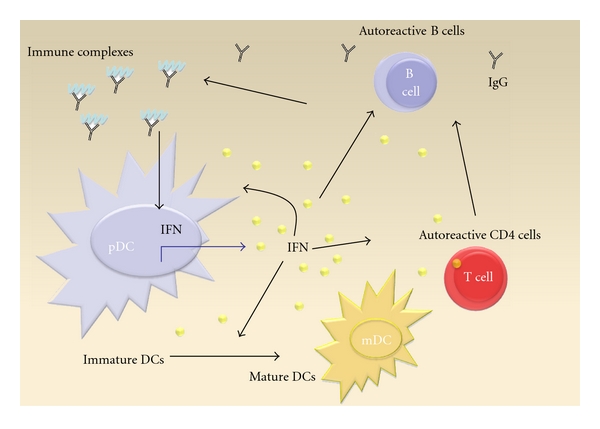
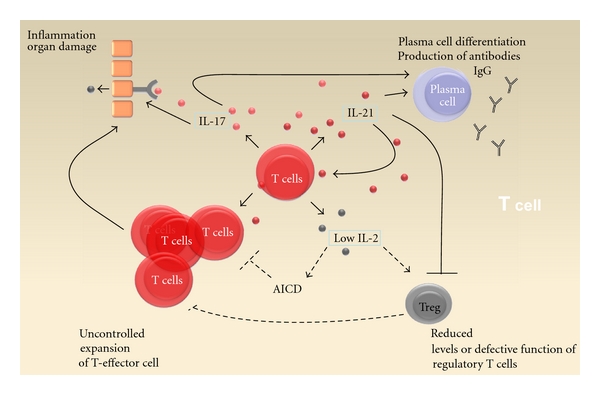
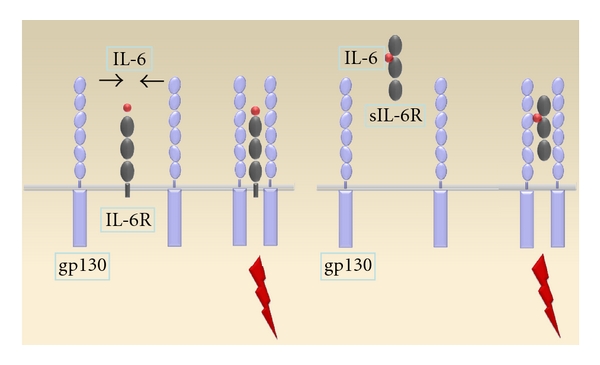
Systemic lupus erythematosus (SLE) is an autoimmune disease of unknown origin affecting virtually all organ systems. Beyond genetic and environmental factors, cytokine imbalances contribute to immune dysfunction, trigger inflammation, and induce organ damage. The key cytokine that is involved in SLE pathogenesis is interferon alpha. Interferon secretion is induced by immune complexes and leads to upregulation of several inflammatory proteins, which account for the so-called IFN signature that can be found in the majority of SLE PBMCs. Additionally IL-6 and IFN-y as well as T-cell-derived cytokines like IL-17, IL-21, and IL-2 are dysregulated in SLE. The latter induce a T-cell phenotype that is characterized by enhanced B-cell help and enhanced secretion of proinflammatory cytokines but reduced induction of suppressive T cells and activation-induced cell death. This paper will focus on these cytokines and highlights pathophysiological approaches and therapeutic potential.
系统性红斑狼疮(SLE)是一种病因不明的自身免疫性疾病,几乎会影响所有器官系统。除了遗传和环境因素外,细胞因子失衡会导致免疫功能障碍、引发炎症并导致器官损伤。参与SLE发病机制的关键细胞因子是α干扰素。免疫复合物可诱导干扰素分泌,并导致多种炎症蛋白上调,这些炎症蛋白构成了大多数SLE外周血单个核细胞中所谓的IFN特征。此外,IL-6、IFN-γ以及T细胞衍生的细胞因子如IL-17、IL-21和IL-2在SLE中也失调。后者诱导一种T细胞表型,其特征是增强B细胞辅助和促炎细胞因子的分泌,但抑制性T细胞的诱导减少和活化诱导的细胞死亡减少。本文将聚焦于这些细胞因子,并强调病理生理学方法和治疗潜力。