Department of Biology, Dowling College, Oakdale, New York, United States of America.
PLoS One. 2011;6(10):e26263. doi: 10.1371/journal.pone.0026263. Epub 2011 Oct 20.
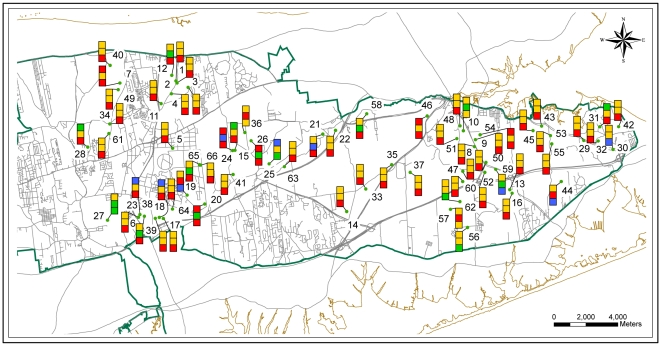
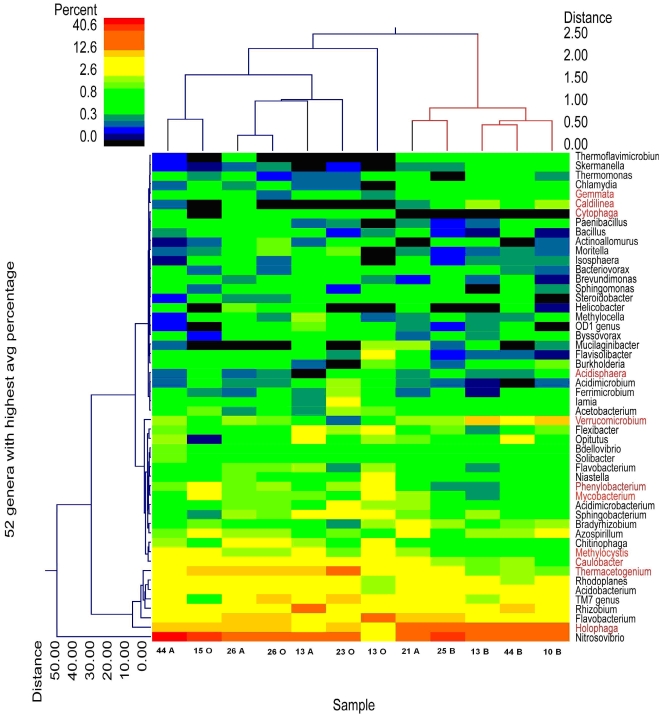
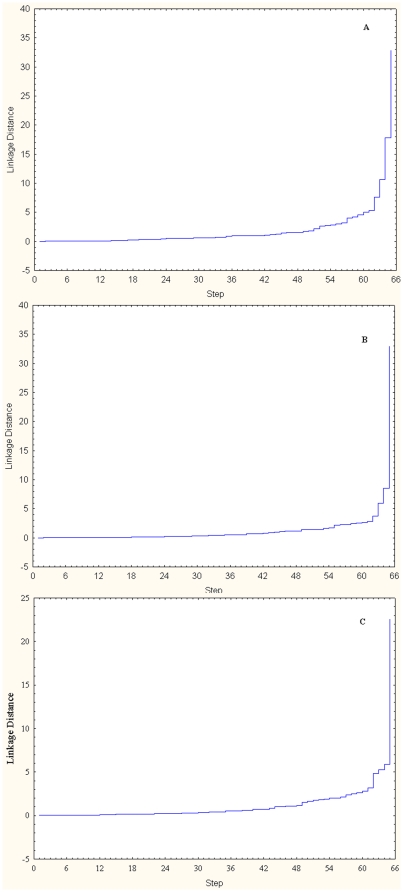
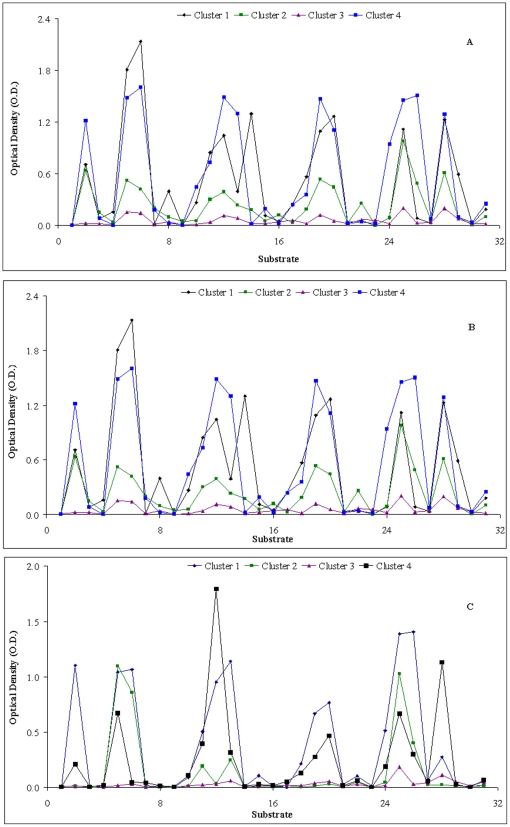
Of the few preserved areas in the northeast of United States, the soil in the Pine Barrens Forests presents a harsh environment for the microorganisms to grow and survive. In the current study we report the use of clustering methods to scientifically select the sampling locations that would represent the entire forest and also report the microbial diversity present in various horizons of the soil. Sixty six sampling locations were selected across the forest and soils were collected from three horizons (sampling depths). The three horizons were 0-10 cm (Horizon O); 11-25 cm (Horizon A) and 26-40 cm (Horizon B). Based on the total microbial substrate utilization pattern and K-means clustering analysis, the soil in the Pine Barrens Forest can be classified into four distinct clusters at each of the three horizons. One soil sample from each of the four clusters were selected and archaeal and bacterial populations within the soil studied using pyrosequencing method. The results show the microbial communities present in each of these clusters are different. Within the microbial communities present, microorganisms involved in nitrogen cycle occupy a major fraction of microbial community in the soil. High level of diversity was observed for nitrogen fixing bacteria. In contrast, Nitrosovibrio and Nitrosocaldus spp are the single bacterial and archaeal population respectively carrying out ammonia oxidation in the soil.
在美国东北部为数不多的保护区中,松树林土壤的环境条件十分恶劣,不利于微生物生长和存活。在本研究中,我们报告了使用聚类方法来科学地选择采样地点,这些采样地点能够代表整个森林,并报告土壤中存在的微生物多样性。在整个森林中选择了 66 个采样地点,并从三个层次(采样深度)采集了土壤。这三个层次分别是 0-10cm(O 层)、11-25cm(A 层)和 26-40cm(B 层)。基于总微生物底物利用模式和 K-均值聚类分析,在三个层次的每一个层次上,松林土壤可以分为四个不同的聚类。从这四个聚类中的每一个聚类中选择一个土壤样本,并使用焦磷酸测序法研究土壤中的古菌和细菌种群。结果表明,这些聚类中存在的微生物群落是不同的。在这些群落中存在的微生物中,参与氮循环的微生物占据了土壤微生物群落的主要部分。固氮细菌的多样性水平很高。相比之下,硝化螺菌和硝化球菌分别是土壤中进行氨氧化的单一细菌和古菌种群。