Department of Pharmacology and Systems Therapeutics, Mount Sinai School of Medicine, New York, New York, United States of America.
PLoS One. 2011;6(10):e25535. doi: 10.1371/journal.pone.0025535. Epub 2011 Oct 17.
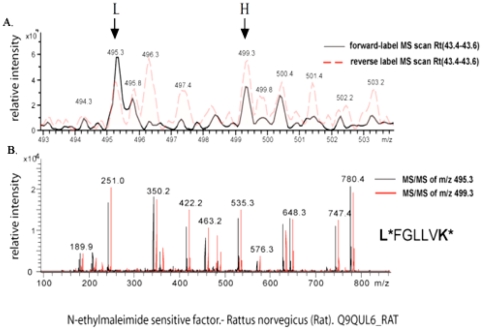
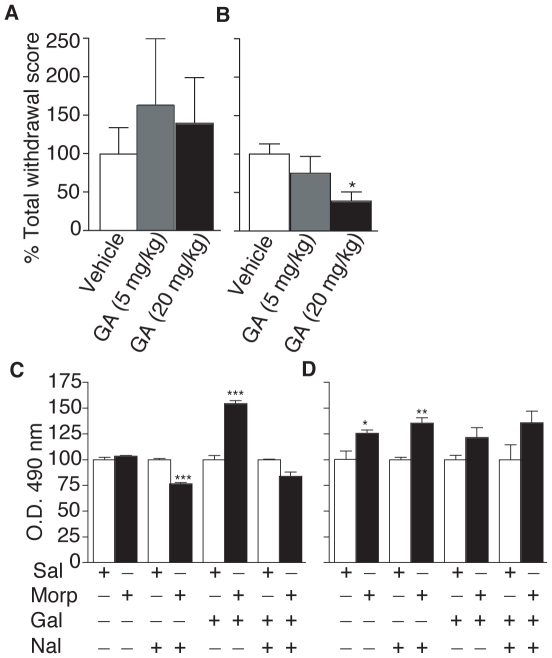
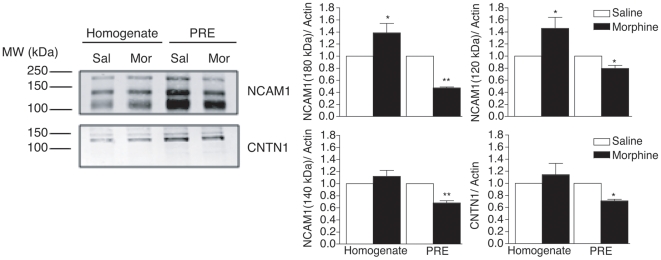
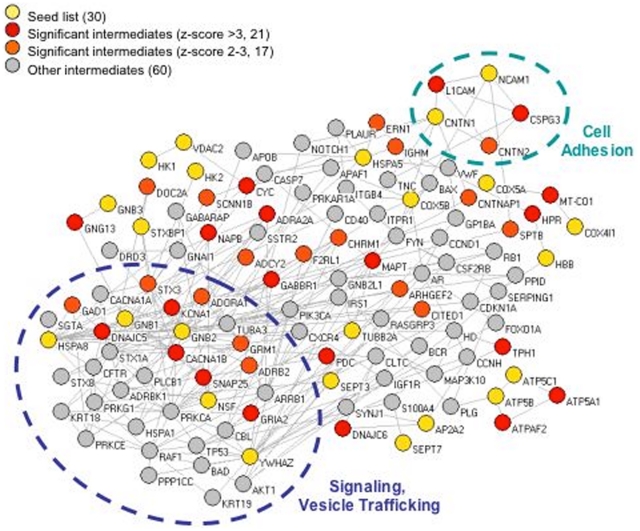
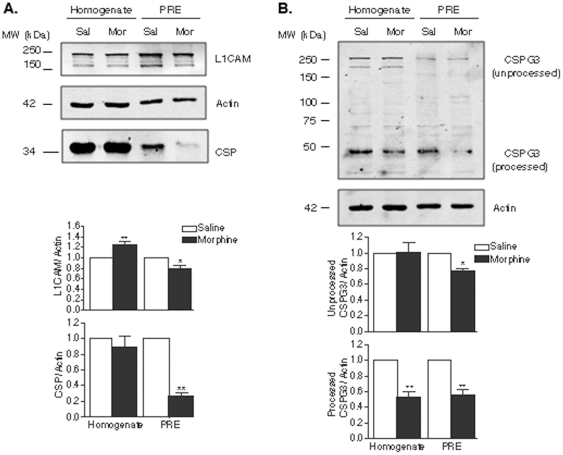
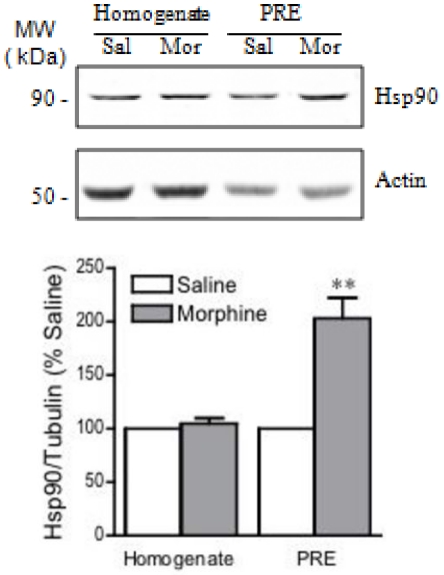
Opiates produce significant and persistent changes in synaptic transmission; knowledge of the proteins involved in these changes may help to understand the molecular mechanisms underlying opiate dependence. Using an integrated quantitative proteomics and systems biology approach, we explored changes in the presynaptic protein profile following a paradigm of chronic morphine administration that leads to the development of dependence. For this, we isolated presynaptic fractions from the striata of rats treated with saline or escalating doses of morphine, and analyzed the proteins in these fractions using differential isotopic labeling. We identified 30 proteins that were significantly altered by morphine and integrated them into a protein-protein interaction (PPI) network representing potential morphine-regulated protein complexes. Graph theory-based analysis of this network revealed clusters of densely connected and functionally related morphine-regulated clusters of proteins. One of the clusters contained molecular chaperones thought to be involved in regulation of neurotransmission. Within this cluster, cysteine-string protein (CSP) and the heat shock protein Hsc70 were downregulated by morphine. Interestingly, Hsp90, a heat shock protein that normally interacts with CSP and Hsc70, was upregulated by morphine. Moreover, treatment with the selective Hsp90 inhibitor, geldanamycin, decreased the somatic signs of naloxone-precipitated morphine withdrawal, suggesting that Hsp90 upregulation at the presynapse plays a role in the expression of morphine dependence. Thus, integration of proteomics, network analysis, and behavioral studies has provided a greater understanding of morphine-induced alterations in synaptic composition, and identified a potential novel therapeutic target for opiate dependence.
阿片类药物会导致突触传递发生显著且持久的变化;了解参与这些变化的蛋白质可能有助于理解阿片类药物依赖的分子机制。我们采用整合的定量蛋白质组学和系统生物学方法,研究了慢性吗啡给药范式导致依赖形成后突触前蛋白质谱的变化。为此,我们从接受生理盐水或递增剂量吗啡处理的大鼠纹状体中分离出突触前部分,并使用差异同位素标记法分析这些部分中的蛋白质。我们鉴定出 30 种受吗啡显著改变的蛋白质,并将它们整合到代表潜在吗啡调节蛋白复合物的蛋白质-蛋白质相互作用(PPI)网络中。对该网络进行基于图论的分析揭示了密集连接和功能相关的吗啡调节蛋白簇的簇。其中一个簇包含被认为参与神经递质调节的分子伴侣。在这个簇中,半胱氨酸-string 蛋白(CSP)和热休克蛋白 Hsc70 被吗啡下调。有趣的是,Hsp90,一种通常与 CSP 和 Hsc70 相互作用的热休克蛋白,被吗啡上调。此外,用选择性 Hsp90 抑制剂格尔德霉素处理可减少纳洛酮引发的吗啡戒断的躯体症状,表明突触前 Hsp90 的上调在阿片类药物依赖的表达中起作用。因此,蛋白质组学、网络分析和行为研究的整合提供了对吗啡诱导的突触组成变化的更深入理解,并确定了阿片类药物依赖的潜在新治疗靶点。