Department of Physiology and Neurobiology and Zlotowski Center for Neuroscience, Ben Gurion University, Be'er-Sheva, Israel.
PLoS Comput Biol. 2011 Oct;7(10):e1002248. doi: 10.1371/journal.pcbi.1002248. Epub 2011 Oct 27.
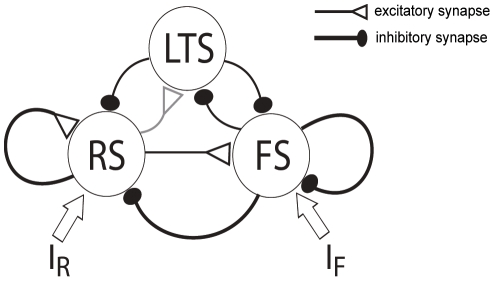
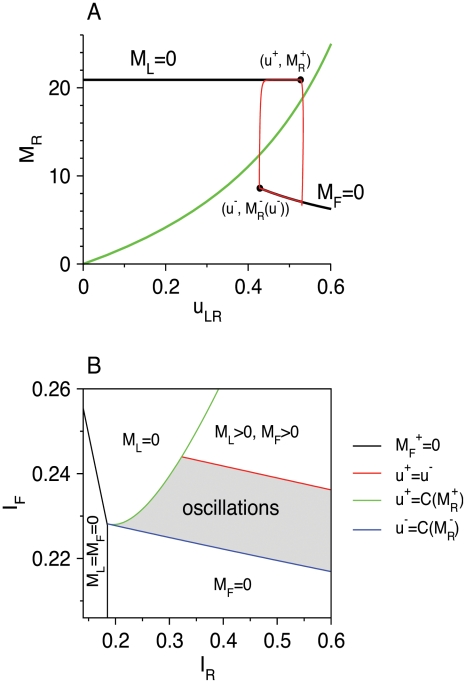
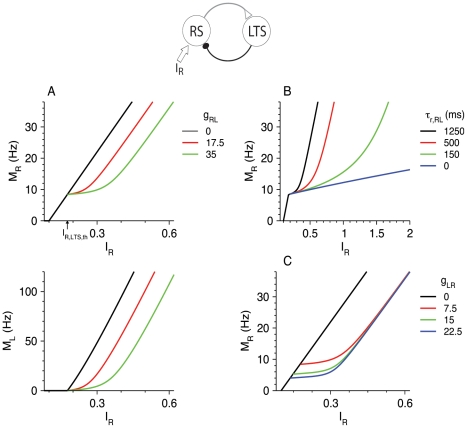
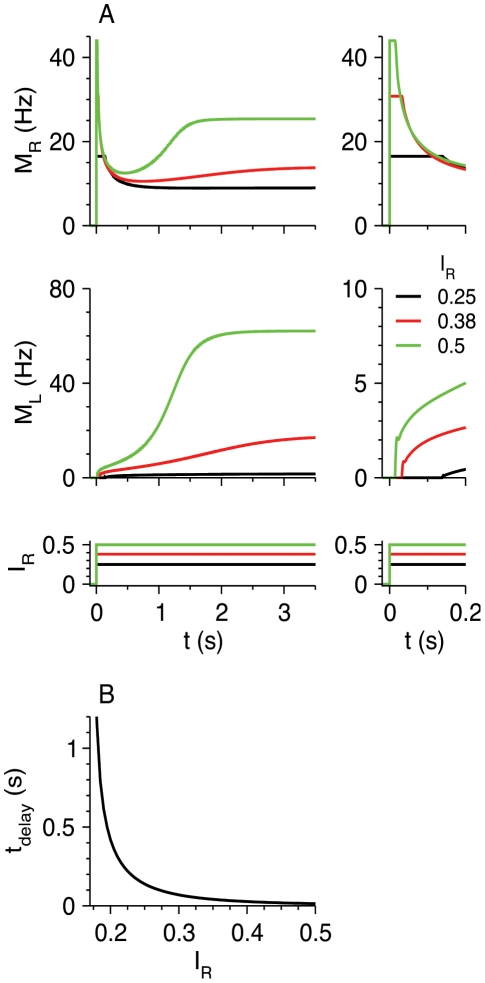
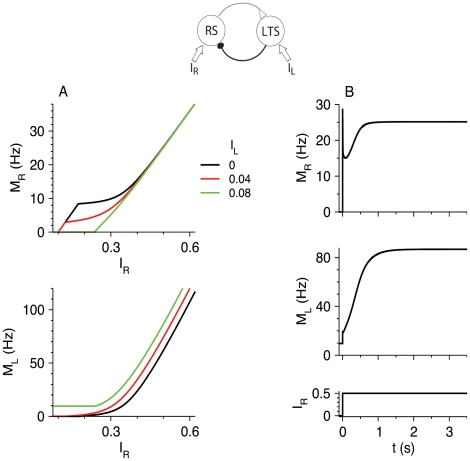
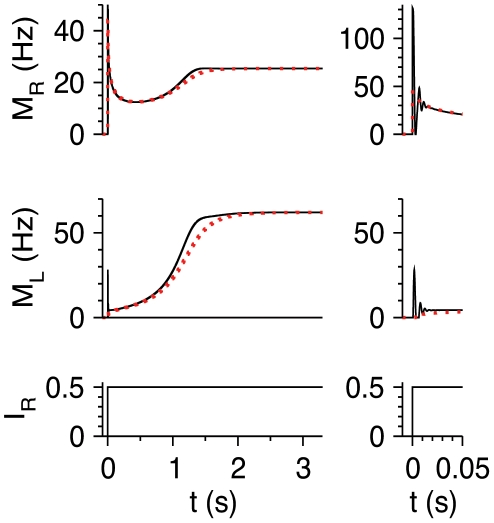
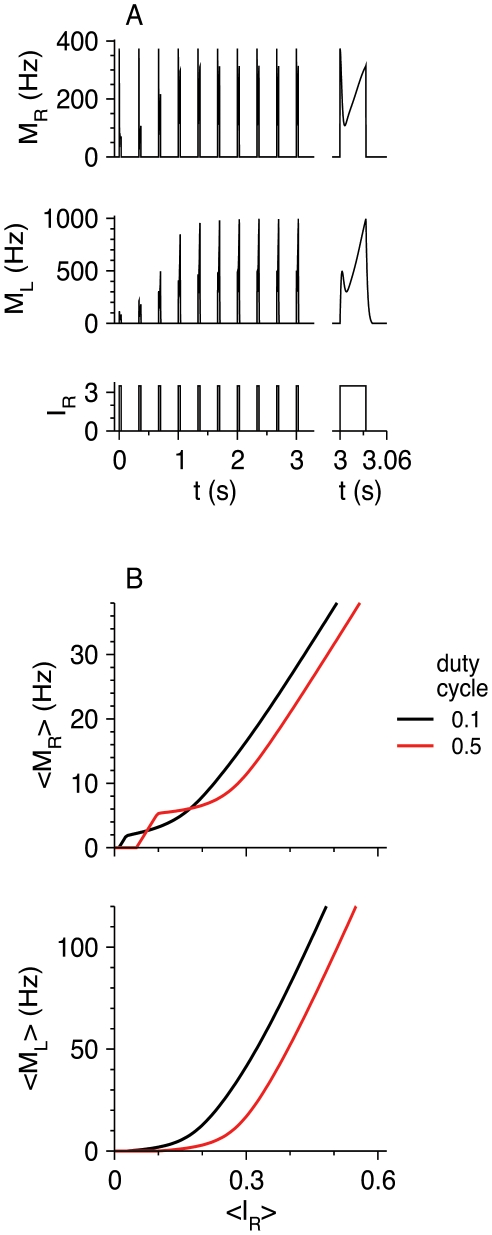
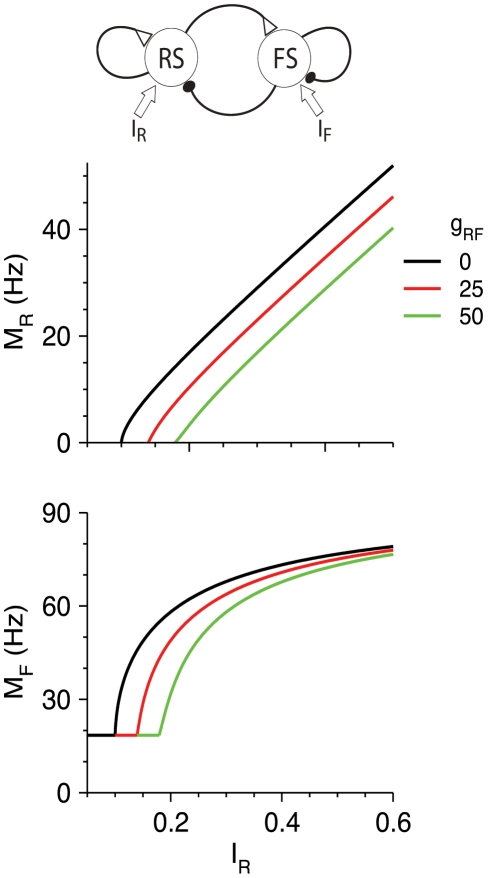
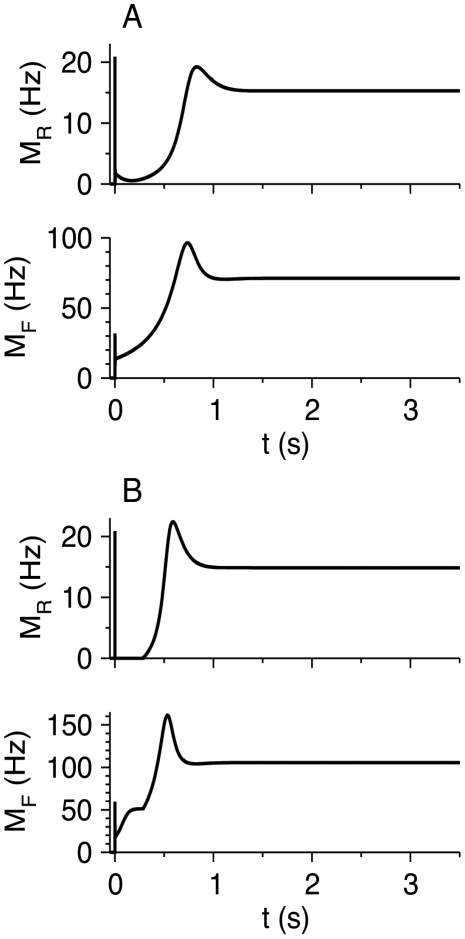
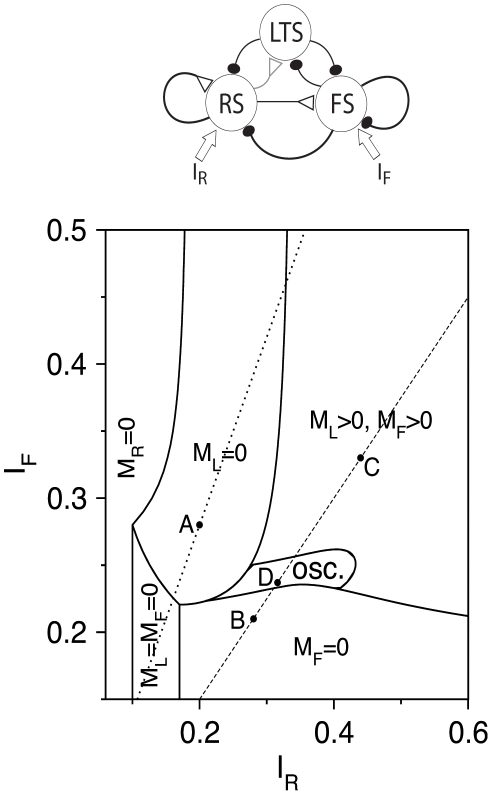
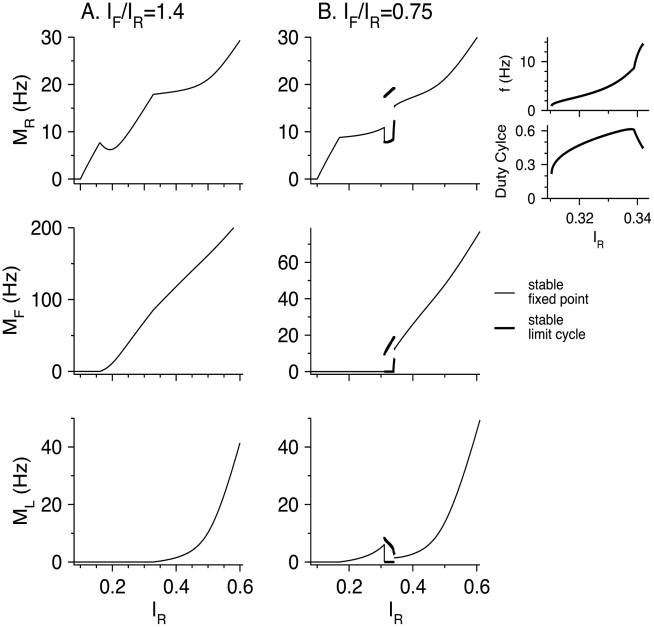
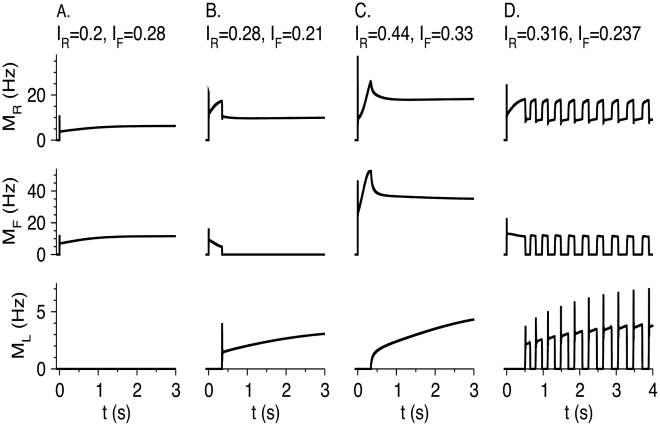
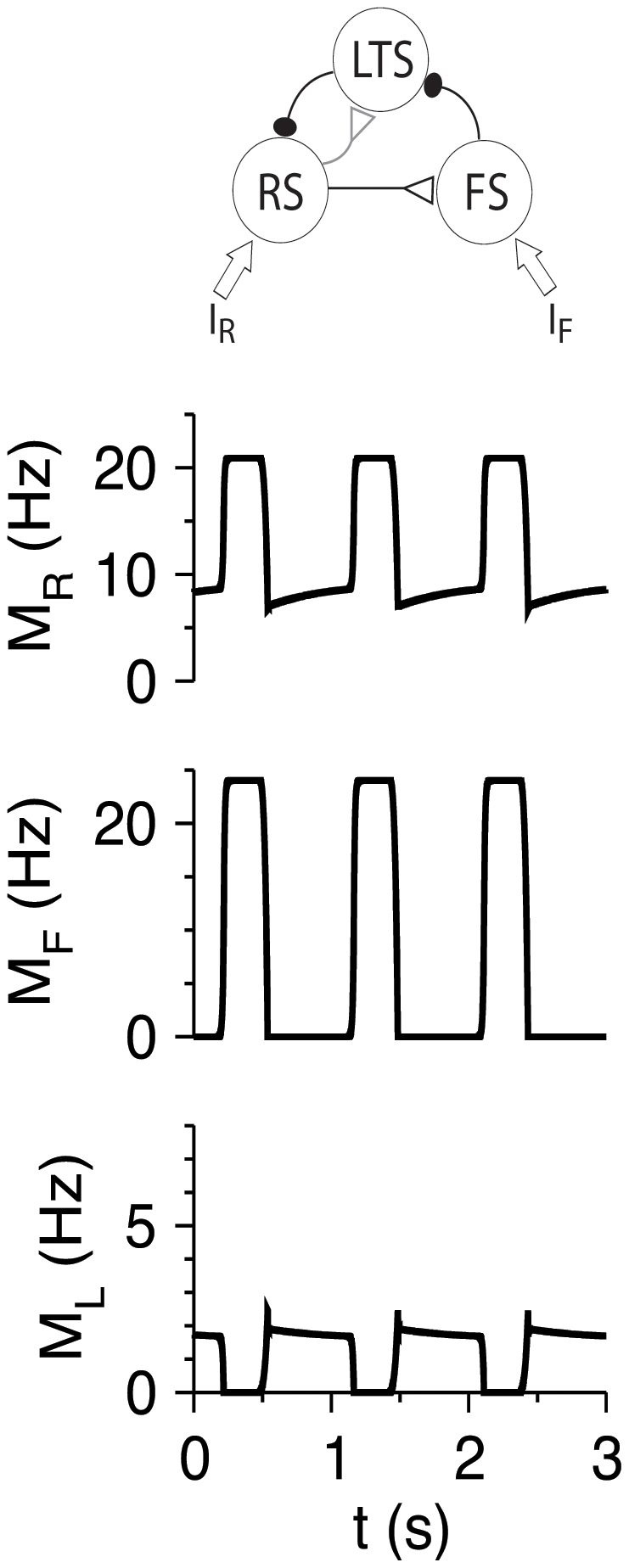
Somatostatin-expressing, low threshold-spiking (LTS) cells and fast-spiking (FS) cells are two common subtypes of inhibitory neocortical interneuron. Excitatory synapses from regular-spiking (RS) pyramidal neurons to LTS cells strongly facilitate when activated repetitively, whereas RS-to-FS synapses depress. This suggests that LTS neurons may be especially relevant at high rate regimes and protect cortical circuits against over-excitation and seizures. However, the inhibitory synapses from LTS cells usually depress, which may reduce their effectiveness at high rates. We ask: by which mechanisms and at what firing rates do LTS neurons control the activity of cortical circuits responding to thalamic input, and how is control by LTS neurons different from that of FS neurons? We study rate models of circuits that include RS cells and LTS and FS inhibitory cells with short-term synaptic plasticity. LTS neurons shift the RS firing-rate vs. current curve to the right at high rates and reduce its slope at low rates; the LTS effect is delayed and prolonged. FS neurons always shift the curve to the right and affect RS firing transiently. In an RS-LTS-FS network, FS neurons reach a quiescent state if they receive weak input, LTS neurons are quiescent if RS neurons receive weak input, and both FS and RS populations are active if they both receive large inputs. In general, FS neurons tend to follow the spiking of RS neurons much more closely than LTS neurons. A novel type of facilitation-induced slow oscillations is observed above the LTS firing threshold with a frequency determined by the time scale of recovery from facilitation. To conclude, contrary to earlier proposals, LTS neurons affect the transient and steady state responses of cortical circuits over a range of firing rates, not only during the high rate regime; LTS neurons protect against over-activation about as well as FS neurons.
生长抑素表达、低阈值爆发(LTS)细胞和快速爆发(FS)细胞是抑制性新皮层中间神经元的两种常见亚型。当重复激活时,来自常规爆发(RS)锥体神经元的兴奋性突触对 LTS 细胞有强烈的促进作用,而 RS 到 FS 的突触则会抑制。这表明 LTS 神经元在高频率模式下可能特别相关,可以保护皮质电路免受过度兴奋和癫痫发作的影响。然而,来自 LTS 细胞的抑制性突触通常会抑制,这可能会降低它们在高频率下的效果。我们提出以下问题:LTS 神经元通过哪些机制以及在什么频率下控制对丘脑输入做出反应的皮质电路的活动,以及它们对皮质电路的控制与 FS 神经元有何不同?我们研究了包含 RS 细胞和 LTS 和 FS 抑制性细胞的短期突触可塑性的电路率模型。LTS 神经元在高频率下将 RS 放电率与电流曲线向右移动,并在低频率下降低其斜率;LTS 效应延迟且持续时间延长。FS 神经元总是将曲线向右移动,并对 RS 放电产生短暂影响。在 RS-LTS-FS 网络中,如果它们接收到弱输入,FS 神经元会进入静止状态,如果 RS 神经元接收到弱输入,LTS 神经元会进入静止状态,如果它们都接收到大输入,那么 FS 和 RS 群体都会活跃。一般来说,FS 神经元比 LTS 神经元更倾向于跟随 RS 神经元的放电。在 LTS 放电阈值以上观察到一种新型的易化诱导慢波振荡,其频率由易化恢复的时间尺度决定。总之,与早期的提议相反,LTS 神经元在一系列放电频率下影响皮质电路的瞬态和稳态响应,而不仅仅是在高频率模式下;LTS 神经元对过度激活的保护作用与 FS 神经元相当。