Department of Biology, University of Crete Heraklion, Greece ; Institute of Molecular Biology and Biotechnology, Foundation for Research and Technology - Hellas Heraklion, Greece.
Institute of Molecular Biology and Biotechnology, Foundation for Research and Technology - Hellas Heraklion, Greece.
Front Neural Circuits. 2014 Jan 31;8:7. doi: 10.3389/fncir.2014.00007. eCollection 2014.
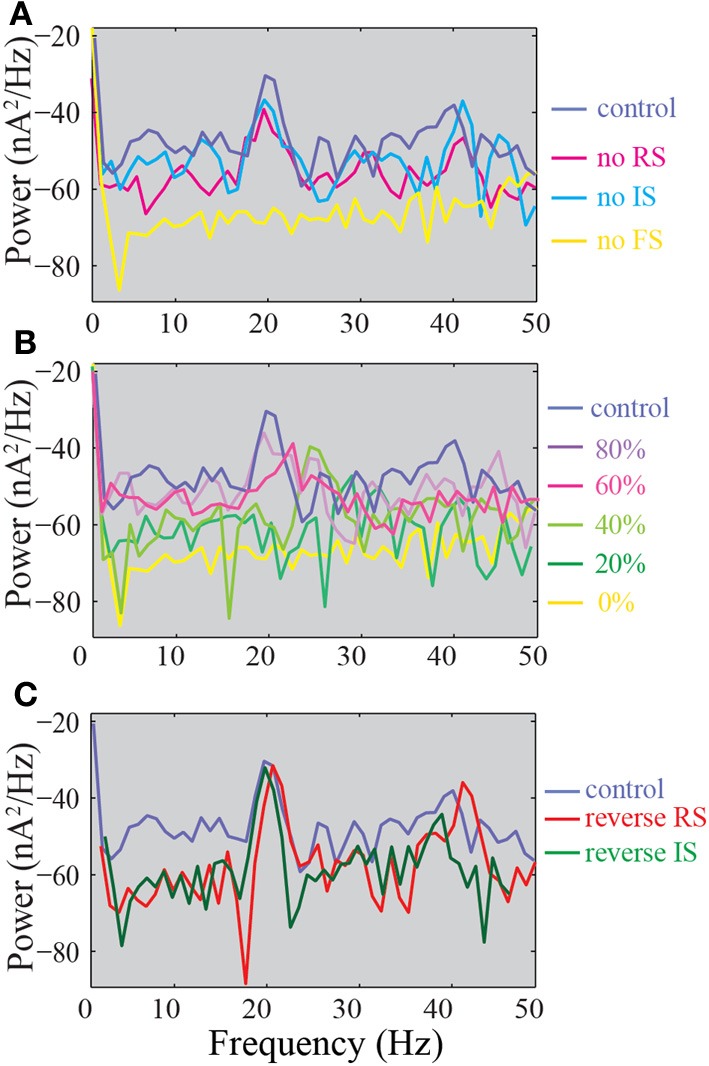
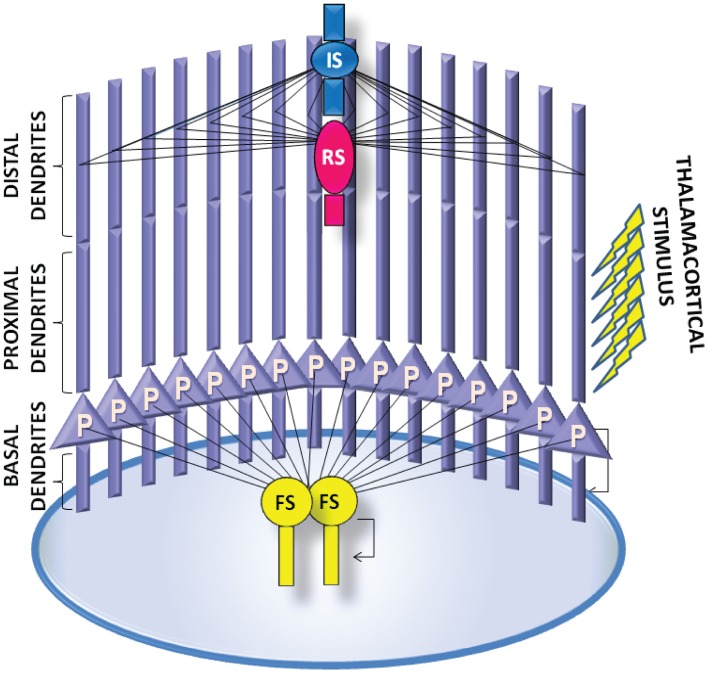
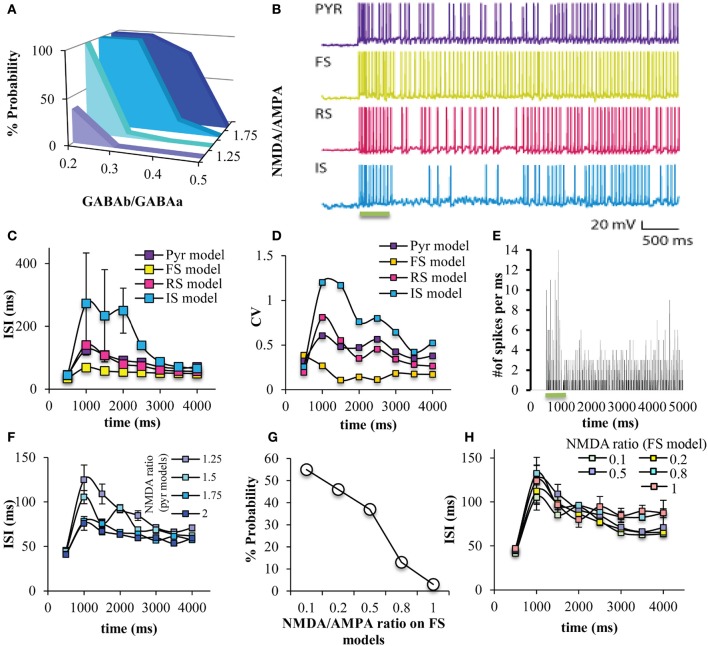
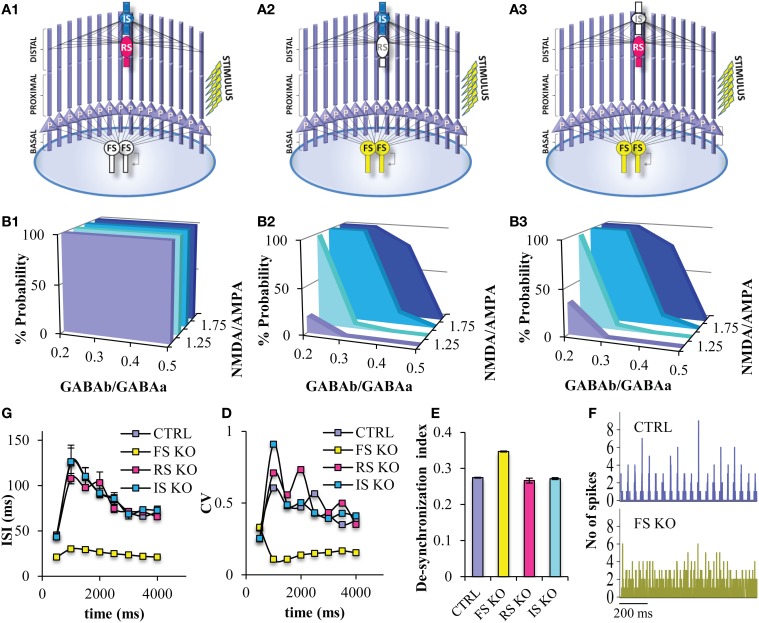
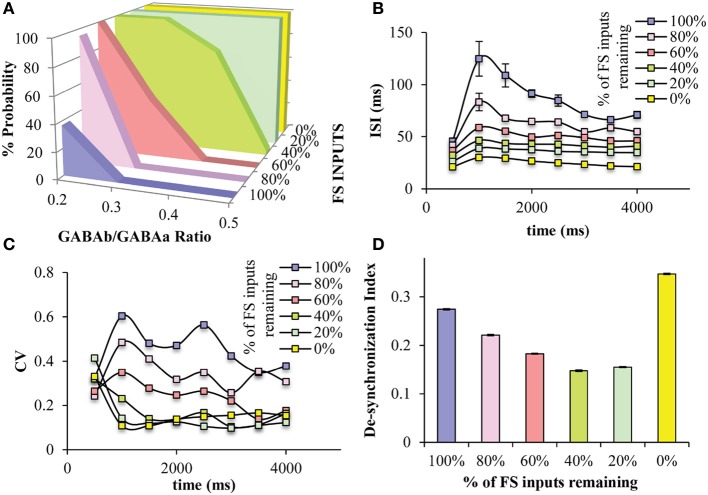
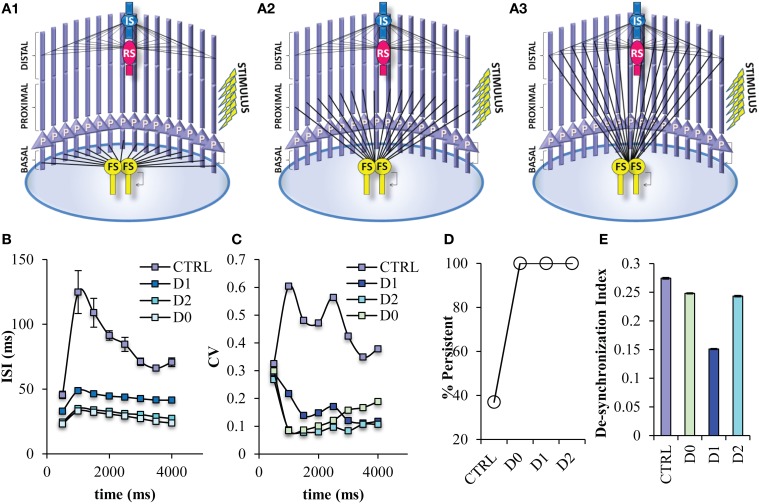
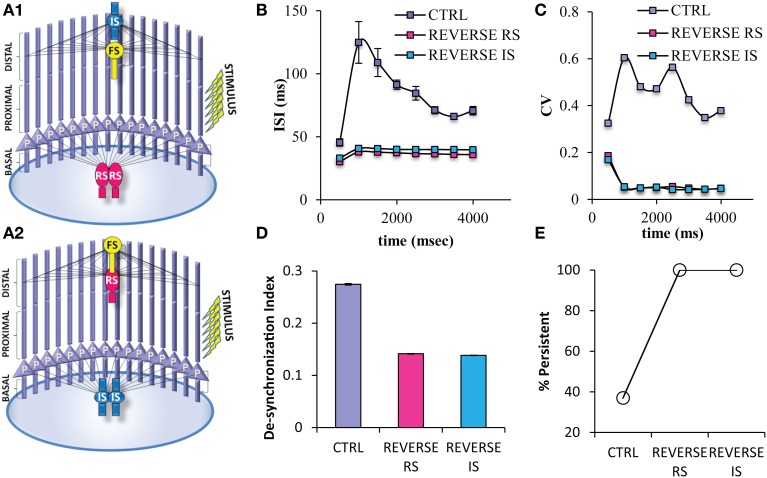
Neocortical network activity is generated through a dynamic balance between excitation, provided by pyramidal neurons, and inhibition, provided by interneurons. Imbalance of the excitation/inhibition ratio has been identified in several neuropsychiatric diseases, such as schizophrenia, autism and epilepsy, which also present with other cognitive deficits and symptoms associated with prefrontal cortical (PFC) dysfunction. We undertook a computational approach to study how changes in the excitation/inhibition balance in a PFC microcircuit model affect the properties of persistent activity, considered the cellular correlate of working memory function in PFC. To this end, we constructed a PFC microcircuit, consisting of pyramidal neuron models and all three different interneuron types: fast-spiking (FS), regular-spiking (RS), and irregular-spiking (IS) interneurons. Persistent activity was induced in the microcircuit model with a stimulus to the proximal apical dendrites of the pyramidal neuron models, and its properties were analyzed, such as the induction profile, the interspike intervals (ISIs) and neuronal synchronicity. Our simulations showed that (a) the induction but not the firing frequency or neuronal synchronicity is modulated by changes in the NMDA-to-AMPA ratio on FS interneuron model, (b) removing or decreasing the FS model input to the pyramidal neuron models greatly limited the biophysical modulation of persistent activity induction, decreased the ISIs and neuronal synchronicity during persistent activity, (c) the induction and firing properties could not be altered by the addition of other inhibitory inputs to the soma (from RS or IS models), and (d) the synchronicity change could be reversed by the addition of other inhibitory inputs to the soma, but beyond the levels of the control network. Thus, generic somatic inhibition acts as a pacemaker of persistent activity and FS specific inhibition modulates the output of the pacemaker.
新皮质网络的活动是通过锥体神经元提供的兴奋与中间神经元提供的抑制之间的动态平衡产生的。在几种神经精神疾病中,如精神分裂症、自闭症和癫痫,已经发现兴奋/抑制比值失衡,这些疾病还伴有与前额皮质(PFC)功能障碍相关的其他认知缺陷和症状。我们采用计算方法来研究 PFC 微电路模型中兴奋/抑制平衡的变化如何影响持续活动的特性,持续活动被认为是 PFC 工作记忆功能的细胞相关性。为此,我们构建了一个 PFC 微电路,由锥体神经元模型和三种不同的中间神经元类型组成:快速放电(FS)、规则放电(RS)和不规则放电(IS)中间神经元。通过对锥体神经元模型的近端顶树突施加刺激,在微电路模型中诱导持续活动,并分析其特性,如诱导谱、峰间间隔(ISIs)和神经元同步性。我们的模拟结果表明:(a)NMDA 到 AMPA 比值的变化调制 FS 中间神经元模型的诱导,但不调制放电频率或神经元同步性,(b)去除或减少 FS 模型对锥体神经元模型的输入,极大地限制了持续活动诱导的生物物理调制,降低了持续活动期间的 ISIs 和神经元同步性,(c)向胞体添加其他抑制性输入(来自 RS 或 IS 模型)不能改变诱导和放电特性,(d)向胞体添加其他抑制性输入可以逆转同步性变化,但不能超过对照网络的水平。因此,通用胞体抑制作为持续活动的起搏器,而 FS 特异性抑制调节起搏器的输出。