Jia Yan, Guo Mingzhou
Department of Gastroenterology and Hepatology, Chinese PLA General Hospital, Beijing, People's Republic of China.
Chin J Cancer. 2013 Jan;32(1):21-30. doi: 10.5732/cjc.011.10245. Epub 2011 Nov 4.
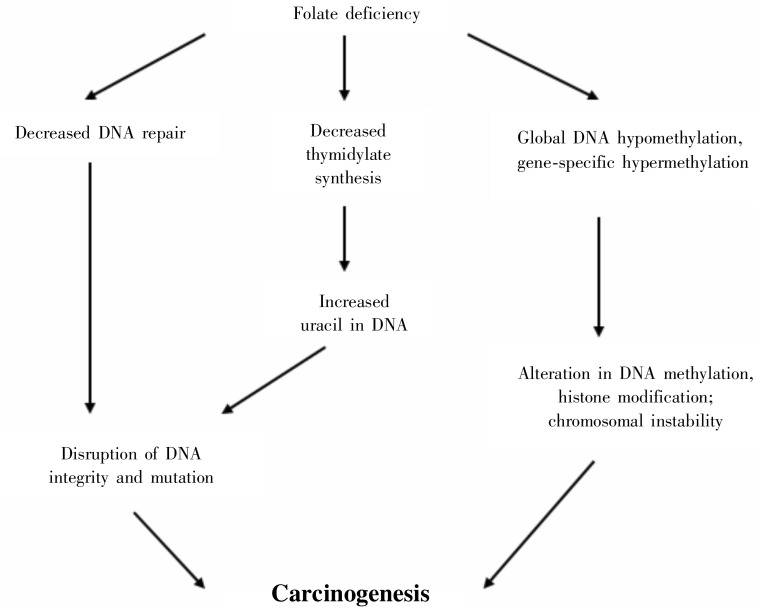
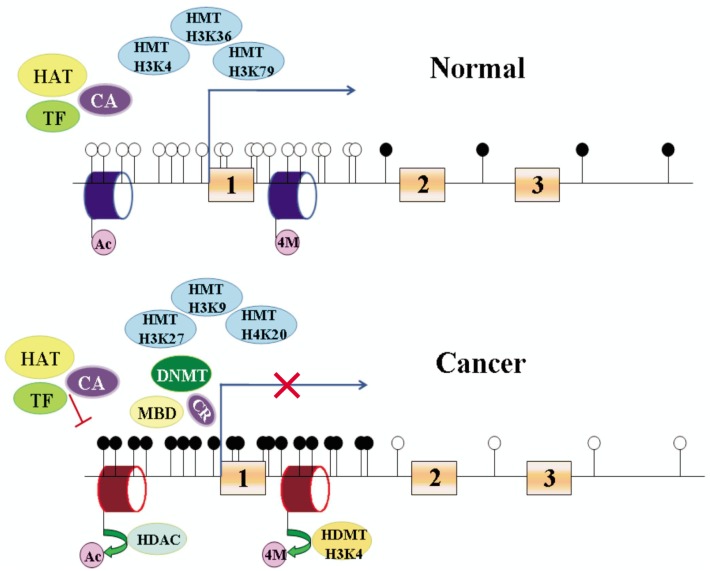
Epigenetic changes frequently occur in human colorectal cancer. Genomic global hypomethylation, gene promoter region hypermethylation, histone modifications, and alteration of miRNA patterns are major epigenetic changes in colorectal cancer. Loss of imprinting(LOI) is associated with colorectal neoplasia. Folate deficiency may cause colorectal carcinogenesis by inducing gene-specific hypermethylation and genomic global hypomethylation. HDAC inhibitors and demethylating agents have been approved by the FDA for myelodysplastic syndrome and leukemia treatment. Non-coding RNA is regarded as another kind of epigenetic marker in colorectal cancer. This review is mainly focused on DNA methylation, histone modification, and microRNA changes in colorectal cancer.
表观遗传变化在人类结直肠癌中频繁发生。基因组整体低甲基化、基因启动子区域高甲基化、组蛋白修饰以及微小RNA模式改变是结直肠癌主要的表观遗传变化。印记丢失(LOI)与结直肠肿瘤形成有关。叶酸缺乏可能通过诱导基因特异性高甲基化和基因组整体低甲基化导致结直肠癌发生。组蛋白去乙酰化酶抑制剂和去甲基化剂已获美国食品药品监督管理局(FDA)批准用于治疗骨髓增生异常综合征和白血病。非编码RNA被视为结直肠癌中的另一种表观遗传标志物。本综述主要聚焦于结直肠癌中的DNA甲基化、组蛋白修饰和微小RNA变化。