Integrated Mathematical Oncology, Moffitt Research Institute, Tampa, Florida, United States.
Mol Pharm. 2011 Dec 5;8(6):2039-49. doi: 10.1021/mp200421k. Epub 2011 Nov 8.
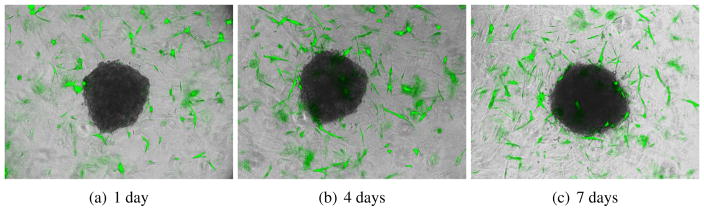
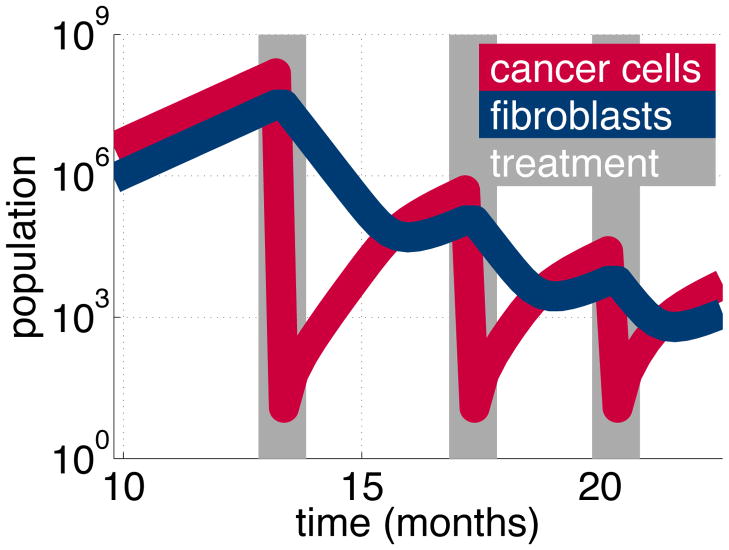
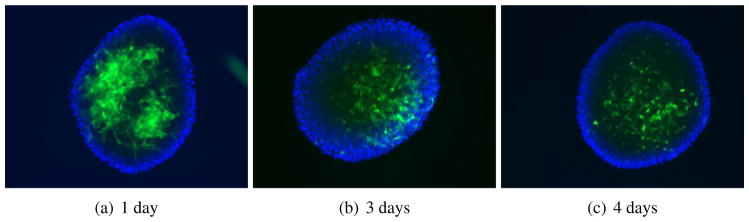
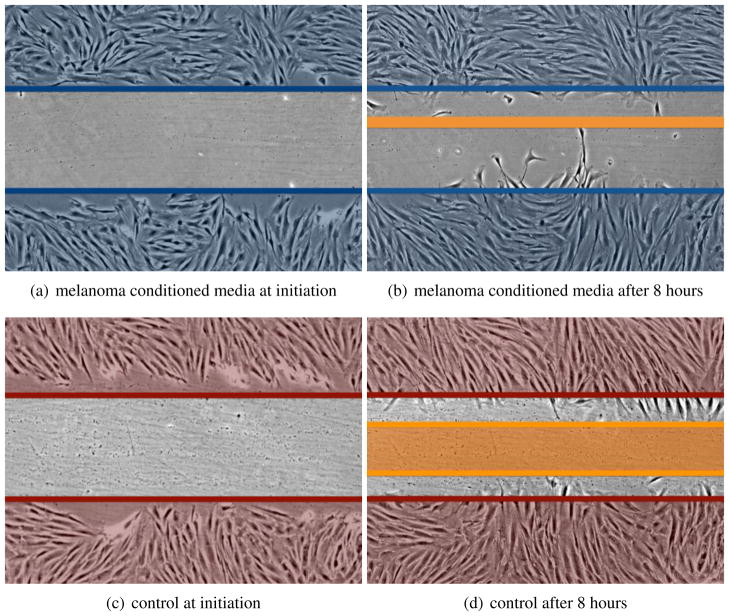
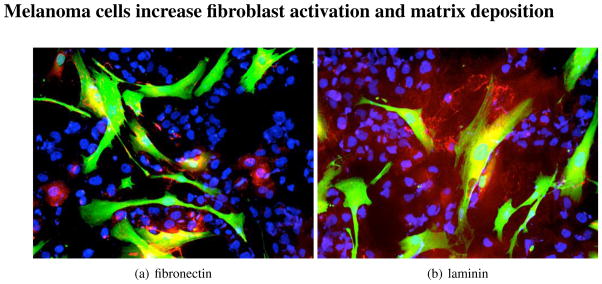
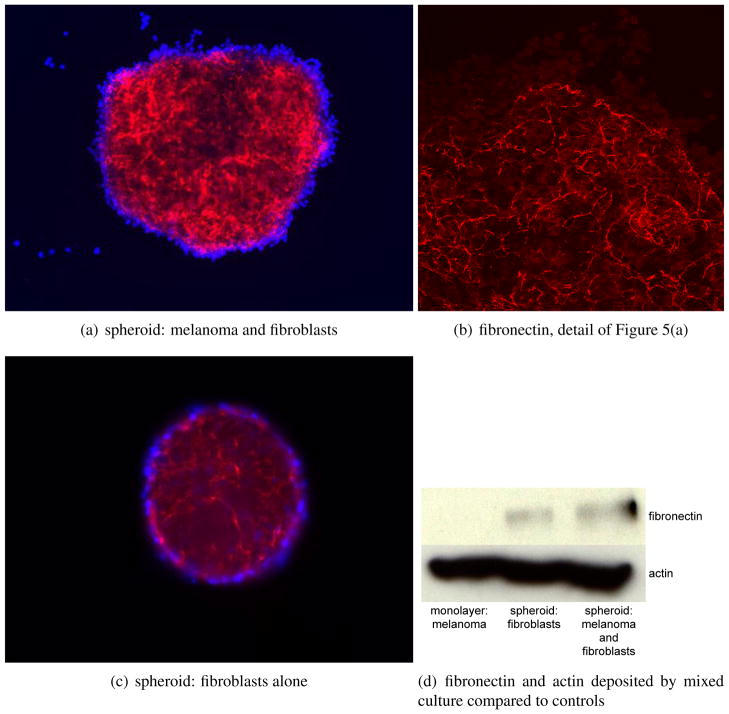
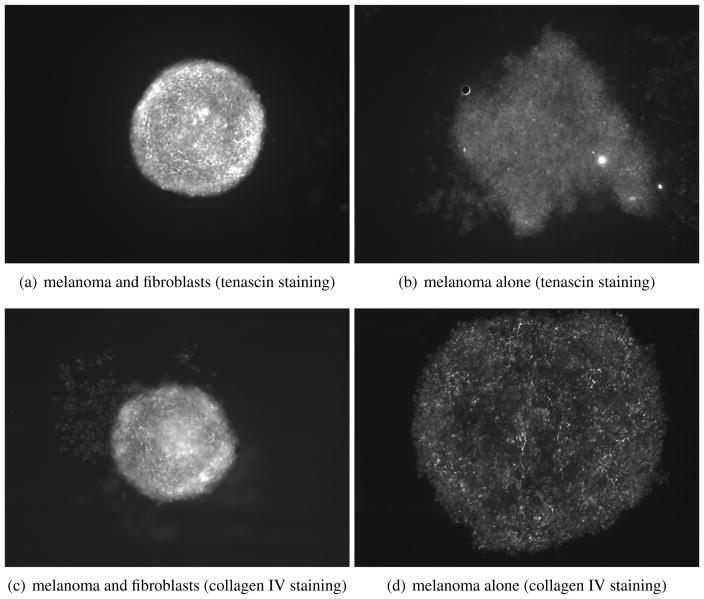
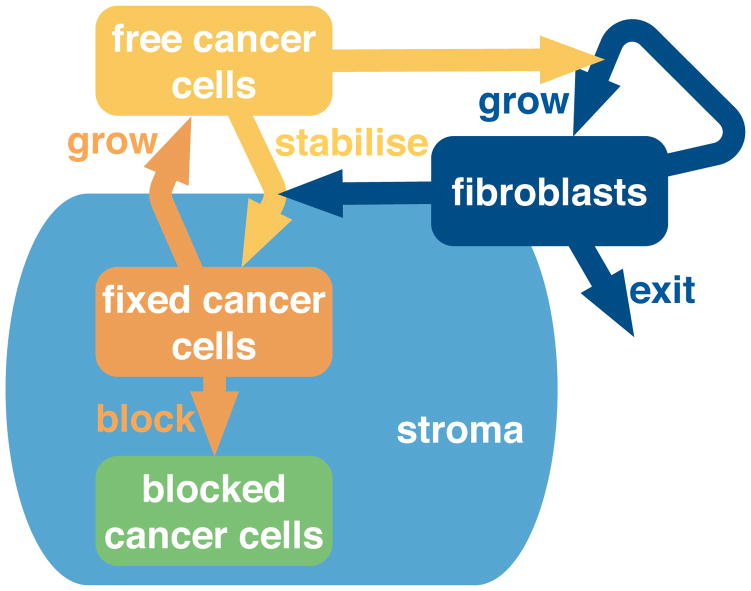
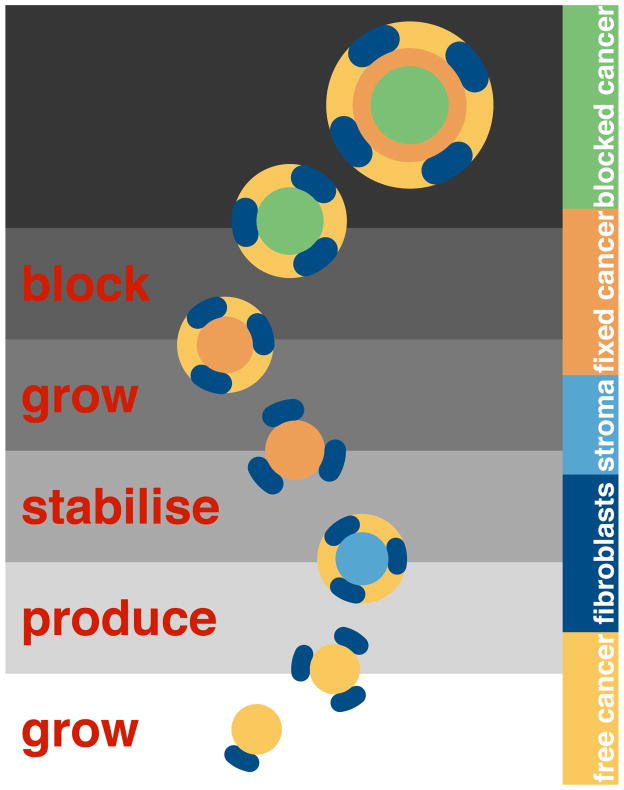
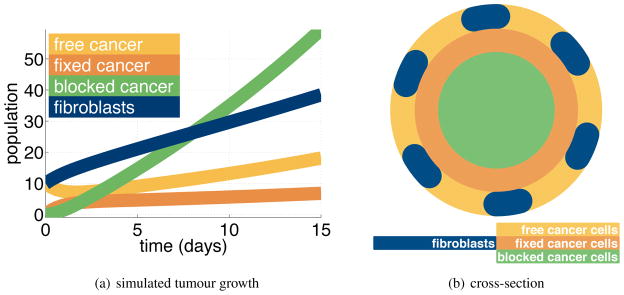
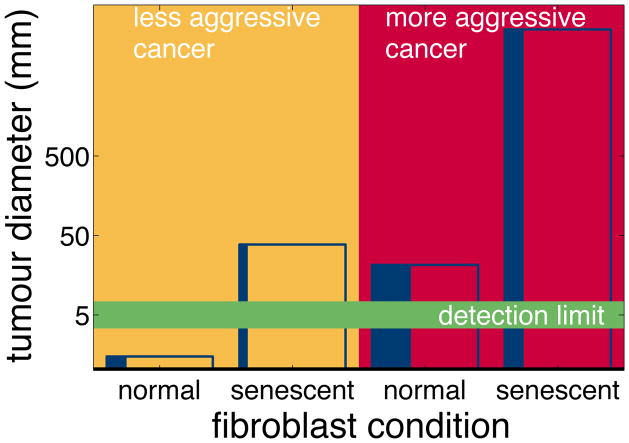
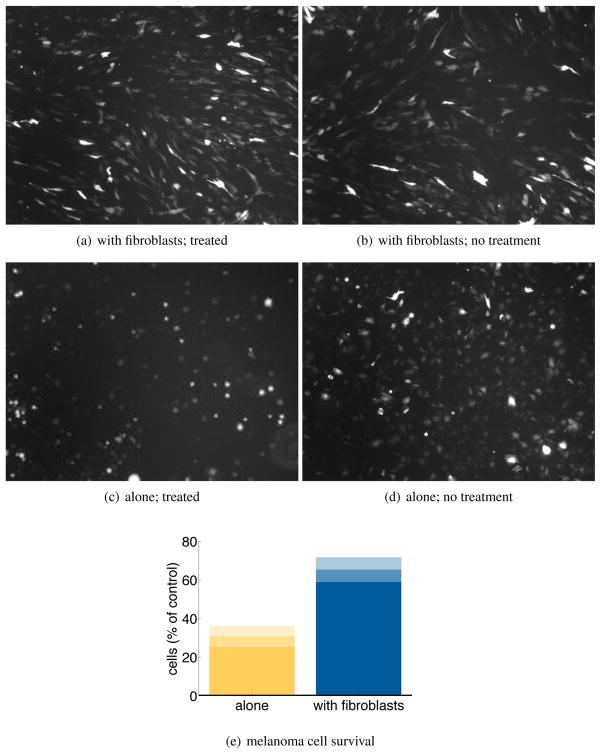
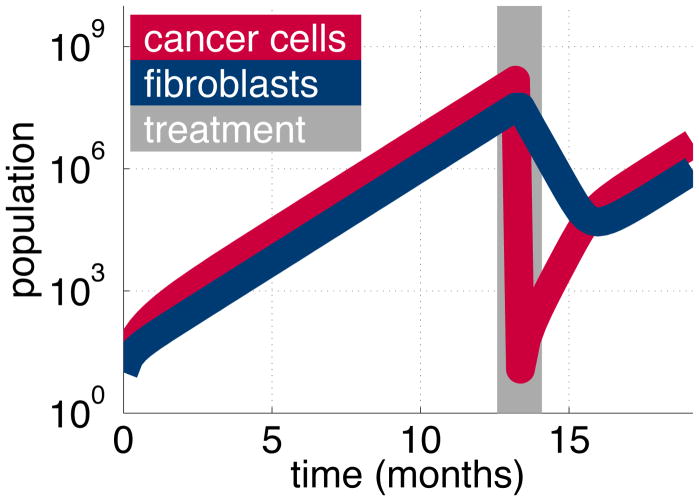
The role of tumor-stromal interactions in progression is generally well accepted, but their role in initiation or treatment is less well understood. It is now generally agreed that, rather than consisting solely of malignant cells, tumors consist of a complex dynamic mixture of cancer cells, host fibroblasts, endothelial cells and immune cells that interact with each other and microenvironmental factors to drive tumor progression. We are particularly interested in stromal cells (for example fibroblasts) and stromal factors (for example fibronectin) as important players in tumor progression since they have also been implicated in drug resistance. Here we develop an integrated approach to understand the role of such stromal cells and factors in the growth and maintenance of tumors as well as their potential impact on treatment resistance, specifically in application to melanoma. Using a suite of experimental assays we show that melanoma cells can stimulate the recruitment of fibroblasts and activate them, resulting in melanoma cell growth by providing both structural (extracellular matrix proteins) and chemical support (growth factors). Motivated by these experimental results we construct a compartment model and use it to investigate the roles of both stromal activation and tumor aggressiveness in melanoma growth and progression. We utilize this model to investigate the role fibroblasts might play in melanoma treatment resistance and the clinically observed flare phenomenon that is seen when a patient, who appears resistant to a targeted drug, is removed from that treatment. Our model makes the unexpected prediction that targeted therapies may actually hasten tumor progression once resistance has occurred. If confirmed experimentally, this provocative prediction may bring important new insights into how drug resistance could be managed clinically.
肿瘤-基质相互作用在进展中的作用已被普遍接受,但它们在起始或治疗中的作用则知之甚少。现在普遍认为,肿瘤不仅仅由恶性细胞组成,而是由癌细胞、宿主成纤维细胞、内皮细胞和免疫细胞组成的复杂动态混合物,这些细胞相互作用并与微环境因素相互作用,以推动肿瘤的进展。我们特别关注基质细胞(例如成纤维细胞)和基质因子(例如纤维连接蛋白),因为它们是肿瘤进展中的重要参与者,因为它们也与耐药性有关。在这里,我们开发了一种综合方法来了解这些基质细胞和因子在肿瘤生长和维持中的作用,以及它们对治疗耐药性的潜在影响,特别是在黑色素瘤中的应用。我们使用一系列实验方法表明,黑色素瘤细胞可以刺激成纤维细胞的募集并激活它们,通过提供结构支持(细胞外基质蛋白)和化学支持(生长因子)来促进黑色素瘤细胞的生长。受这些实验结果的启发,我们构建了一个隔室模型,并利用它来研究基质激活和肿瘤侵袭性在黑色素瘤生长和进展中的作用。我们利用该模型来研究成纤维细胞在黑色素瘤治疗耐药性中的作用,以及临床上观察到的“爆发”现象,即当一个对靶向药物耐药的患者停止使用该药物时,肿瘤会变得更活跃。我们的模型做出了一个出人意料的预测,即靶向治疗一旦发生耐药性,实际上可能会加速肿瘤的进展。如果在实验中得到证实,这一有争议的预测可能会为如何在临床上管理耐药性提供新的重要见解。