Foodborne Contaminants Research Unit, Western Regional Research Center, USDA Agricultural Research Service, 800 Buchanan Street, Albany, CA 94710, USA.
Toxins (Basel). 2011 Apr;3(4):398-408. doi: 10.3390/toxins3040398. Epub 2011 Apr 4.
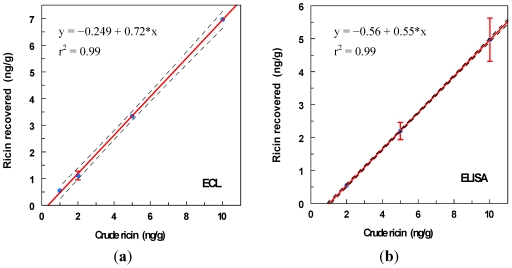
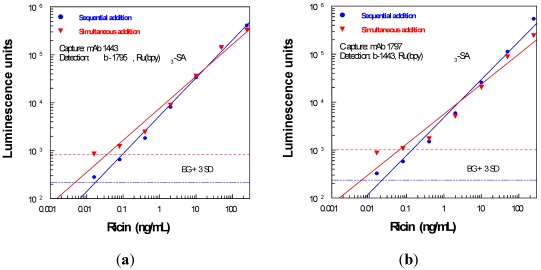
Ricin is a highly toxic protein present in the seeds of Ricinus communis (castor), grown principally as a source of high quality industrial lubricant and as an ornamental. Because ricin has been used for intentional poisoning in the past and could be used to contaminate food, there is a need for analytical methodology to detect ricin in food matrices. A monoclonal antibody-based method was developed for detecting and quantifying ricin in ground beef, a complex, fatty matrix. The limit of detection was 0.5 ng/g for the electrochemiluminescence (ECL) method and 1.5 ng/g for enzyme-linked immunosorbent assay (ELISA). The detection of nanogram per gram quantities of ricin spiked into retail samples of ground beef provides approximately 10,000-fold greater sensitivity than required to detect a toxic dose of ricin (>1 mg) in a 100 g sample.
蓖麻毒素是一种存在于蓖麻(castor)种子中的高毒性蛋白质,主要用作高质量工业润滑剂和观赏植物的来源。由于蓖麻毒素过去曾被用于故意中毒,并且可能被用于污染食物,因此需要分析方法来检测食物基质中的蓖麻毒素。已经开发了一种基于单克隆抗体的方法来检测和定量检测 ground beef 中的蓖麻毒素,ground beef 是一种复杂的、高脂肪的基质。电化学发光(ECL)方法的检测限为 0.5 ng/g,酶联免疫吸附测定(ELISA)的检测限为 1.5 ng/g。检测到零售样品中的痕量每克蓖麻毒素(ng/g),比检测 100 克样品中毒性剂量(>1 毫克)的蓖麻毒素的灵敏度高约 10,000 倍。