Center for Osteoporosis and Metabolic Bone Diseases, Division of Endocrinology and Metabolism, Department of Internal Medicine, University of Arkansas for Medical Sciences and the Central Arkansas Veterans Healthcare System, Little Rock, Arkansas, United States of America.
PLoS One. 2011;6(11):e27285. doi: 10.1371/journal.pone.0027285. Epub 2011 Nov 3.
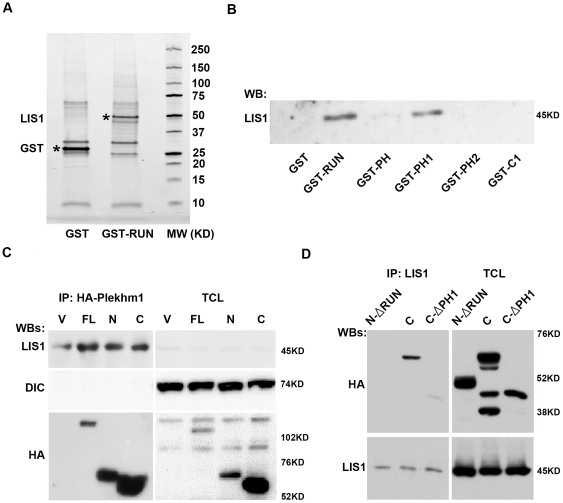
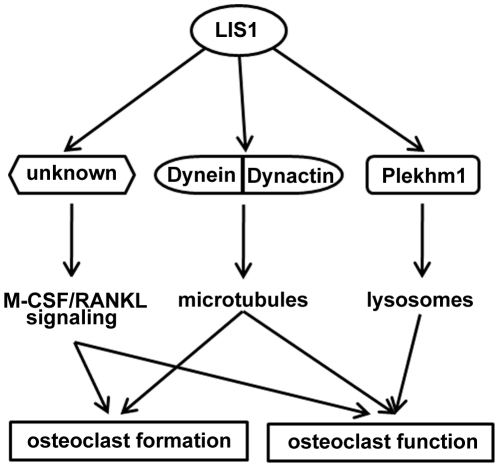
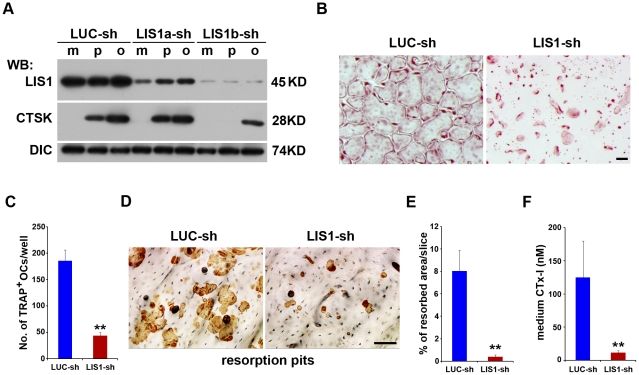
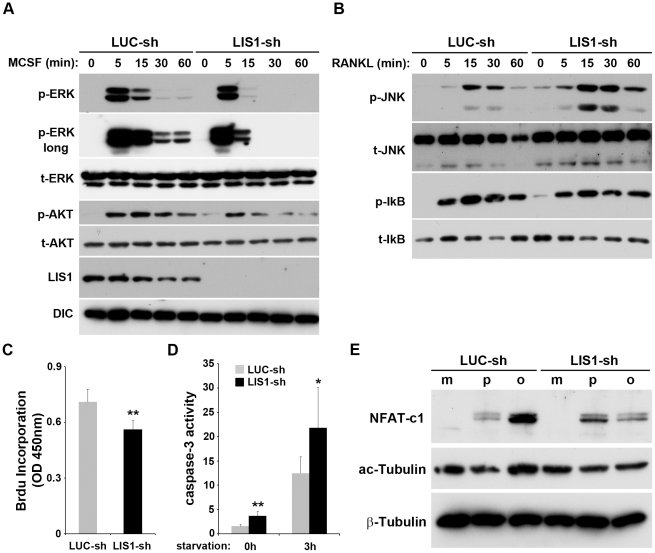
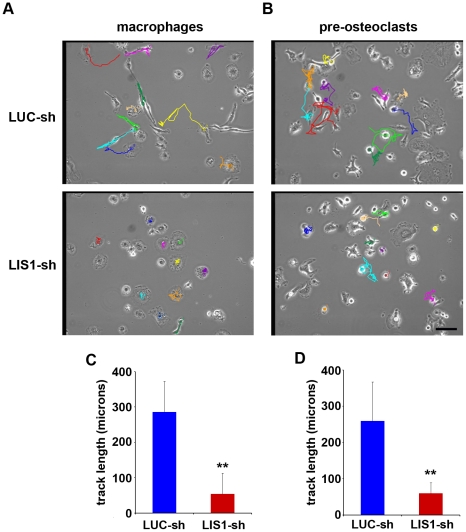
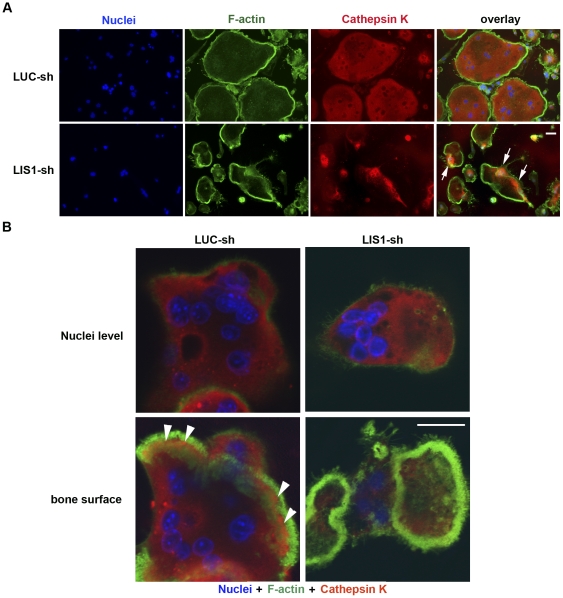
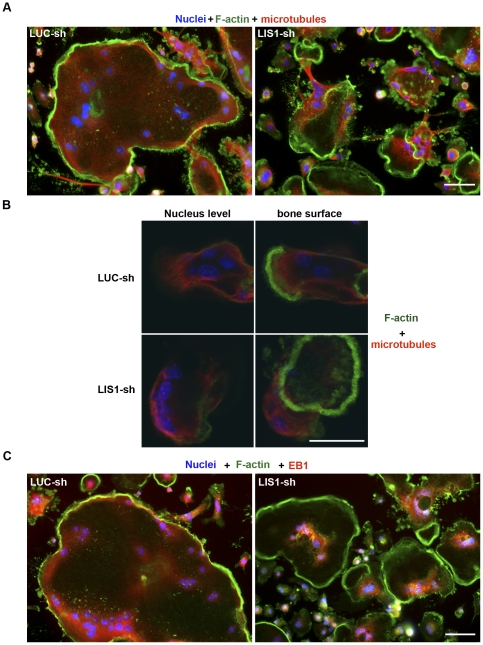
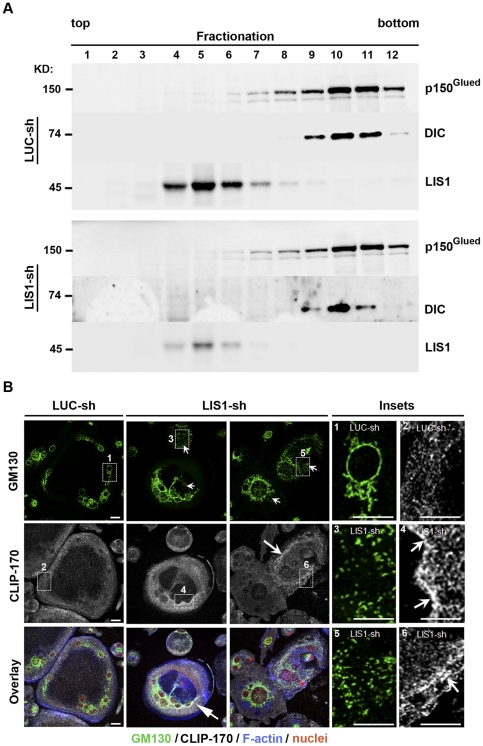
Microtubule organization and lysosomal secretion are both critical for the activation and function of osteoclasts, highly specialized polykaryons that are responsible for bone resorption and skeletal homeostasis. Here, we have identified a novel interaction between microtubule regulator LIS1 and Plekhm1, a lysosome-associated protein implicated in osteoclast secretion. Decreasing LIS1 expression by shRNA dramatically attenuated osteoclast formation and function, as shown by a decreased number of mature osteoclasts differentiated from bone marrow macrophages, diminished resorption pits formation, and reduced level of CTx-I, a bone resorption marker. The ablated osteoclast formation in LIS1-depleted macrophages was associated with a significant decrease in macrophage proliferation, osteoclast survival and differentiation, which were caused by reduced activation of ERK and AKT by M-CSF, prolonged RANKL-induced JNK activation and declined expression of NFAT-c1, a master transcription factor of osteoclast differentiation. Consistent with its critical role in microtubule organization and dynein function in other cell types, we found that LIS1 binds to and colocalizes with dynein in osteoclasts. Loss of LIS1 led to disorganized microtubules and aberrant dynein function. More importantly, the depletion of LIS1 in osteoclasts inhibited the secretion of Cathepsin K, a crucial lysosomal hydrolase for bone degradation, and reduced the motility of osteoclast precursors. These results indicate that LIS1 is a previously unrecognized regulator of osteoclast formation, microtubule organization, and lysosomal secretion by virtue of its ability to modulate dynein function and Plekhm1.
微管组织和溶酶体分泌对于破骨细胞的激活和功能都至关重要,破骨细胞是高度特化的多核细胞,负责骨吸收和骨骼内稳态。在这里,我们发现了微管调节因子 LIS1 与 Plekhm1 之间的一种新相互作用,后者是一种与破骨细胞分泌有关的溶酶体相关蛋白。通过 shRNA 降低 LIS1 的表达显著减弱了破骨细胞的形成和功能,表现为骨髓巨噬细胞分化而来的成熟破骨细胞数量减少、吸收陷窝形成减少以及骨吸收标志物 CTx-I 的水平降低。在 LIS1 耗尽的巨噬细胞中,破骨细胞形成被消融,这与巨噬细胞增殖、破骨细胞存活和分化显著减少有关,其原因是 M-CSF 激活 ERK 和 AKT 减少、RANKL 诱导的 JNK 激活延长以及 NFAT-c1(破骨细胞分化的主要转录因子)的表达下降。与 LIS1 在其他细胞类型中对微管组织和动力蛋白功能的关键作用一致,我们发现 LIS1 在破骨细胞中与动力蛋白结合并共定位。LIS1 的缺失导致微管组织紊乱和动力蛋白功能异常。更重要的是,破骨细胞中 LIS1 的耗竭抑制了组织蛋白酶 K(一种降解骨的关键溶酶体水解酶)的分泌,并降低了破骨细胞前体的运动能力。这些结果表明,LIS1 是一种以前未被识别的破骨细胞形成、微管组织和溶酶体分泌的调节剂,其通过调节动力蛋白功能和 Plekhm1 发挥作用。