MOE Key Laboratory of Model Animals for Disease Study, Model Animal Research Center of Nanjing University, Nanjing, China.
PLoS One. 2011;6(11):e27464. doi: 10.1371/journal.pone.0027464. Epub 2011 Nov 8.
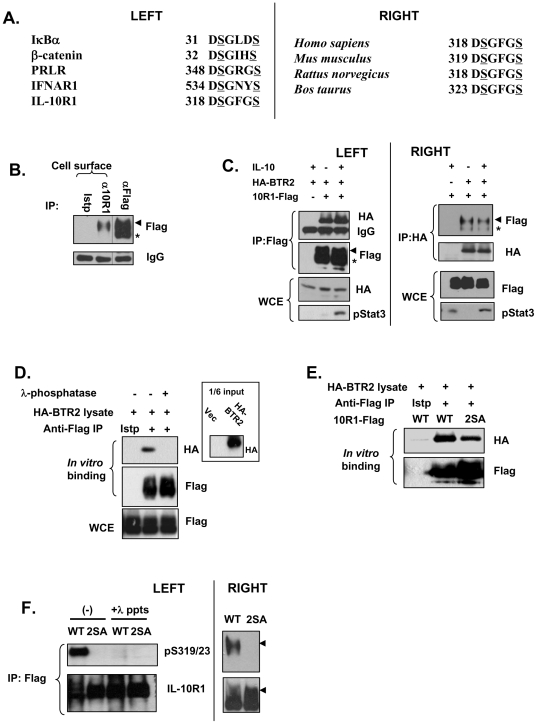
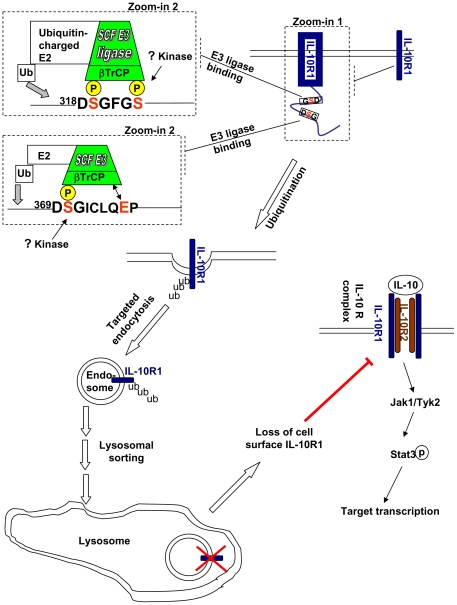
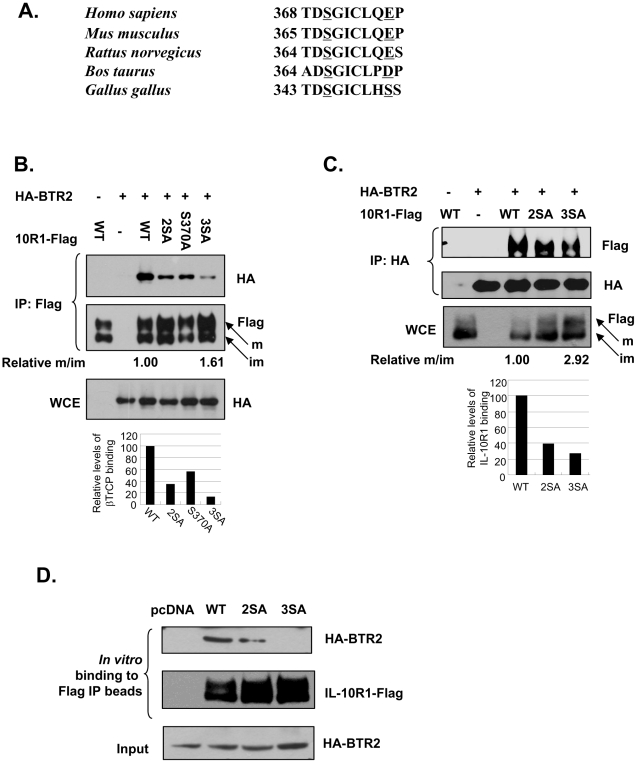
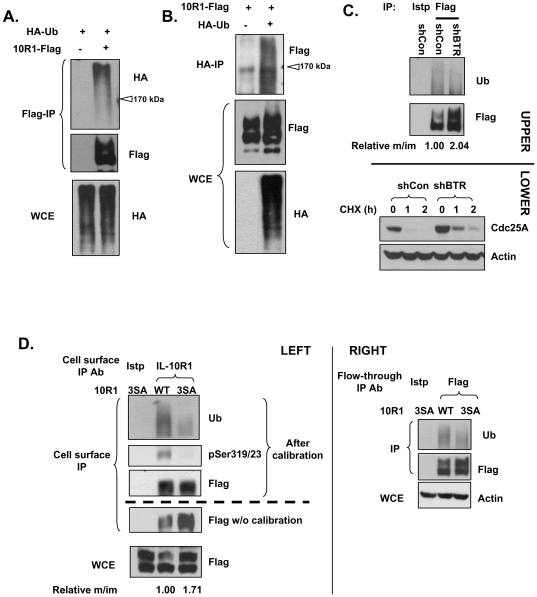
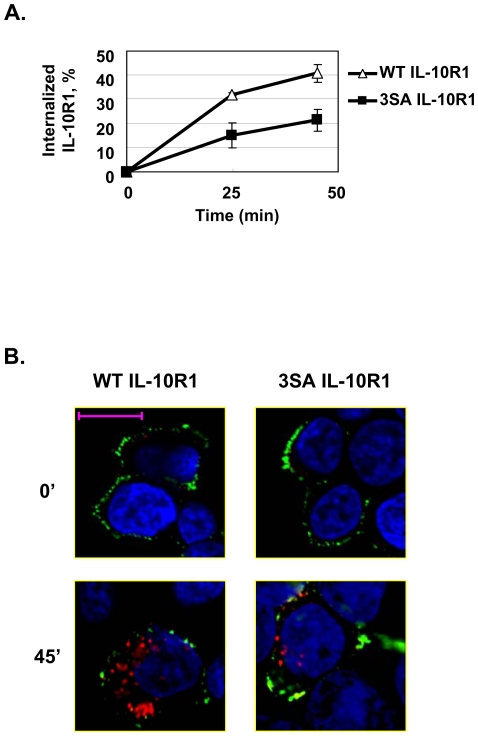
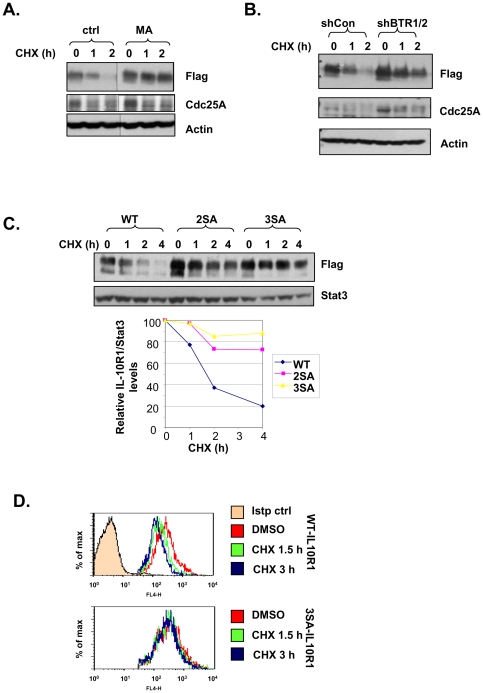
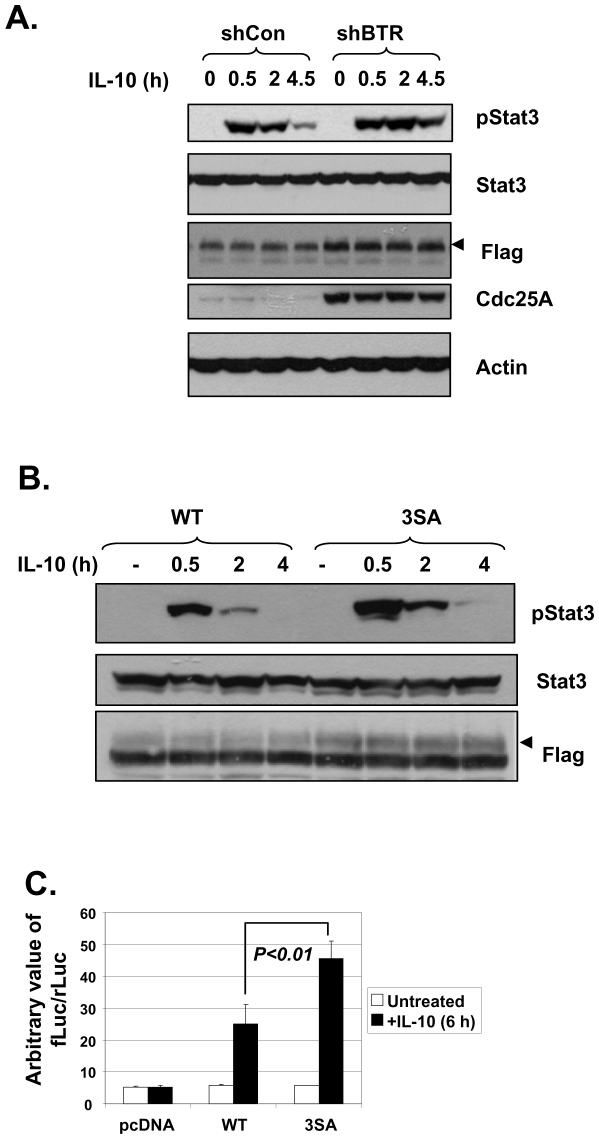
Interleukin-10 (IL-10) initiates potent anti-inflammatory effects via activating its cell surface receptor, composed of IL-10R1 and IL-10R2 subunits. The level of IL-10R1 is a major determinant of the cells' responsiveness to IL-10. Here, via a series of biochemical analyses using 293T cells reconstituted with IL-10R1, we identify the latter as a novel substrate of βTrCP-containing ubiquitin E3 ligase. Within the intracellular tail of IL-10R1, a canonical ((318)DpSGFGpS) and a slightly deviated ((369)DpSGICLQEP) βTrCP recognition motif can additively recruit βTrCP in a phosphorylation-dependent manner. βTrCP recruitment leads to ubiquitination, endocytosis and degradation of IL-10R1, subsequently reducing the cellular responsiveness to IL-10. Our study uncovers a novel negative regulatory mechanism that may potentially affect IL-10 function in target cells under physiological or pathological conditions.
白细胞介素-10(IL-10)通过激活其细胞表面受体发挥强大的抗炎作用,该受体由 IL-10R1 和 IL-10R2 亚基组成。IL-10R1 的水平是细胞对 IL-10 反应性的主要决定因素。在这里,我们通过使用 293T 细胞重建的一系列生化分析,确定后者是含有 βTrCP 的泛素 E3 连接酶的新型底物。在 IL-10R1 的细胞内尾部,一个典型的((318)DpSGFGpS)和一个略微偏离的((369)DpSGICLQEP)βTrCP 识别基序可以以磷酸化依赖性方式附加地募集 βTrCP。βTrCP 的募集导致 IL-10R1 的泛素化、内吞作用和降解,从而降低细胞对 IL-10 的反应性。我们的研究揭示了一种新的负调控机制,该机制可能会影响生理或病理条件下靶细胞中 IL-10 的功能。