Department of Pathology, Diabetes and Obesity Center of Excellence, 815 Mercer St, University of Washington, Seattle, WA 98109-8055, USA.
Arterioscler Thromb Vasc Biol. 2012 Feb;32(2):223-9. doi: 10.1161/ATVBAHA.111.236927. Epub 2011 Nov 17.
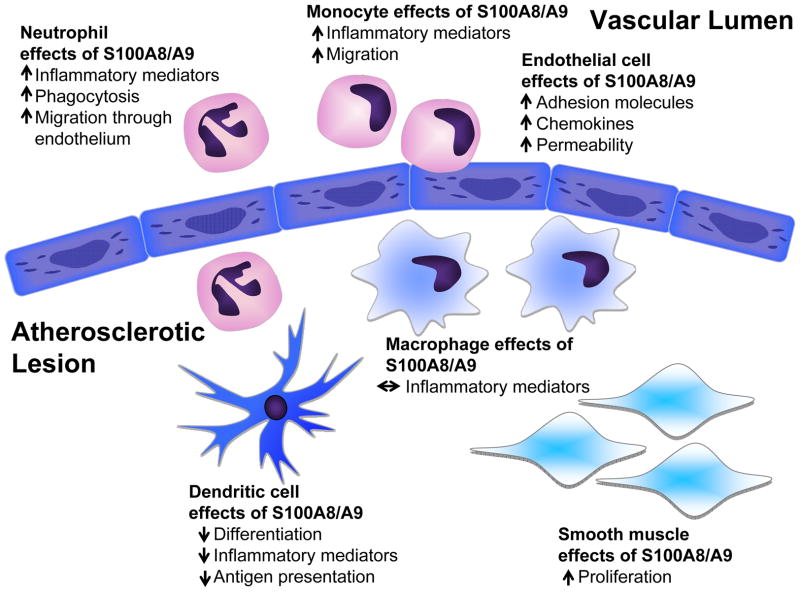
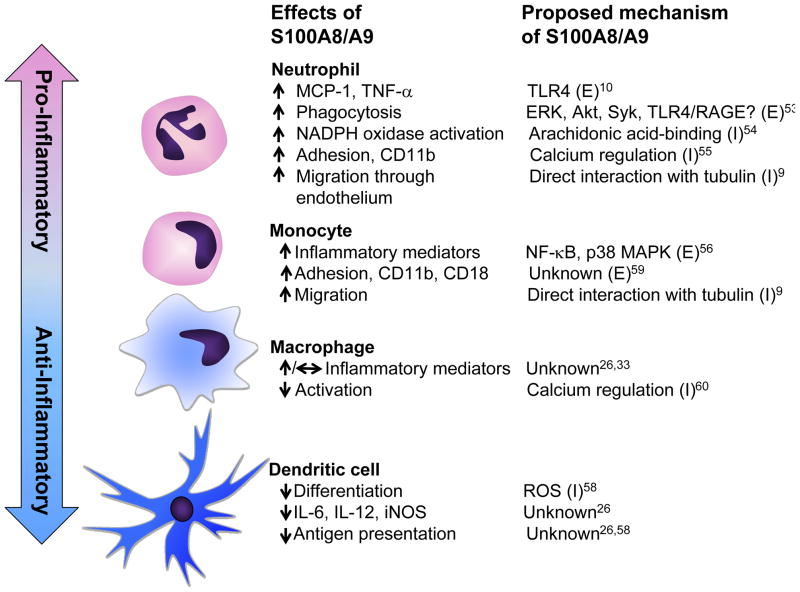
There is recent and widespread interest in the damage-associated molecular pattern molecules S100A8 and S100A9 in cardiovascular science. These proteins have a number of interesting features and functions. For example, S100A8 and S100A9 (S100A8/A9) have both intracellular and extracellular actions, they are abundantly expressed in inflammatory and autoimmune states, primarily by myeloid cells but also by other vascular cells, and they modulate inflammatory processes, in part through Toll-like receptor 4 and the receptor for advanced glycation end products. S100A8/A9 also have anti-inflammatory and immune regulatory actions. Furthermore, increased plasma levels of S100A8/A9 predict cardiovascular events in humans, and deletion of these proteins partly protects Apoe(-)(/)(-) mice from atherosclerosis. Understanding the roles of S100A8 and S100A9 in vascular cell types and the mechanisms whereby these proteins mediate their biological effects may offer new therapeutic strategies to prevent, treat, and predict cardiovascular diseases.
近年来,人们对心血管科学中的损伤相关分子模式分子 S100A8 和 S100A9 产生了广泛的兴趣。这些蛋白质具有许多有趣的特征和功能。例如,S100A8 和 S100A9(S100A8/A9)既有细胞内作用,也有细胞外作用,它们在炎症和自身免疫状态下大量表达,主要由髓样细胞表达,但也由其他血管细胞表达,并且它们通过 Toll 样受体 4 和晚期糖基化终产物受体调节炎症过程。S100A8/A9 也具有抗炎和免疫调节作用。此外,血浆中 S100A8/A9 水平升高可预测人类心血管事件,并且这些蛋白质的缺失可部分保护 Apoe(-)(/)(-) 小鼠免于动脉粥样硬化。了解 S100A8 和 S100A9 在血管细胞类型中的作用以及这些蛋白质介导其生物学效应的机制,可能为预防、治疗和预测心血管疾病提供新的治疗策略。