Singh Ompal, Khanam Zakia, Misra Neelam, Srivastava Manoj Kumar
Department of Biochemistry, Bundelkhand University, Jhansi- 284 128, India.
Pharmacogn Rev. 2011 Jan;5(9):82-95. doi: 10.4103/0973-7847.79103.
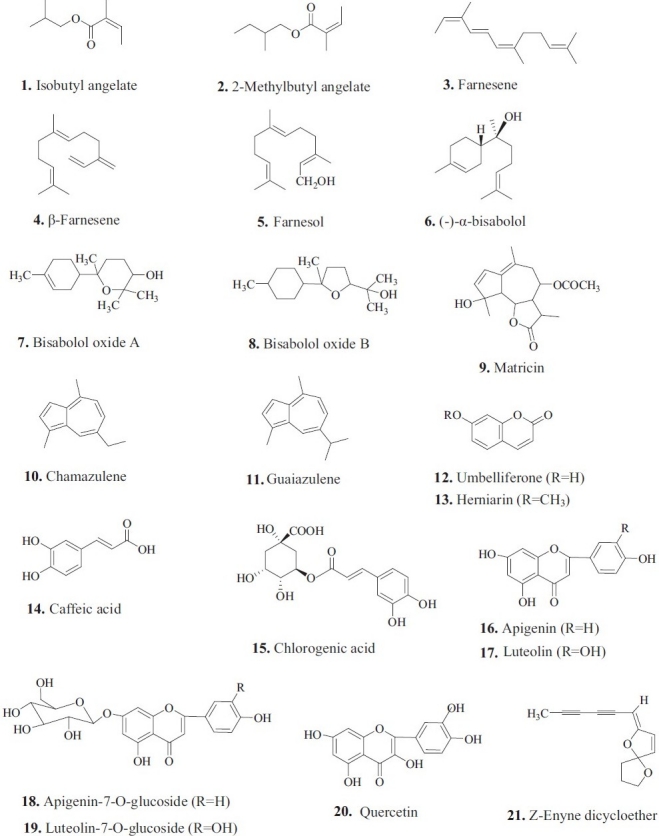
Chamomile (Matricaria chamomilla L.) is a well-known medicinal plant species from the Asteraceae family often referred to as the "star among medicinal species." Nowadays it is a highly favored and much used medicinal plant in folk and traditional medicine. Its multitherapeutic, cosmetic, and nutritional values have been established through years of traditional and scientific use and research. Chamomile has an established domestic (Indian) and international market, which is increasing day by day. The plant available in the market many a times is adulterated and substituted by close relatives of chamomile. This article briefly reviews the medicinal uses along with botany and cultivation techniques. Since chamomile is a rich source of natural products, details on chemical constituents of essential oil and plant parts as well as their pharmacological properties are included. Furthermore, particular emphasis is given to the biochemistry, biotechnology, market demand, and trade of the plant. This is an attempt to compile and document information on different aspects of chamomile and highlight the need for research and development.
洋甘菊(母菊,Matricaria chamomilla L.)是菊科一种著名的药用植物,常被称为“药用植物之星”。如今,它是民间和传统医学中备受青睐且广泛使用的药用植物。其多种治疗、美容和营养价值已通过多年的传统应用、科学使用及研究得以确立。洋甘菊在国内(印度)和国际市场都有一定地位,且市场需求日益增长。市场上可得的这种植物很多时候会被洋甘菊的近缘种掺假或替代。本文简要回顾了其药用用途以及植物学和栽培技术。由于洋甘菊是天然产物的丰富来源,文中还包括了精油和植物各部分的化学成分及其药理特性的详细信息。此外,特别强调了该植物的生物化学、生物技术、市场需求和贸易情况。本文旨在汇编和记录有关洋甘菊不同方面的信息,并突出研发的必要性。