Key Laboratory of Zoonosis, Ministry of Education, Institute of Zoonosis, Jilin University, Changchun, China.
PLoS One. 2011;6(11):e26448. doi: 10.1371/journal.pone.0026448. Epub 2011 Nov 1.
Trichinella spiralis is a parasite with unique features. It is a multicellular organism but with an intracellular parasitization and development stage. T. spiralis is the helminthic pathogen that causes zoonotic trichinellosis and afflicts more than 10 million people worldwide, whereas the parasite's biology, especially the developmental regulation is largely unknown. In other organisms, small non-coding RNAs, such as microRNAs (miRNA) and small interfering RNAs (siRNA) execute post-transcriptional regulation by translational repression or mRNA degradation, and a large number of miRNAs have been identified in diverse species. In T. spiralis, the profile of small non-coding RNAs and their function remains poorly understood.
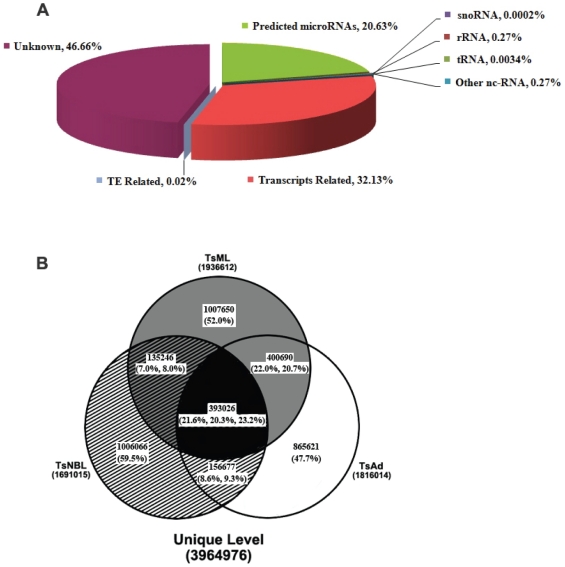
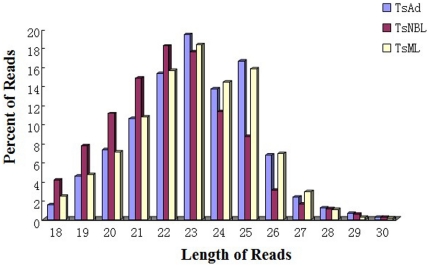
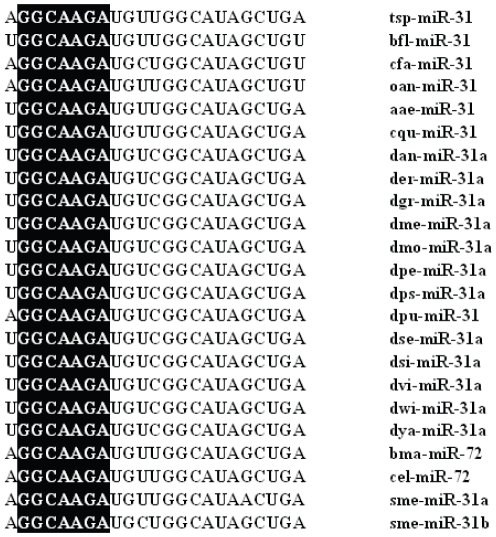
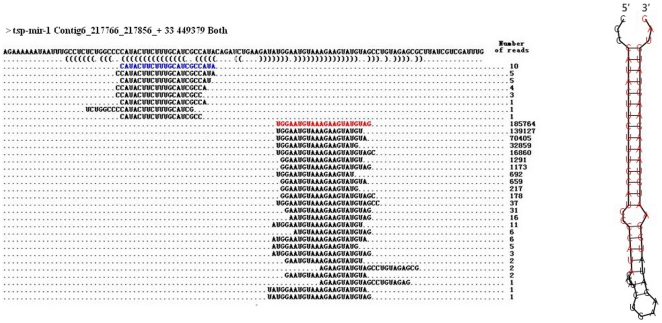
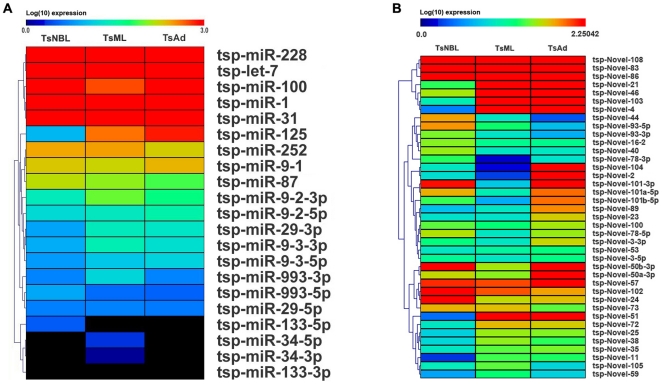
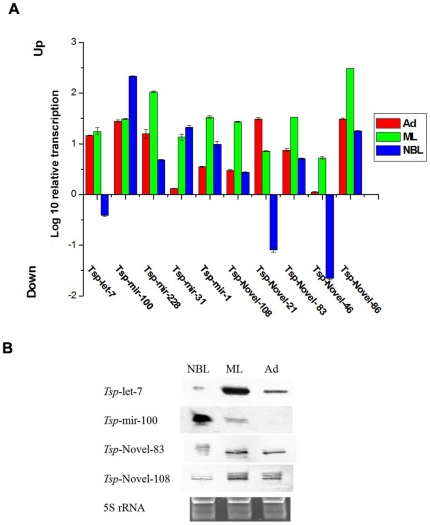
Here, the transcriptional profiles of miRNA and siRNA in three developmental stages of T. spiralis in the rat host were investigated, and compared by high-throughput cDNA sequencing technique ("RNA-seq"). 5,443,641 unique sequence tags were obtained. Of these, 21 represented conserved miRNAs related to 13 previously identified metazoan miRNA families and 213 were novel miRNAs so far unique to T. spiralis. Some of these miRNAs exhibited stage-specific expression. Expression of miRNAs was confirmed in three stages of the life cycle by qRT-PCR and northern blot analysis. In addition, endogenous siRNAs (endo-siRNAs) were found mainly derived from natural antisense transcripts (NAT) and transposable elements (TE) in the parasite.
We provide evidence for the presence of miRNAs and endo-siRNAs in T. spiralis. The miRNAs accounted for the major proportion of the small regulatory RNA population of T. spiralis, while fewer endogenous siRNAs were found. The finding of stage-specific expression patterns of the miRNAs in different developmental stages of T. spiralis suggests that miRNAs may play important roles in parasite development. Our data provide a basis for further understanding of the molecular regulation and functional evolution of miRNAs in parasitic nematodes.
旋毛虫是一种具有独特特征的寄生虫。它是一种多细胞生物,但具有细胞内寄生和发育阶段。旋毛虫是引起人畜共患旋毛虫病的寄生虫病原体,全球有超过 1000 万人感染,而寄生虫的生物学特性,尤其是发育调控机制在很大程度上尚不清楚。在其他生物体中,小非编码 RNA,如 microRNA(miRNA)和 small interfering RNA(siRNA)通过翻译抑制或 mRNA 降解来执行转录后调控,并且在不同物种中已经鉴定出大量的 miRNA。在旋毛虫中,小非编码 RNA 的谱及其功能仍知之甚少。
本研究采用高通量 cDNA 测序技术(“RNA-seq”),研究了旋毛虫在大鼠宿主中的三个发育阶段的 miRNA 和 siRNA 的转录谱,并进行了比较。共获得 5,443,641 个独特序列标签。其中,21 个代表与 13 个已鉴定的后生动物 miRNA 家族相关的保守 miRNA,213 个是迄今为止旋毛虫特有的新 miRNA。其中一些 miRNA 表现出阶段特异性表达。通过 qRT-PCR 和 northern blot 分析在生命周期的三个阶段证实了 miRNA 的表达。此外,内源性 siRNA(endo-siRNA)主要来源于寄生虫中的天然反义转录本(NAT)和转座元件(TE)。
本研究为旋毛虫中存在 miRNA 和内源性 siRNA 提供了证据。miRNA 占旋毛虫小调控 RNA 群体的主要比例,而发现的内源性 siRNA 较少。旋毛虫不同发育阶段 miRNA 的表达模式具有阶段特异性,表明 miRNA 可能在寄生虫发育中发挥重要作用。我们的数据为进一步了解寄生虫线虫中 miRNA 的分子调控和功能进化提供了基础。