Department of Internal Medicine, Brody School of Medicine, East Carolina University, Greenville, North Carolina, United States of America.
PLoS One. 2011;6(11):e27586. doi: 10.1371/journal.pone.0027586. Epub 2011 Nov 16.
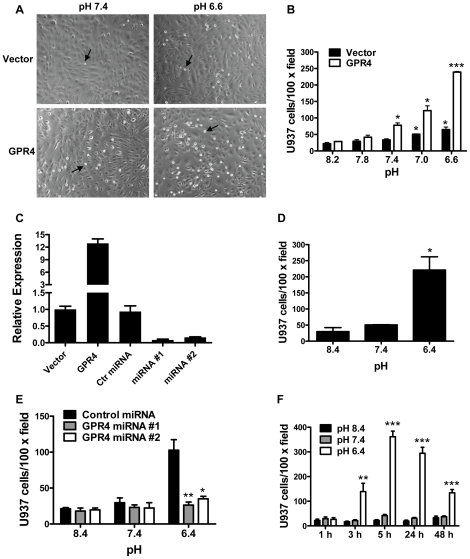
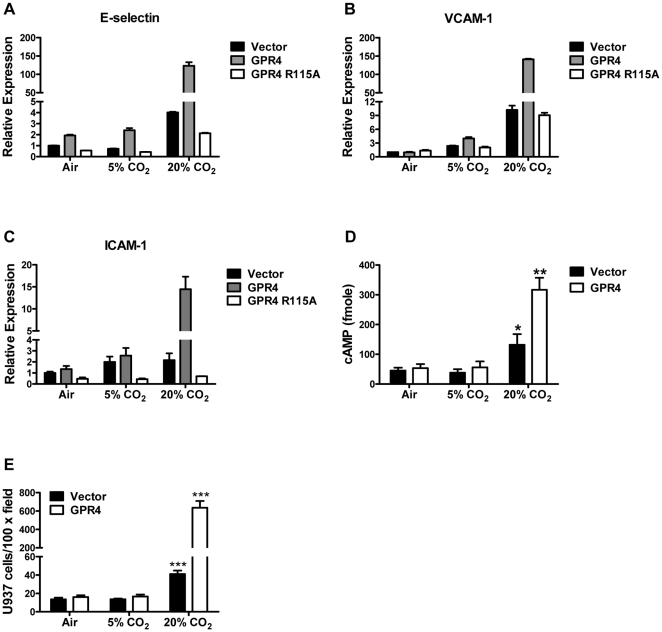
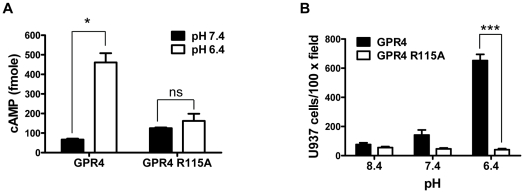
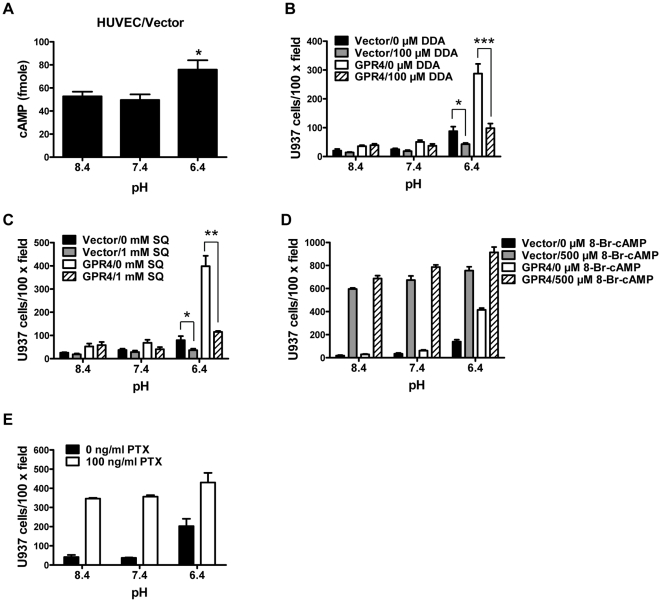
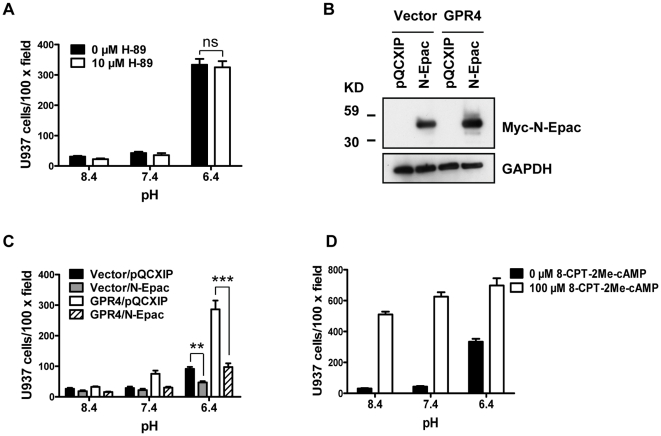
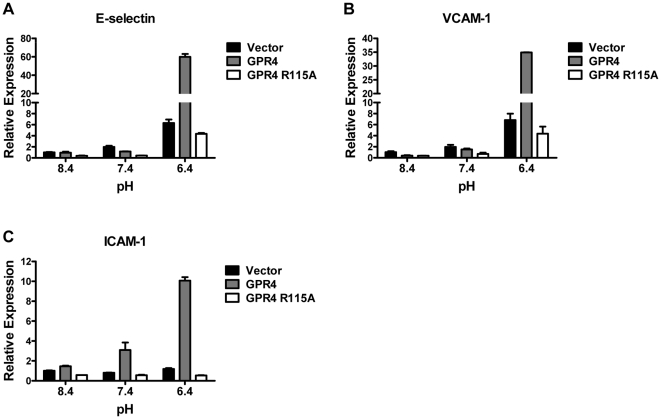
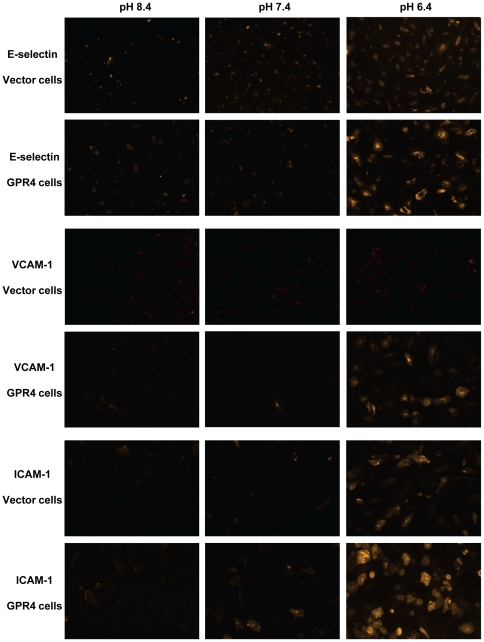
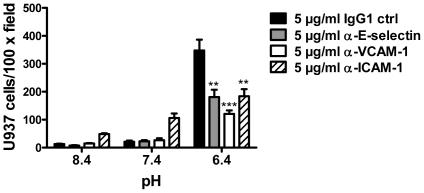
Endothelium-leukocyte interaction is critical for inflammatory responses. Whereas the tissue microenvironments are often acidic at inflammatory sites, the mechanisms by which cells respond to acidosis are not well understood. Using molecular, cellular and biochemical approaches, we demonstrate that activation of GPR4, a proton-sensing G protein-coupled receptor, by isocapnic acidosis increases the adhesiveness of human umbilical vein endothelial cells (HUVECs) that express GPR4 endogenously. Acidosis in combination with GPR4 overexpression further augments HUVEC adhesion with U937 monocytes. In contrast, overexpression of a G protein signaling-defective DRY motif mutant (R115A) of GPR4 does not elicit any increase of HUVEC adhesion, indicating the requirement of G protein signaling. Downregulation of GPR4 expression by RNA interference reduces the acidosis-induced HUVEC adhesion. To delineate downstream pathways, we show that inhibition of adenylate cyclase by inhibitors, 2',5'-dideoxyadenosine (DDA) or SQ 22536, attenuates acidosis/GPR4-induced HUVEC adhesion. Consistently, treatment with a cAMP analog or a G(i) signaling inhibitor increases HUVEC adhesiveness, suggesting a role of the G(s)/cAMP signaling in this process. We further show that the cAMP downstream effector Epac is important for acidosis/GPR4-induced cell adhesion. Moreover, activation of GPR4 by acidosis increases the expression of vascular adhesion molecules E-selectin, VCAM-1 and ICAM-1, which are functionally involved in acidosis/GPR4-mediated HUVEC adhesion. Similarly, hypercapnic acidosis can also activate GPR4 to stimulate HUVEC adhesion molecule expression and adhesiveness. These results suggest that acidosis/GPR4 signaling regulates endothelial cell adhesion mainly through the G(s)/cAMP/Epac pathway and may play a role in the inflammatory response of vascular endothelial cells.
内皮细胞-白细胞相互作用对于炎症反应至关重要。虽然组织微环境在炎症部位通常呈酸性,但细胞对酸中毒的反应机制尚不清楚。我们使用分子、细胞和生化方法证明,质子感应 G 蛋白偶联受体 GPR4 的激活可增加内源性表达 GPR4 的人脐静脉内皮细胞 (HUVEC) 的粘附性。酸中毒与 GPR4 过表达相结合可进一步增强 HUVEC 与 U937 单核细胞的粘附。相比之下,GPR4 的 G 蛋白信号缺陷 DRY 基序突变体 (R115A) 的过表达不会引起 HUVEC 粘附的任何增加,表明需要 G 蛋白信号。RNA 干扰下调 GPR4 表达可减少酸中毒诱导的 HUVEC 粘附。为了描绘下游途径,我们表明抑制剂 2',5'-二脱氧腺苷 (DDA) 或 SQ 22536 抑制腺苷酸环化酶可减弱酸中毒/GPR4 诱导的 HUVEC 粘附。一致地,用 cAMP 类似物或 G(i)信号抑制剂处理可增加 HUVEC 的粘附性,表明 G(s)/cAMP 信号在此过程中起作用。我们进一步表明,cAMP 下游效应物 Epac 在酸中毒/GPR4 诱导的细胞粘附中很重要。此外,酸中毒激活 GPR4 可增加血管粘附分子 E-选择素、VCAM-1 和 ICAM-1 的表达,这些分子在酸中毒/GPR4 介导的 HUVEC 粘附中起功能作用。同样,高碳酸酸中毒也可以激活 GPR4 来刺激 HUVEC 粘附分子的表达和粘附性。这些结果表明,酸中毒/GPR4 信号主要通过 G(s)/cAMP/Epac 途径调节内皮细胞粘附,可能在血管内皮细胞的炎症反应中发挥作用。