Department of Cell and Molecular Biology/Interface Biophysics, University of Gothenburg, Medicinaregatan 9E, Gothenburg, Sweden.
Int J Nanomedicine. 2011;6:2653-66. doi: 10.2147/IJN.S24578. Epub 2011 Oct 31.
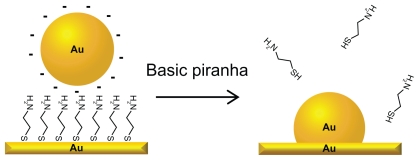
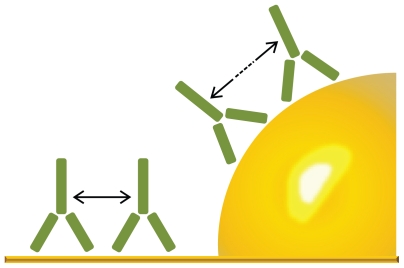
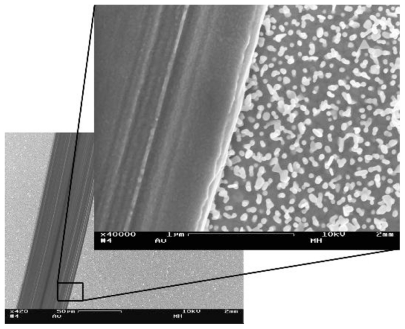
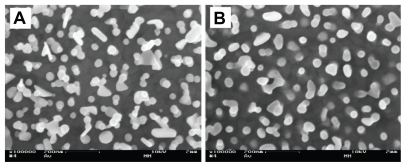
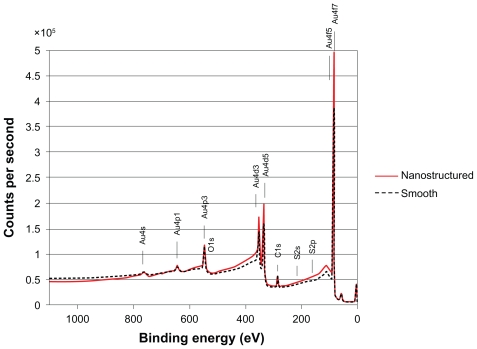
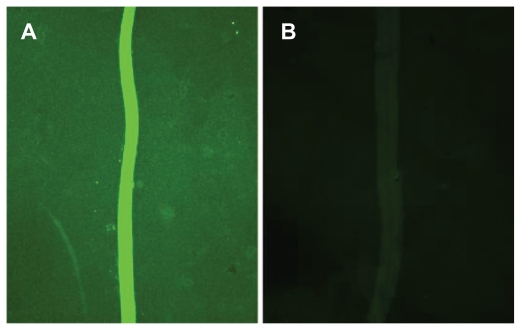
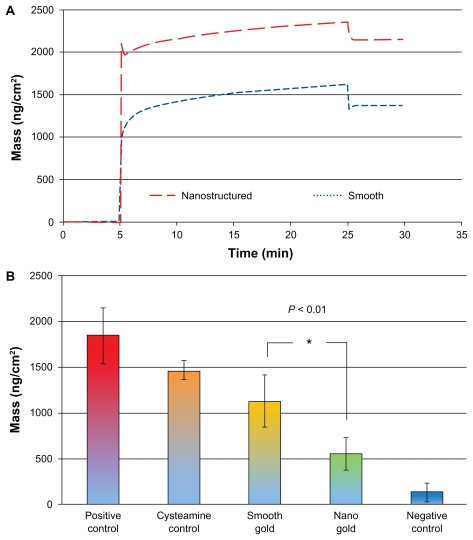
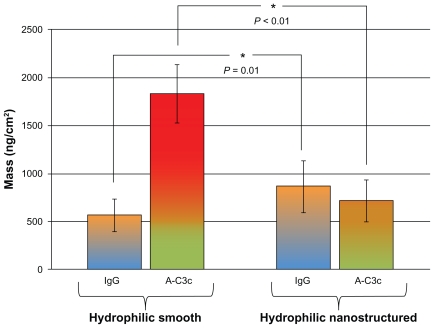
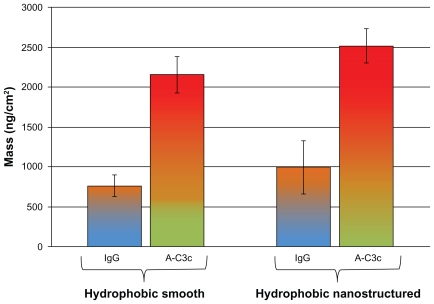
The immune complement (IC) is a cell-free protein cascade system, and the first part of the innate immune system to recognize foreign objects that enter the body. Elevated activation of the system from, for example, biomaterials or medical devices can result in both local and systemic adverse effects and eventually loss of function or rejection of the biomaterial. Here, the researchers have studied the effect of surface nanotopography on the activation of the IC system. By a simple nonlithographic process, gold nanoparticles with an average size of 58 nm were immobilized on a smooth gold substrate, creating surfaces where a nanostructure is introduced without changing the surface chemistry. The activation of the IC on smooth and nanostructured surfaces was viewed with fluorescence microscopy and quantified with quartz crystal microbalance with dissipation monitoring in human serum. Additionally, the ability of pre-adsorbed human immunoglobulin G (IgG) (a potent activator of the IC) to activate the IC after a change in surface hydrophobicity was studied. It was found that the activation of the IC was significantly attenuated on nanostructured surfaces with nearly a 50% reduction, even after pre-adsorption with IgG. An increase in surface hydrophobicity blunted this effect. The possible role of the curvature of the nanoparticles for the orientation of adsorbed IgG molecules, and how this can affect the subsequent activation of the IC, are discussed. The present findings are important for further understanding of how surface nanotopography affects complex protein adsorption, and for the future development of biomaterials and blood-contacting devices.
免疫补体(IC)是一种无细胞蛋白级联系统,是人体识别进入体内的外来物质的先天免疫系统的第一部分。例如,生物材料或医疗设备中系统的过度激活会导致局部和全身的不良反应,最终导致生物材料的功能丧失或被排斥。在这里,研究人员研究了表面纳米形貌对 IC 系统激活的影响。通过简单的非光刻工艺,将平均尺寸为 58nm 的金纳米粒子固定在光滑的金基底上,在不改变表面化学性质的情况下引入纳米结构,从而产生表面纳米形貌。通过荧光显微镜观察光滑和纳米结构表面上的 IC 激活,并用人血清中的石英晶体微天平耗散监测法进行定量。此外,还研究了预吸附人免疫球蛋白 G(IgG)(IC 的有效激活剂)在表面疏水性改变后激活 IC 的能力。结果发现,即使在预吸附 IgG 后,IC 的激活在纳米结构表面上也显著减弱,降低了近 50%。表面疏水性的增加削弱了这种效应。讨论了纳米粒子的曲率对吸附 IgG 分子取向的可能作用,以及这如何影响 IC 的后续激活。本研究结果对于进一步了解表面纳米形貌如何影响复杂的蛋白质吸附,以及生物材料和与血液接触的设备的未来发展具有重要意义。