Clinical Epidemiology Program, Ottawa Hospital Research Institute.
Infect Drug Resist. 2011;4:197-207. doi: 10.2147/IDR.S23174. Epub 2011 Oct 20.
The effectiveness of pandemic vaccine campaigns such as the H1N1 vaccine rollout is dependent on both the vaccines' effectiveness and the general public's willingness to be vaccinated. It is therefore critical to understand the factors that influence the decision of members of the public whether to get vaccinated with new, emergently released vaccines.
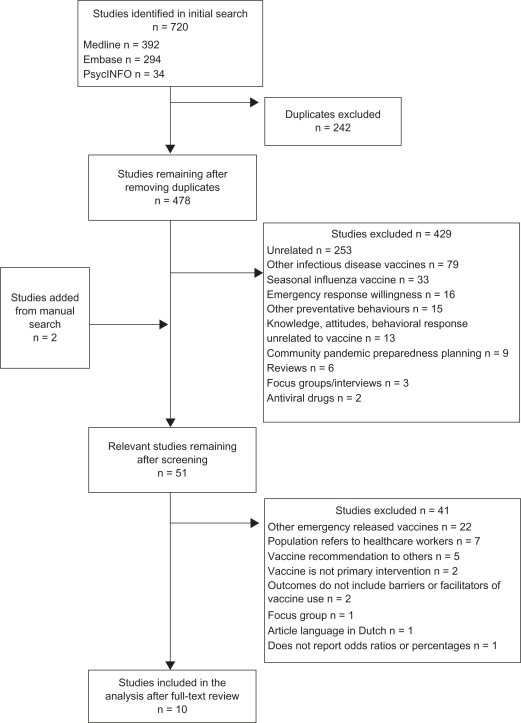
A systematic review of English language quantitative surveys was conducted to identify consistent predictors of the decision to accept or decline any (pre)pandemic vaccine, including the H1N1 influenza A vaccine. A total of ten studies were included in this review and all pertained to the 2009 H1N1 influenza A pandemic. Respondents' willingness to receive a pandemic vaccine ranged from 8%-67% across the ten studies. The factors reported to be consistent predictors of the intention to vaccinate were: risk of infection, proximity or severity of the public health event, severity of personal consequences resulting from the illness, harm or adverse events from the vaccine, acceptance of previous vaccination, and ethnicity. Age and sex were the demographic variables examined most frequently across the ten studies and there was no consistent association between these variables and the intention to accept or reject a pandemic vaccine.
Some predictors of the intention to accept or decline a (pre)pandemic vaccine or the H1N1 influenza A vaccine are consistently identified by surveys. Understanding the important factors influencing the acceptance of a pandemic vaccine by individual members of the public may help inform strategies to improve vaccine uptake during future pandemics.
大流行疫苗接种活动(如 H1N1 疫苗接种)的效果取决于疫苗的有效性和公众接种疫苗的意愿。因此,了解影响公众成员是否接受新发布的紧急疫苗的因素至关重要。
对英语定量调查进行了系统回顾,以确定决定接受或拒绝任何(前)大流行疫苗的一致预测因素,包括甲型 H1N1 流感疫苗。本综述共纳入 10 项研究,均与 2009 年甲型 H1N1 流感大流行有关。在这 10 项研究中,受访者接受大流行疫苗的意愿从 8%到 67%不等。报告为接种疫苗意向的一致预测因素包括:感染风险、公共卫生事件的接近程度或严重程度、疾病对个人造成的严重后果、疫苗的危害或不良事件、对以前接种疫苗的接受程度以及种族。年龄和性别是这 10 项研究中最常检查的人口统计学变量,但这些变量与接受或拒绝大流行疫苗的意向之间没有一致的关联。
一些预测接受或拒绝(前)大流行疫苗或甲型 H1N1 流感疫苗的意向的因素通过调查得到了一致确定。了解影响个体公众接受大流行疫苗的重要因素可能有助于为未来大流行期间提高疫苗接种率提供信息。