Behavioural Neurophysiology, Max-Planck-Institute for Medical Research, Jahnstr. 29, 69120 Heidelberg, Germany.
Curr Opin Neurobiol. 2012 Feb;22(1):170-6. doi: 10.1016/j.conb.2011.11.004. Epub 2011 Nov 24.
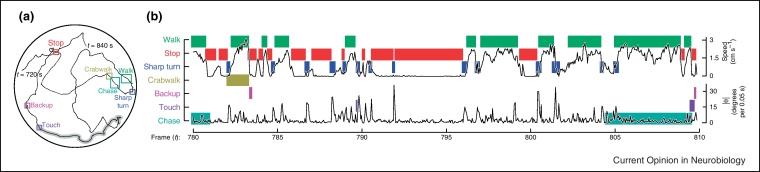
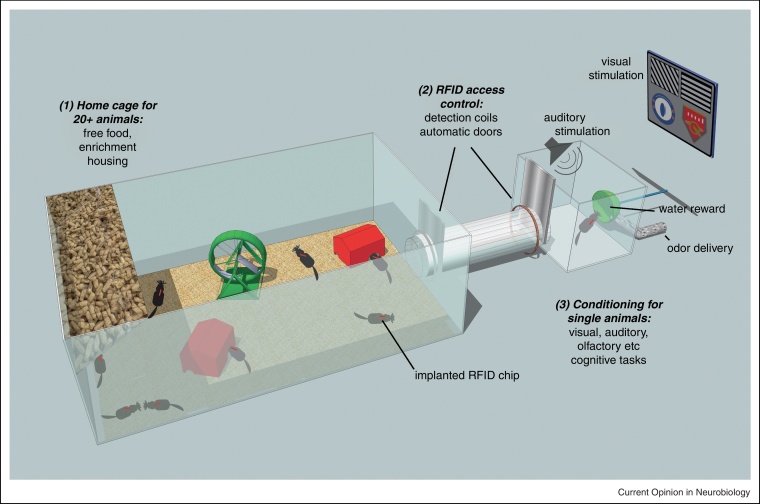
Genetics' demand for increased throughput is driving automatization of behavior analysis far beyond experimental workhorses like circadian monitors and the operant conditioning box. However, the new automation is not just faster: it is also allowing new kinds of experiments, many of which erase the boundaries of the traditional neuroscience disciplines (psychology, ethology and physiology) while producing insight into problems that were otherwise opaque. Ironically, a central theme of current automatization is to improve observation of animals in increasingly naturalistic environments. This is not just a return to 19th century priorities: the new observational methods provide unprecedented quantitation of actions and ever-closer integration with experimentation.
遗传学对高通量的需求正在推动行为分析的自动化发展,远远超出了像昼夜节律监测器和操作性条件反射箱这样的实验工具。然而,新的自动化不仅更快:它还允许进行新的实验类型,其中许多实验消除了传统神经科学学科(心理学、行为学和生理学)的界限,同时深入了解了原本不透明的问题。具有讽刺意味的是,当前自动化的一个核心主题是改善对动物在日益自然环境中的观察。这不仅仅是对 19 世纪重点的回归:新的观察方法提供了对行为的前所未有的定量分析,并与实验更紧密地结合在一起。