Institute of Health Sciences, Universiti Brunei Darussalam, Gadong, Brunei Darussalam.
PLoS Negl Trop Dis. 2011 Nov;5(11):e1369. doi: 10.1371/journal.pntd.0001369. Epub 2011 Nov 22.
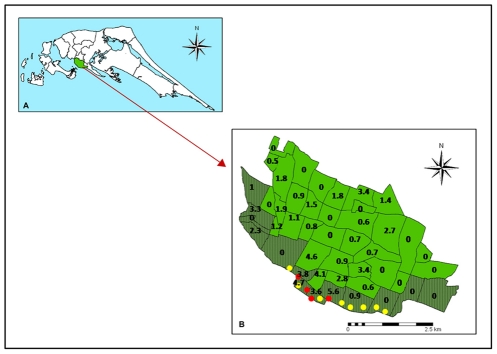
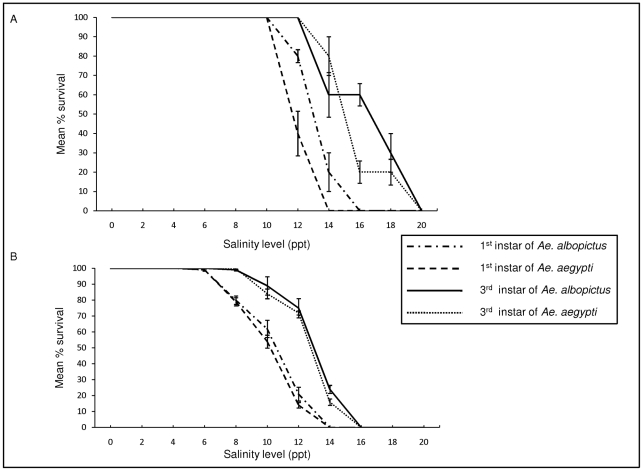
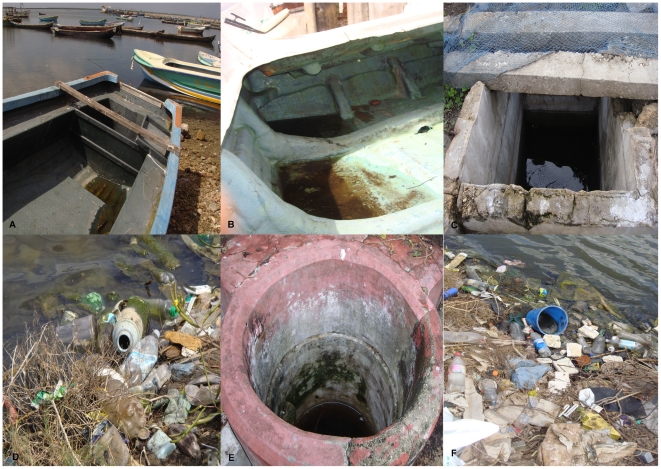
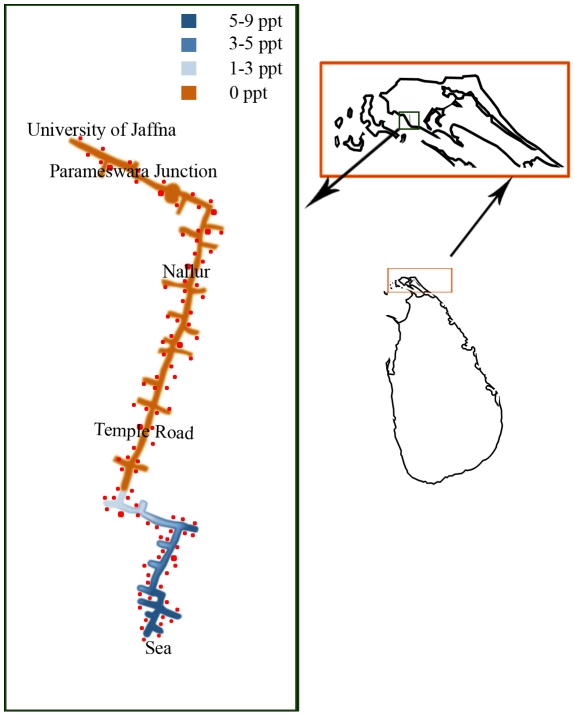
Aedes aegypti (Linnaeus) and Aedes albopictus Skuse mosquitoes transmit serious human arboviral diseases including yellow fever, dengue and chikungunya in many tropical and sub-tropical countries. Females of the two species have adapted to undergo preimaginal development in natural or artificial collections of freshwater near human habitations and feed on human blood. While there is an effective vaccine against yellow fever, the control of dengue and chikungunya is mainly dependent on reducing freshwater preimaginal development habitats of the two vectors. We show here that Ae. aegypti and Ae. albopictus lay eggs and their larvae survive to emerge as adults in brackish water (water with <0.5 ppt or parts per thousand, 0.5-30 ppt and >30 ppt salt are termed fresh, brackish and saline respectively). Brackish water with salinity of 2 to 15 ppt in discarded plastic and glass containers, abandoned fishing boats and unused wells in coastal peri-urban environment were found to contain Ae. aegypti and Ae. albopictus larvae. Relatively high incidence of dengue in Jaffna city, Sri Lanka was observed in the vicinity of brackish water habitats containing Ae. aegypti larvae. These observations raise the possibility that brackish water-adapted Ae. aegypti and Ae. albopictus may play a hitherto unrecognized role in transmitting dengue, chikungunya and yellow fever in coastal urban areas. National and international health authorities therefore need to take the findings into consideration and extend their vector control efforts, which are presently focused on urban freshwater habitats, to include brackish water larval development habitats.
埃及伊蚊(Linnaeus)和白纹伊蚊(Skuse)蚊子在许多热带和亚热带国家传播包括黄热病、登革热和基孔肯雅热在内的严重人类虫媒病毒病。这两个物种的雌性已经适应在靠近人类住区的天然或人工淡水收集处进行未成熟发育,并以人类血液为食。虽然有针对黄热病的有效疫苗,但登革热和基孔肯雅热的控制主要依赖于减少这两种媒介的淡水未成熟发育栖息地。我们在这里表明,埃及伊蚊和白纹伊蚊可以在咸水中(盐度<0.5 ppt 或千分之几,0.5-30 ppt 和>30 ppt 的水分别称为淡水、咸水和盐水)产卵,其幼虫可以存活并发育为成虫。在沿海城郊环境中废弃的塑料和玻璃容器、废弃的渔船和未使用的井中发现,盐度为 2 至 15 ppt 的咸水含有埃及伊蚊和白纹伊蚊的幼虫。在斯里兰卡贾夫纳市,靠近含有埃及伊蚊幼虫的咸水栖息地观察到相对较高的登革热发病率。这些观察结果提出了一种可能性,即适应咸水的埃及伊蚊和白纹伊蚊可能在沿海城市地区传播登革热、基孔肯雅热和黄热病方面发挥了迄今为止尚未被认识到的作用。因此,国家和国际卫生当局需要考虑到这些发现,并将其病媒控制工作从目前集中在城市淡水资源扩展到包括咸水幼虫发育栖息地。