Rossmanith Walter
Center for Anatomy & Cell Biology, Medical University of Vienna, Austria.
Biochim Biophys Acta. 2012 Sep-Oct;1819(9-10):1017-26. doi: 10.1016/j.bbagrm.2011.11.003. Epub 2011 Nov 23.
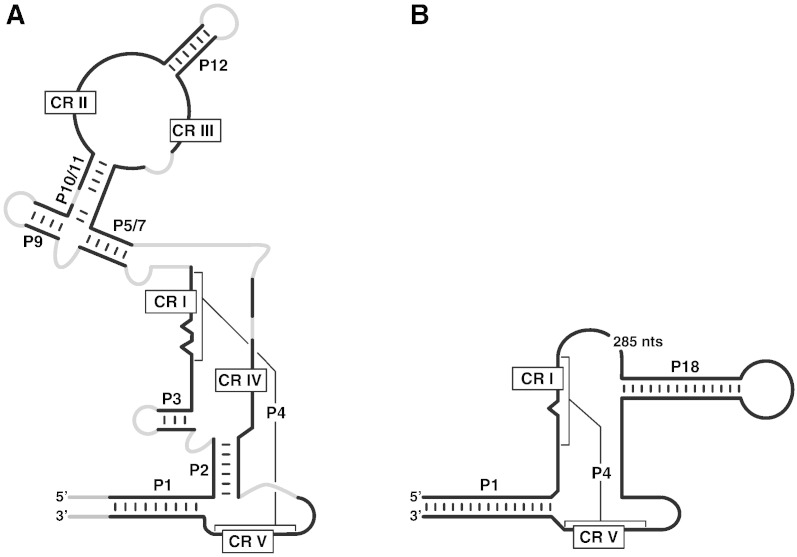
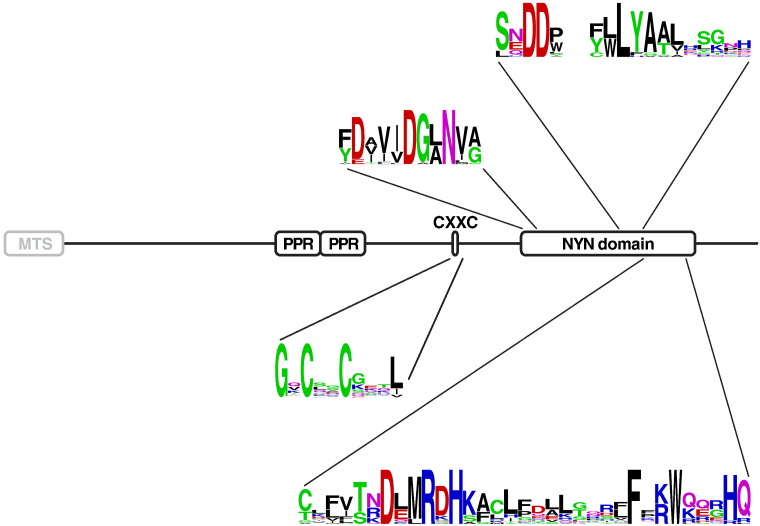
Mitochondrial tRNAs are generally synthesized as part of polycistronic transcripts. Release of tRNAs from these precursors is thus not only required to produce functional adaptors for translation, but also responsible for the maturation of other mitochondrial RNA species. Cleavage of mitochondrial tRNAs appears to be exclusively accomplished by endonucleases. 5'-end maturation in the mitochondria of different Eukarya is achieved by various kinds of RNase P, representing the full range of diversity found in this enzyme family. While ribonucleoprotein enzymes with RNA components of bacterial-like appearance are found in a few unrelated protists, algae, and fungi, highly degenerate RNAs of dramatic size variability are found in the mitochondria of many fungi. The majority of mitochondrial RNase P enzymes, however, appear to be pure protein enzymes. Human mitochondrial RNase P, the first to be identified and possibly the prototype of all animal mitochondrial RNases P, is composed of three proteins. Homologs of its nuclease subunit MRPP3/PRORP, are also found in plants, algae and several protists, where they are apparently responsible for RNase P activity in mitochondria (and beyond) without the help of extra subunits. The diversity of RNase P enzymes is contrasted by the uniformity of mitochondrial RNases Z, which are responsible for 3'-end processing. Only the long form of RNase Z, which is restricted to eukarya, is found in mitochondria, even when an additional short form is present in the same organism. Mitochondrial tRNA processing thus appears dominated by new, eukaryal inventions rather than bacterial heritage. This article is part of a Special Issue entitled: Mitochondrial Gene Expression.
线粒体tRNA通常作为多顺反子转录本的一部分进行合成。因此,从这些前体中释放tRNA不仅是产生用于翻译的功能性衔接子所必需的,而且还负责其他线粒体RNA种类的成熟。线粒体tRNA的切割似乎完全由核酸内切酶完成。不同真核生物线粒体中的5'-末端成熟是通过各种RNase P实现的,这代表了该酶家族中发现的全部多样性。虽然在一些不相关的原生生物、藻类和真菌中发现了具有类似细菌外观RNA成分的核糖核蛋白酶,但在许多真菌的线粒体中发现了大小差异极大的高度退化RNA。然而,大多数线粒体RNase P酶似乎是纯蛋白酶。人类线粒体RNase P是第一个被鉴定的,可能是所有动物线粒体RNase P的原型,由三种蛋白质组成。其核酸酶亚基MRPP3/PRORP的同源物也存在于植物、藻类和几种原生生物中,在那里它们显然在没有额外亚基帮助的情况下负责线粒体(及其他)中的RNase P活性。与RNase P酶的多样性形成对比的是线粒体RNase Z的一致性,RNase Z负责3'-末端加工。即使在同一生物体中存在额外的短形式,线粒体中也只发现了仅限于真核生物的长形式RNase Z。因此,线粒体tRNA加工似乎由新的真核生物发明而非细菌遗传特征主导。本文是名为“线粒体基因表达”的特刊的一部分。