Department of Biology and Biotechnology Center, Western Kentucky University, Bowling Green, Kentucky, United States of America.
PLoS One. 2011;6(11):e28372. doi: 10.1371/journal.pone.0028372. Epub 2011 Nov 30.
Previous microarray analysis showed that growth hormone (GH) was significantly upregulated following acoustic trauma in the zebrafish (Danio rerio) ear suggesting that GH may play an important role in the process of auditory hair cell regeneration. Our objective was to examine the effects of exogenous and endogenous GH on zebrafish inner ear epithelia following acoustic trauma.
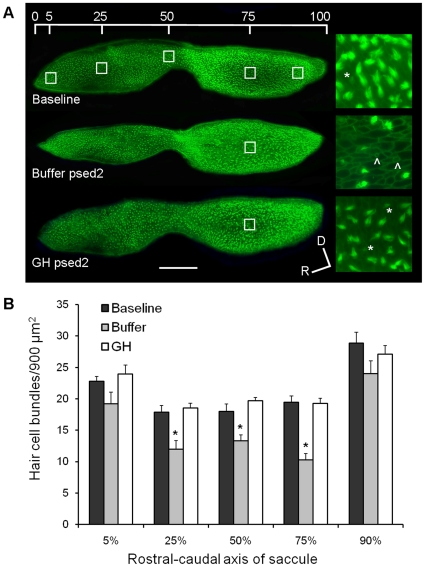
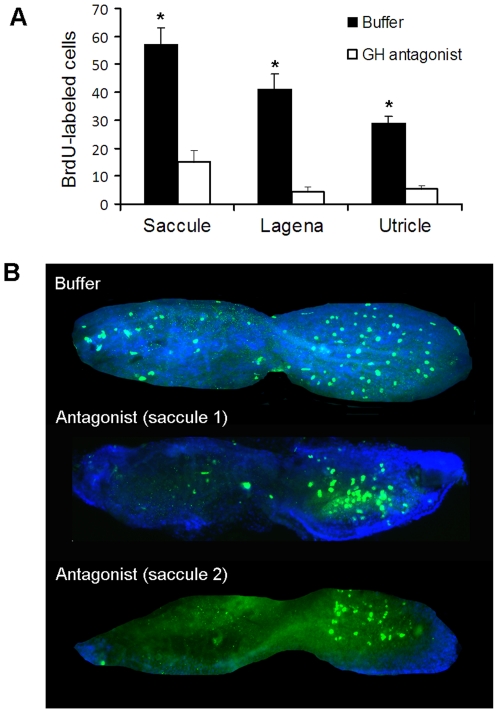
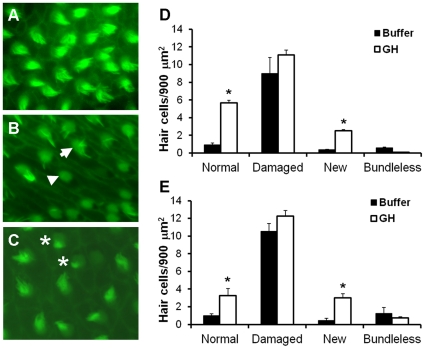
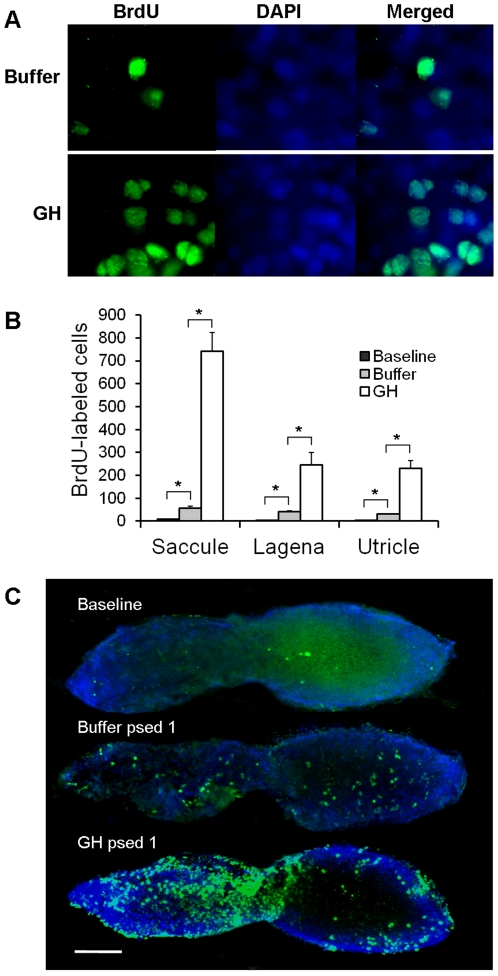
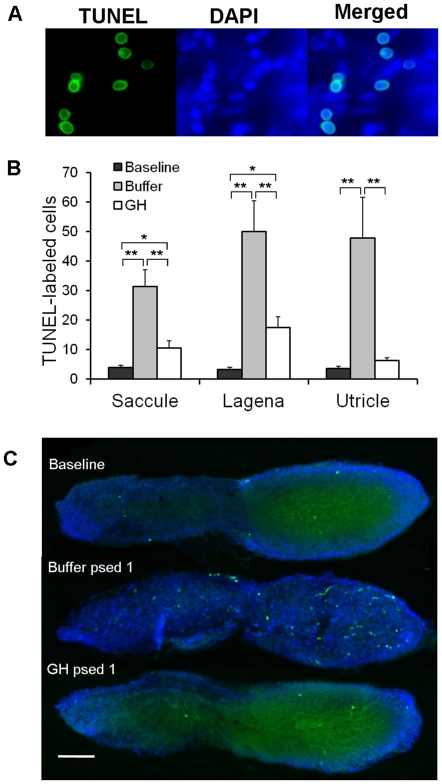
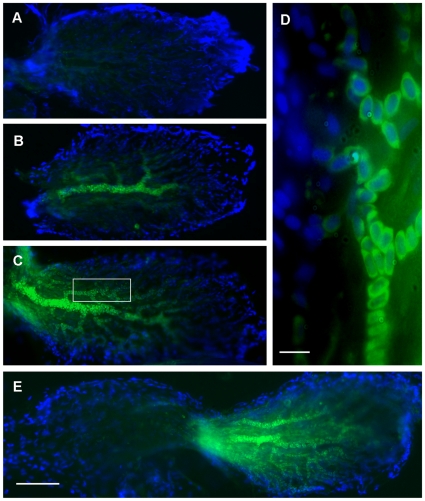
METHODOLOGY/PRINCIPAL FINDINGS: We induced auditory hair cell damage by exposing zebrafish to acoustic overstimulation. Fish were then injected intraperitoneally with either carp GH or buffer, and placed in a recovery tank for either one or two days. Phalloidin-, bromodeoxyuridine (BrdU)-, and TUNEL-labeling were used to examine hair cell densities, cell proliferation, and apoptosis, respectively. Two days post-trauma, saccular hair cell densities in GH-treated fish were similar to that of baseline controls, whereas buffer-injected fish showed significantly reduced densities of hair cell bundles. Cell proliferation was greater and apoptosis reduced in the saccules, lagenae, and utricles of GH-treated fish one day following trauma compared to controls. Fluorescent in situ hybridization (FISH) was used to examine the localization of GH mRNA in the zebrafish ear. At one day post-trauma, GH mRNA expression appeared to be localized perinuclearly around erythrocytes in the blood vessels of the inner ear epithelia. In order to examine the effects of endogenous GH on the process of cell proliferation in the ear, a GH antagonist was injected into zebrafish immediately following acoustic trauma, resulting in significantly decreased cell proliferation one day post-trauma in all three zebrafish inner ear end organs.
CONCLUSIONS/SIGNIFICANCE: Our results show that exogenous GH promotes post-trauma auditory hair cell regeneration in the zebrafish ear through stimulating proliferation and suppressing apoptosis, and that endogenous GH signals are present in the zebrafish ear during the process of auditory hair cell regeneration.
先前的基因芯片分析显示,在斑马鱼(Danio rerio)耳部受到声创伤后,生长激素(GH)显著上调,表明 GH 可能在听觉毛细胞再生过程中发挥重要作用。我们的目的是研究外源性和内源性 GH 对声创伤后斑马鱼内耳上皮的影响。
方法/主要发现:我们通过使斑马鱼暴露于过强的声音刺激来诱导听觉毛细胞损伤。然后,将鱼腹膜内注射鲤鱼 GH 或缓冲液,并将其置于恢复槽中 1 或 2 天。使用鬼笔环肽、溴脱氧尿苷(BrdU)和 TUNEL 标记分别检测毛细胞密度、细胞增殖和细胞凋亡。创伤后 2 天,GH 处理组的囊状毛细胞密度与基线对照组相似,而缓冲液注射组的毛细胞束密度明显降低。创伤后 1 天,与对照组相比,GH 处理组的囊、镫骨和椭圆囊中的细胞增殖增加,凋亡减少。荧光原位杂交(FISH)用于检测 GH mRNA 在斑马鱼耳中的定位。创伤后 1 天,GH mRNA 表达似乎定位于内耳上皮血管中红细胞周围的核周。为了研究内源性 GH 对耳部细胞增殖过程的影响,我们在声创伤后立即向斑马鱼注射 GH 拮抗剂,导致所有三个斑马鱼内耳终末器官在创伤后 1 天的细胞增殖显著减少。
结论/意义:我们的结果表明,外源性 GH 通过刺激增殖和抑制凋亡促进斑马鱼耳部创伤后听觉毛细胞的再生,并且内源性 GH 信号在听觉毛细胞再生过程中存在于斑马鱼耳中。