Department of Molecular Genetics, Weizmann Institute of Science, Rehovot, 76100, Israel.
Hum Genomics. 2011 Oct;5(6):709-17. doi: 10.1186/1479-7364-5-6-709.
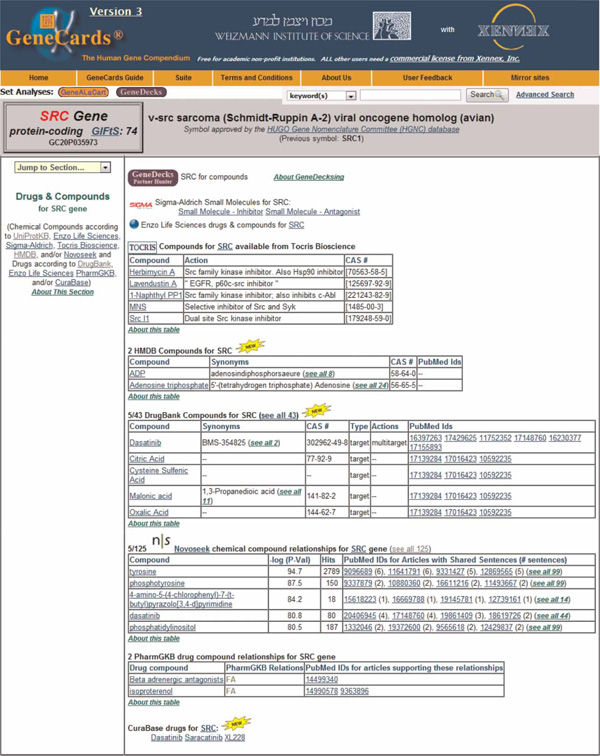
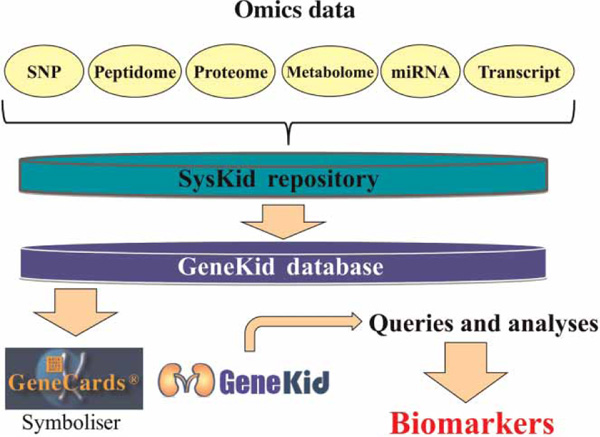
Since 1998, the bioinformatics, systems biology, genomics and medical communities have enjoyed a synergistic relationship with the GeneCards database of human genes (http://www.genecards.org). This human gene compendium was created to help to introduce order into the increasing chaos of information flow. As a consequence of viewing details and deep links related to specific genes, users have often requested enhanced capabilities, such that, over time, GeneCards has blossomed into a suite of tools (including GeneDecks, GeneALaCart, GeneLoc, GeneNote and GeneAnnot) for a variety of analyses of both single human genes and sets thereof. In this paper, we focus on inhouse and external research activities which have been enabled, enhanced, complemented and, in some cases, motivated by GeneCards. In turn, such interactions have often inspired and propelled improvements in GeneCards. We describe here the evolution and architecture of this project, including examples of synergistic applications in diverse areas such as synthetic lethality in cancer, the annotation of genetic variations in disease, omics integration in a systems biology approach to kidney disease, and bioinformatics tools.
自 1998 年以来,生物信息学、系统生物学、基因组学和医学界一直与人类基因的 GeneCards 数据库(http://www.genecards.org)保持着协同关系。这个人类基因纲要的创建旨在帮助引入秩序到信息流的日益混乱中。由于查看了与特定基因相关的详细信息和深度链接,用户经常要求增强功能,因此,随着时间的推移,GeneCards 已经发展成为一套工具(包括 GeneDecks、GeneALaCart、GeneLoc、GeneNote 和 GeneAnnot),用于对单个人类基因及其集合进行各种分析。在本文中,我们专注于由 GeneCards 支持、增强、补充和在某些情况下激发的内部和外部研究活动。反过来,这些交互作用经常激发并推动了 GeneCards 的改进。我们在这里描述了这个项目的演变和架构,包括在癌症中的合成致死性、疾病中遗传变异的注释、系统生物学方法在肾病中的组学整合以及生物信息学工具等不同领域中的协同应用的例子。