• 文献检索
  • 文档翻译
  • 深度研究
  • 学术资讯
  • Suppr Zotero 插件Zotero 插件
  • 邀请有礼
  • 套餐&价格
  • 历史记录
应用&插件
Suppr Zotero 插件Zotero 插件浏览器插件Mac 客户端Windows 客户端微信小程序
定价
高级版会员购买积分包购买API积分包
服务
文献检索文档翻译深度研究API 文档MCP 服务
关于我们
关于 Suppr公司介绍联系我们用户协议隐私条款
关注我们

Suppr 超能文献

核心技术专利:CN118964589B侵权必究
粤ICP备2023148730 号-1Suppr @ 2026

文献检索

告别复杂PubMed语法,用中文像聊天一样搜索,搜遍4000万医学文献。AI智能推荐,让科研检索更轻松。

立即免费搜索

文件翻译

保留排版,准确专业,支持PDF/Word/PPT等文件格式,支持 12+语言互译。

免费翻译文档

深度研究

AI帮你快速写综述,25分钟生成高质量综述,智能提取关键信息,辅助科研写作。

立即免费体验

基于优化竞争神经网络的电子鼻。

Electronic nose based on an optimized competition neural network.

机构信息

School of Automation Engineering, Northeast Dianli University, Jilin City 132012, China.

出版信息

Sensors (Basel). 2011;11(5):5005-19. doi: 10.3390/s110505005. Epub 2011 May 4.

DOI:10.3390/s110505005
PMID:22163887
原文链接:https://pmc.ncbi.nlm.nih.gov/articles/PMC3231367/
Abstract

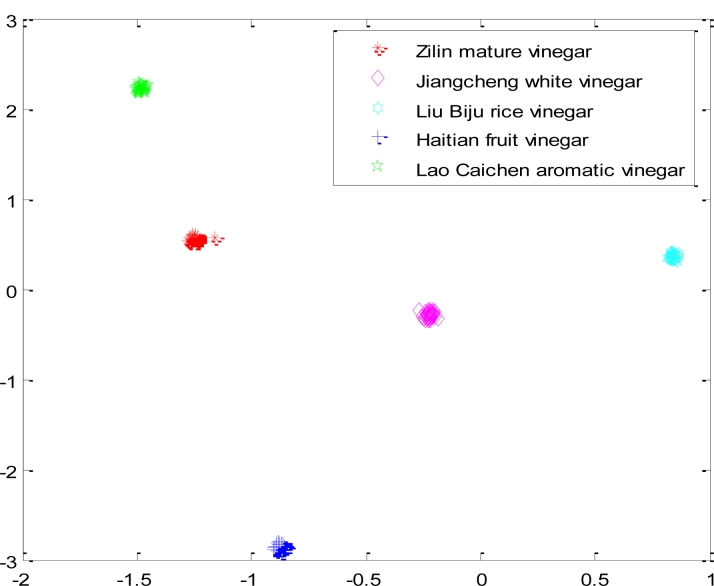
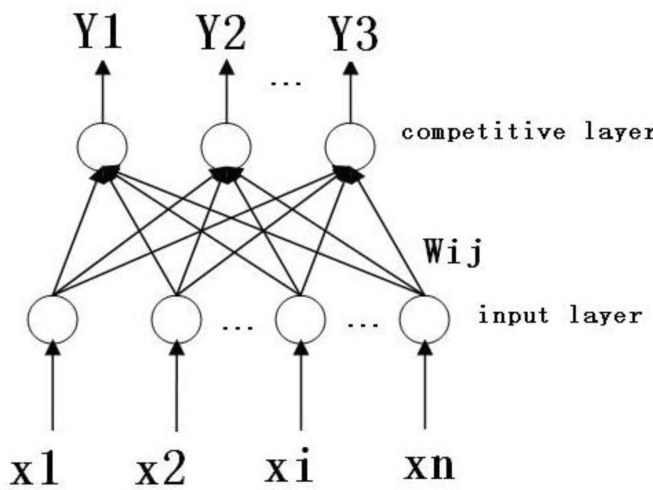
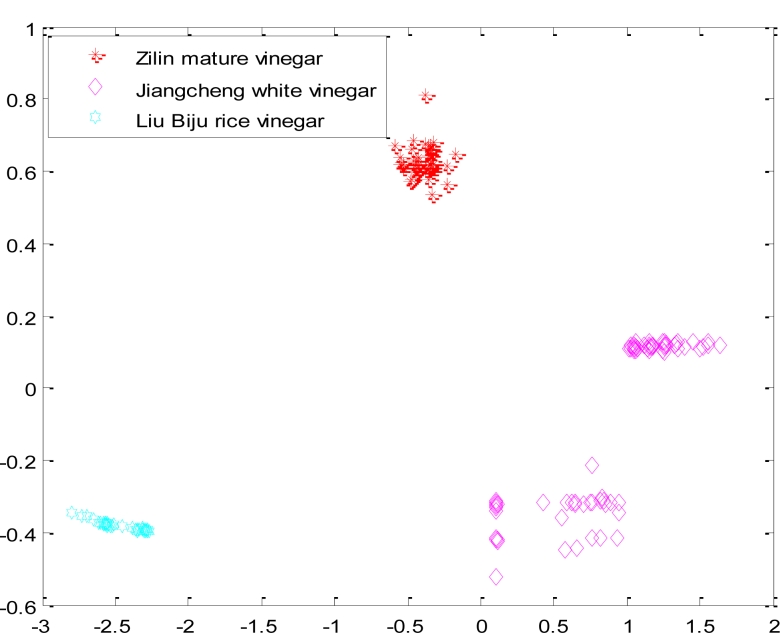
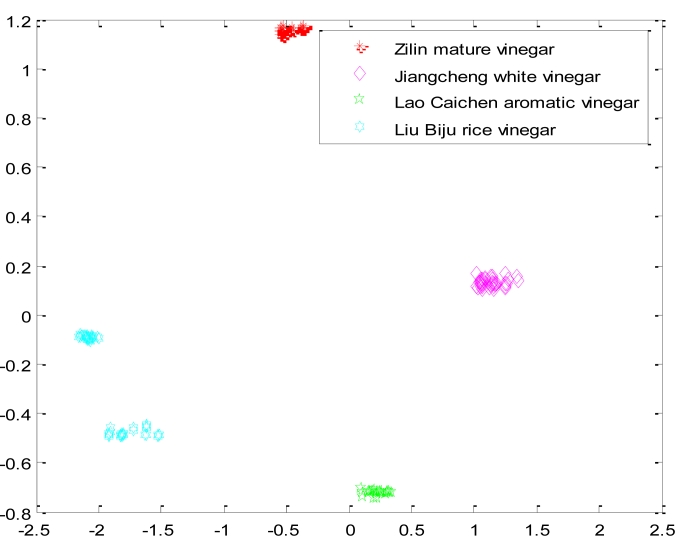
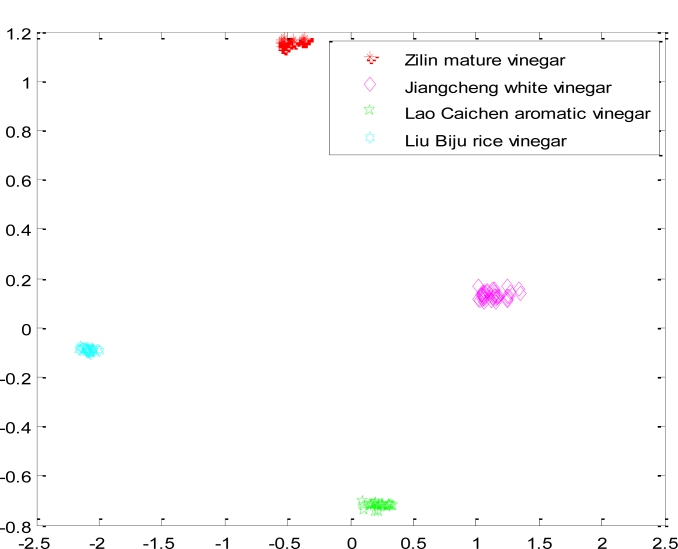
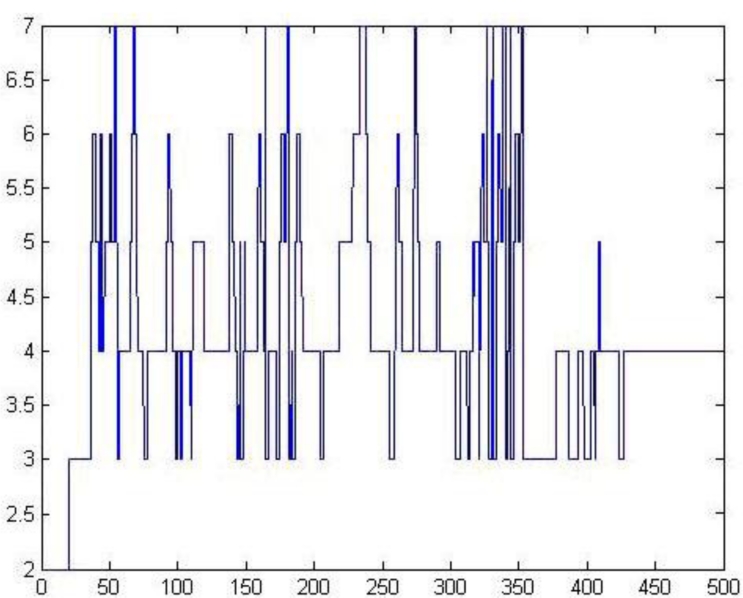
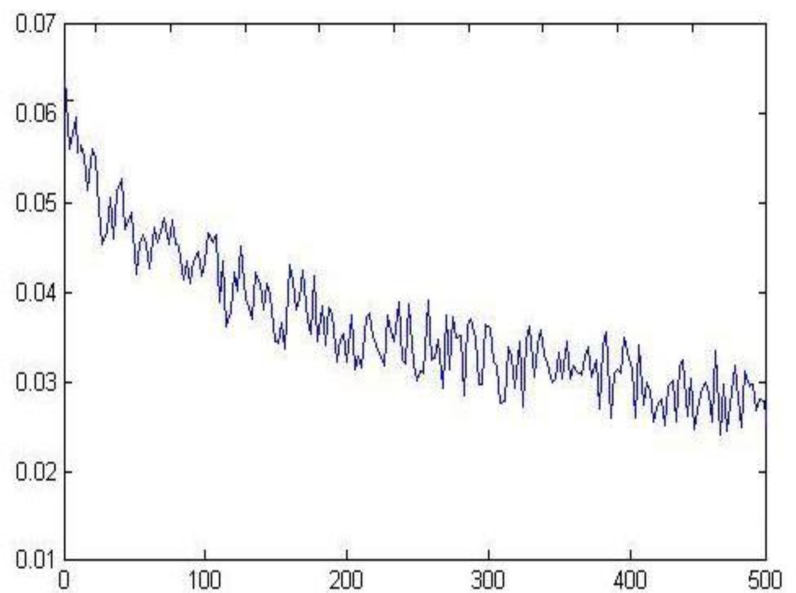
In view of the fact that there are disadvantages in that the class number must be determined in advance, the value of learning rates are hard to fix, etc., when using traditional competitive neural networks (CNNs) in electronic noses (E-noses), an optimized CNN method was presented. The optimized CNN was established on the basis of the optimum class number of samples according to the changes of the Davies and Bouldin (DB) value and it could increase, divide, or delete neurons in order to adjust the number of neurons automatically. Moreover, the learning rate changes according to the variety of training times of each sample. The traditional CNN and the optimized CNN were applied to five kinds of sorted vinegars with an E-nose. The results showed that optimized network structures could adjust the number of clusters dynamically and resulted in good classifications.

摘要

鉴于传统竞争神经网络(CNNs)在电子鼻(E-nose)中应用存在类数必须提前确定、学习率取值困难等缺点,提出了一种优化的 CNN 方法。该优化的 CNN 是根据 Davies 和 Bouldin(DB)值的变化,在样本最优类数的基础上建立的,可以增加、划分或删除神经元,从而自动调整神经元的数量。此外,学习率根据每个样本的训练次数的变化而变化。将传统 CNN 和优化的 CNN 应用于电子鼻的 5 种分类醋中。结果表明,优化的网络结构可以动态调整聚类数,从而得到较好的分类效果。
https://cdn.ncbi.nlm.nih.gov/pmc/blobs/9e09/3231367/d07360ae9da8/sensors-11-05005f12.jpg
https://cdn.ncbi.nlm.nih.gov/pmc/blobs/9e09/3231367/900fb35b2a7e/sensors-11-05005f1.jpg
https://cdn.ncbi.nlm.nih.gov/pmc/blobs/9e09/3231367/da29ee41aa89/sensors-11-05005f2.jpg
https://cdn.ncbi.nlm.nih.gov/pmc/blobs/9e09/3231367/78cb41f7621f/sensors-11-05005f3.jpg
https://cdn.ncbi.nlm.nih.gov/pmc/blobs/9e09/3231367/f04e61b5c152/sensors-11-05005f4.jpg
https://cdn.ncbi.nlm.nih.gov/pmc/blobs/9e09/3231367/53f8829bb061/sensors-11-05005f5.jpg
https://cdn.ncbi.nlm.nih.gov/pmc/blobs/9e09/3231367/041ab8def7bd/sensors-11-05005f6.jpg
https://cdn.ncbi.nlm.nih.gov/pmc/blobs/9e09/3231367/03d04759591d/sensors-11-05005f7.jpg
https://cdn.ncbi.nlm.nih.gov/pmc/blobs/9e09/3231367/9bb19c3ab5d2/sensors-11-05005f8.jpg
https://cdn.ncbi.nlm.nih.gov/pmc/blobs/9e09/3231367/0c868cfe53c7/sensors-11-05005f9.jpg
https://cdn.ncbi.nlm.nih.gov/pmc/blobs/9e09/3231367/a731dfa4ceed/sensors-11-05005f10.jpg
https://cdn.ncbi.nlm.nih.gov/pmc/blobs/9e09/3231367/cc18abac89f6/sensors-11-05005f11.jpg
https://cdn.ncbi.nlm.nih.gov/pmc/blobs/9e09/3231367/d07360ae9da8/sensors-11-05005f12.jpg
https://cdn.ncbi.nlm.nih.gov/pmc/blobs/9e09/3231367/900fb35b2a7e/sensors-11-05005f1.jpg
https://cdn.ncbi.nlm.nih.gov/pmc/blobs/9e09/3231367/da29ee41aa89/sensors-11-05005f2.jpg
https://cdn.ncbi.nlm.nih.gov/pmc/blobs/9e09/3231367/78cb41f7621f/sensors-11-05005f3.jpg
https://cdn.ncbi.nlm.nih.gov/pmc/blobs/9e09/3231367/f04e61b5c152/sensors-11-05005f4.jpg
https://cdn.ncbi.nlm.nih.gov/pmc/blobs/9e09/3231367/53f8829bb061/sensors-11-05005f5.jpg
https://cdn.ncbi.nlm.nih.gov/pmc/blobs/9e09/3231367/041ab8def7bd/sensors-11-05005f6.jpg
https://cdn.ncbi.nlm.nih.gov/pmc/blobs/9e09/3231367/03d04759591d/sensors-11-05005f7.jpg
https://cdn.ncbi.nlm.nih.gov/pmc/blobs/9e09/3231367/9bb19c3ab5d2/sensors-11-05005f8.jpg
https://cdn.ncbi.nlm.nih.gov/pmc/blobs/9e09/3231367/0c868cfe53c7/sensors-11-05005f9.jpg
https://cdn.ncbi.nlm.nih.gov/pmc/blobs/9e09/3231367/a731dfa4ceed/sensors-11-05005f10.jpg
https://cdn.ncbi.nlm.nih.gov/pmc/blobs/9e09/3231367/cc18abac89f6/sensors-11-05005f11.jpg
https://cdn.ncbi.nlm.nih.gov/pmc/blobs/9e09/3231367/d07360ae9da8/sensors-11-05005f12.jpg

相似文献

1
Electronic nose based on an optimized competition neural network.基于优化竞争神经网络的电子鼻。
Sensors (Basel). 2011;11(5):5005-19. doi: 10.3390/s110505005. Epub 2011 May 4.
2
Automatic recognition of holistic functional brain networks using iteratively optimized convolutional neural networks (IO-CNN) with weak label initialization.利用具有弱标签初始化的迭代优化卷积神经网络(IO-CNN)自动识别整体功能脑网络。
Med Image Anal. 2018 Jul;47:111-126. doi: 10.1016/j.media.2018.04.002.
3
Neonatal Seizure Detection Using Deep Convolutional Neural Networks.使用深度卷积神经网络进行新生儿癫痫发作检测。
Int J Neural Syst. 2019 May;29(4):1850011. doi: 10.1142/S0129065718500119. Epub 2018 Apr 2.
4
Evolution of Deep Convolutional Neural Networks Using Cartesian Genetic Programming.基于笛卡尔遗传编程的深度卷积神经网络进化。
Evol Comput. 2020 Spring;28(1):141-163. doi: 10.1162/evco_a_00253. Epub 2019 Mar 22.
5
Chlorophenols identification in water using an electronic nose and ANNs (artificial neural networks) classification.利用电子鼻和人工神经网络分类法识别水中的氯酚
Water Sci Technol. 2004;49(9):99-105.
6
White blood cells detection and classification based on regional convolutional neural networks.基于区域卷积神经网络的白细胞检测与分类。
Med Hypotheses. 2020 Feb;135:109472. doi: 10.1016/j.mehy.2019.109472. Epub 2019 Nov 4.
7
Development of convolutional neural networks for recognition of tenogenic differentiation based on cellular morphology.基于细胞形态的肌腱分化识别卷积神经网络的开发。
Comput Methods Programs Biomed. 2021 Sep;208:106279. doi: 10.1016/j.cmpb.2021.106279. Epub 2021 Jul 21.
8
Automatically Designing CNN Architectures Using the Genetic Algorithm for Image Classification.使用遗传算法自动设计用于图像分类的 CNN 架构。
IEEE Trans Cybern. 2020 Sep;50(9):3840-3854. doi: 10.1109/TCYB.2020.2983860. Epub 2020 Apr 21.
9
Dual Model Medical Invoices Recognition.双模型医疗发票识别。
Sensors (Basel). 2019 Oct 10;19(20):4370. doi: 10.3390/s19204370.
10
High-Density Surface EMG-Based Gesture Recognition Using a 3D Convolutional Neural Network.基于高密度表面肌电的三维卷积神经网络手势识别
Sensors (Basel). 2020 Feb 21;20(4):1201. doi: 10.3390/s20041201.

引用本文的文献

1
A rapid discrimination of authentic and unauthentic Radix Angelicae Sinensis growth regions by electronic nose coupled with multivariate statistical analyses.基于电子鼻结合多元统计分析对当归正品与非正品生长区域的快速鉴别
Sensors (Basel). 2014 Oct 27;14(11):20134-48. doi: 10.3390/s141120134.

本文引用的文献

1
Hazardous Odor Recognition by CMAC Based Neural Networks.基于 CMAC 神经网络的危险气味识别。
Sensors (Basel). 2009;9(9):7308-19. doi: 10.3390/s90907308. Epub 2009 Sep 11.
2
Detection and classification of human body odor using an electronic nose.使用电子鼻检测和分类人体气味。
Sensors (Basel). 2009;9(9):7234-49. doi: 10.3390/s90907234. Epub 2009 Sep 9.
3
Classification of agarwood oil using an electronic nose.利用电子鼻对沉香精油进行分类。
Sensors (Basel). 2010;10(5):4675-85. doi: 10.3390/s100504675. Epub 2010 May 6.
4
Improved classification of Orthosiphon stamineus by data fusion of electronic nose and tongue sensors.电子鼻和舌传感器数据融合提高了蛇菰属植物的分类。
Sensors (Basel). 2010;10(10):8782-96. doi: 10.3390/s101008782. Epub 2010 Sep 28.
5
Monitoring of warmed-over flavour in pork using the electronic nose - correlation to sensory attributes and secondary lipid oxidation products.使用电子鼻监测猪肉中的回热风味——与感官特性和次级脂质氧化产物的相关性
Meat Sci. 2008 Dec;80(4):1254-63. doi: 10.1016/j.meatsci.2008.05.040. Epub 2008 Jun 24.
6
A cluster separation measure.一种聚类分离度量。
IEEE Trans Pattern Anal Mach Intell. 1979 Feb;1(2):224-7.
7
Biomimetic sensing layer based on electrospun conductive polymer webs.基于电纺导电聚合物纤维网的仿生传感层。
Biosens Bioelectron. 2011 Jan 15;26(5):2460-5. doi: 10.1016/j.bios.2010.10.032. Epub 2010 Oct 27.