Department of Epidemiology and Public Health, Swiss Tropical and Public Health Institute, Basel, Switzerland.
PLoS Negl Trop Dis. 2011 Dec;5(12):e1404. doi: 10.1371/journal.pntd.0001404. Epub 2011 Dec 13.
After many years of general neglect, interest has grown and efforts came under way for the mapping, control, surveillance, and eventual elimination of neglected tropical diseases (NTDs). Disease risk estimates are a key feature to target control interventions, and serve as a benchmark for monitoring and evaluation. What is currently missing is a georeferenced global database for NTDs providing open-access to the available survey data that is constantly updated and can be utilized by researchers and disease control managers to support other relevant stakeholders. We describe the steps taken toward the development of such a database that can be employed for spatial disease risk modeling and control of NTDs.
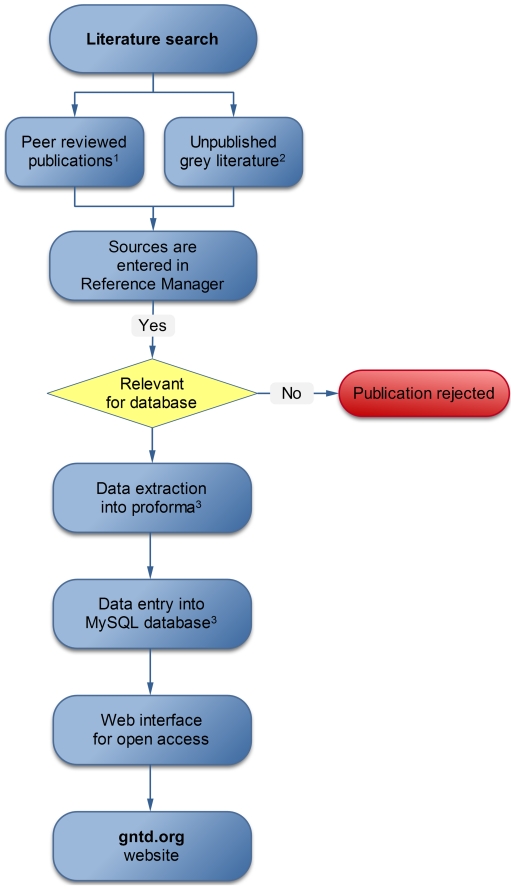
With an emphasis on schistosomiasis in Africa, we systematically searched the literature (peer-reviewed journals and 'grey literature'), contacted Ministries of Health and research institutions in schistosomiasis-endemic countries for location-specific prevalence data and survey details (e.g., study population, year of survey and diagnostic techniques). The data were extracted, georeferenced, and stored in a MySQL database with a web interface allowing free database access and data management.
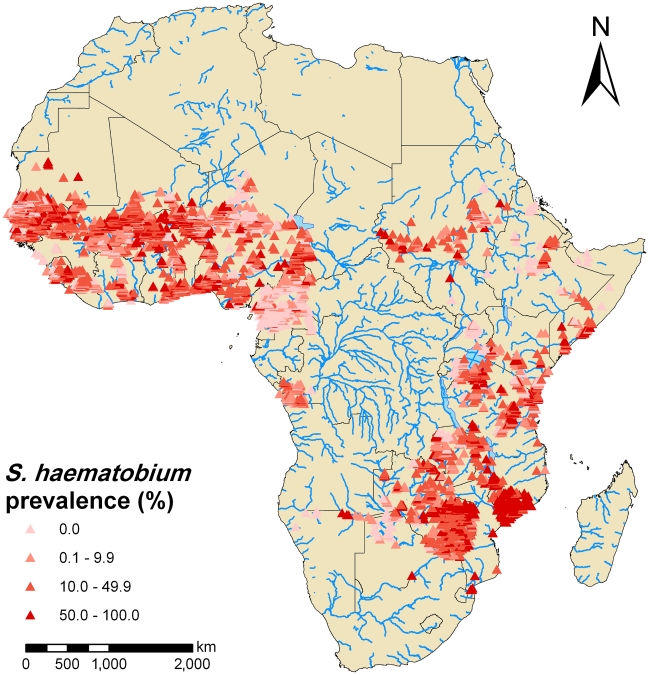
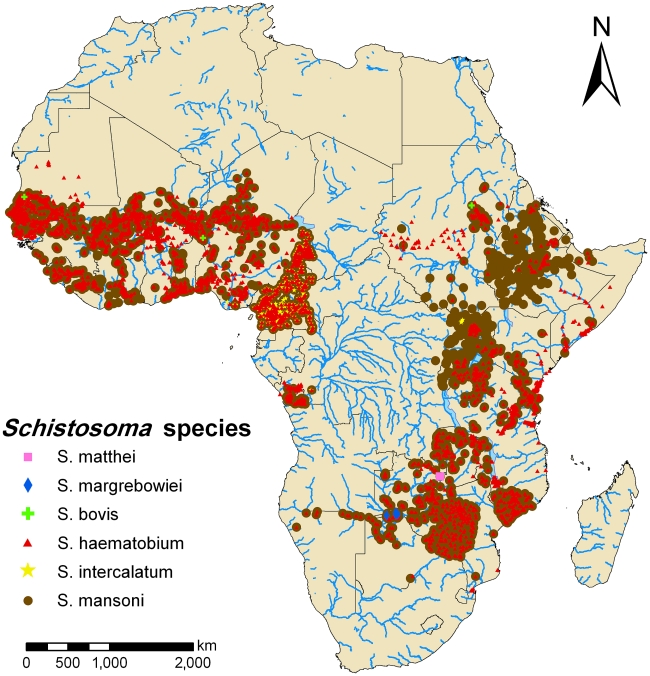
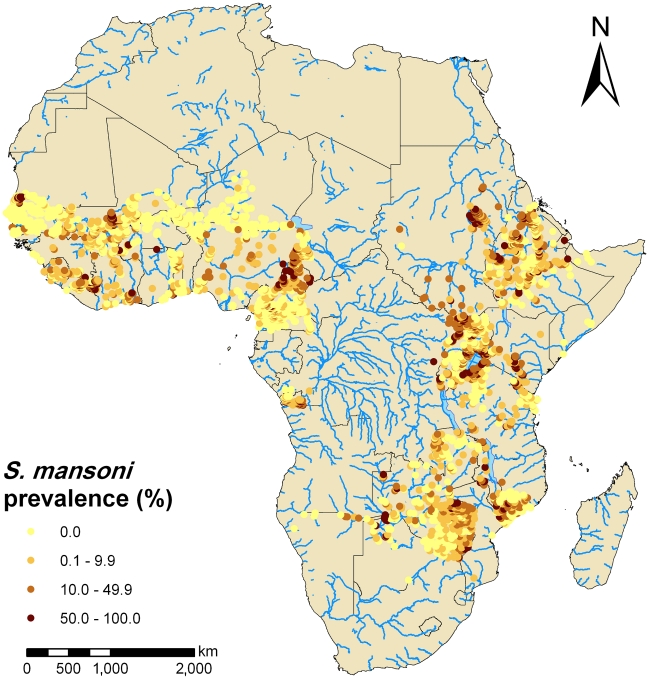
At the beginning of 2011, our database contained more than 12,000 georeferenced schistosomiasis survey locations from 35 African countries available under http://www.gntd.org. Currently, the database is expanded to a global repository, including a host of other NTDs, e.g. soil-transmitted helminthiasis and leishmaniasis.
An open-access, spatially explicit NTD database offers unique opportunities for disease risk modeling, targeting control interventions, disease monitoring, and surveillance. Moreover, it allows for detailed geostatistical analyses of disease distribution in space and time. With an initial focus on schistosomiasis in Africa, we demonstrate the proof-of-concept that the establishment and running of a global NTD database is feasible and should be expanded without delay.
经过多年的普遍忽视,人们对被忽视的热带病(NTDs)的绘图、控制、监测和最终消除产生了兴趣,并为此做出了努力。疾病风险估计是靶向控制干预的一个关键特征,也是监测和评估的基准。目前缺失的是一个具有地理位置的全球 NTD 数据库,它提供了对可用调查数据的开放访问,这些数据不断更新,可供研究人员和疾病控制管理者用于支持其他相关利益攸关方。我们描述了朝着开发这样一个数据库的方向所采取的步骤,该数据库可用于空间疾病风险建模和 NTD 控制。
我们特别强调非洲的血吸虫病,系统地搜索了文献(同行评议的期刊和“灰色文献”),联系了血吸虫病流行国家的卫生部和研究机构,以获取特定地点的流行率数据和调查详情(例如,研究人群、调查年份和诊断技术)。数据被提取、地理定位,并存储在一个 MySQL 数据库中,该数据库具有一个网络界面,允许免费访问数据库和数据管理。
在 2011 年初,我们的数据库包含了来自 35 个非洲国家的 12000 多个地理位置明确的血吸虫病调查地点,可在 http://www.gntd.org 上获得。目前,该数据库已扩展为一个全球性的知识库,其中包括许多其他的 NTD,例如土壤传播的蠕虫病和利什曼病。
一个开放获取的、具有空间明确性的 NTD 数据库为疾病风险建模、靶向控制干预、疾病监测和监测提供了独特的机会。此外,它还允许对疾病在空间和时间上的分布进行详细的地统计学分析。我们最初专注于非洲的血吸虫病,证明了建立和运行一个全球性的 NTD 数据库是可行的,应该毫不拖延地加以扩展。