Agricultural Biotechnology Research Center, Academia Sinica, Taiwan.
J Biomed Sci. 2011 Dec 21;18(1):94. doi: 10.1186/1423-0127-18-94.
Skin is the largest organ in the body, and is directly exposed to extrinsic assaults. As such, the skin plays a central role in host defense and the cutaneous immune system is able to elicit specific local inflammatory and systemic immune responses against harmful stimuli. 12-O-tetradecanoylphorbol-13-acetate (TPA) can stimulate acute and chronic inflammation and tumor promotion in skin. TPA-induced dermatitis is thus a useful in vivo pharmacological platform for drug discovery. In this study, the inhibitory effect of briarane-type diterpenes (BrDs) from marine coral Briareum excavatum on TPA-induced dermatitis and dendritic cell (DC) function was explored.
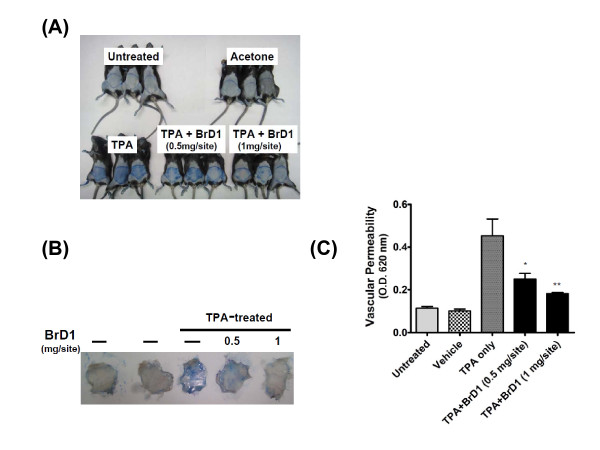
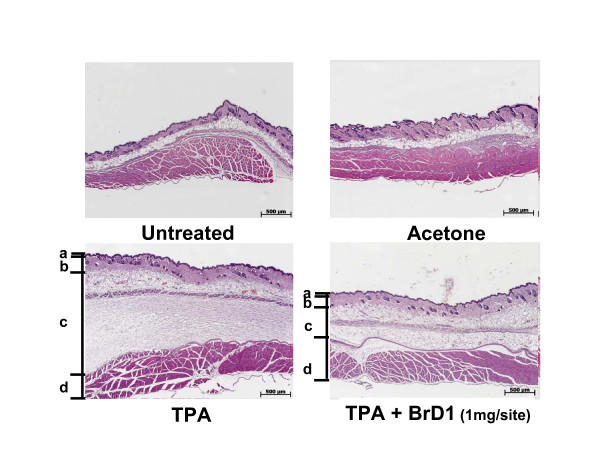
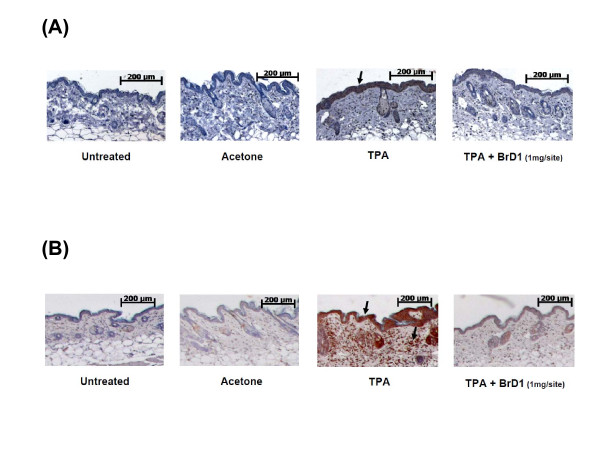
Evans blue dye exudation was used to determine vascular permeability. H&E-stained skin section was used to determine the formation of edema in mouse abdominal skin. We also used immunohistochemistry staining and western blot assays to evaluate the activation of specific inflammation makers and key mediators of signaling pathway in the mouse skin. Furthermore, mouse bone marrow DCs were used to determine the relationship between the chemical structure of BrDs and their regulation of DC function.
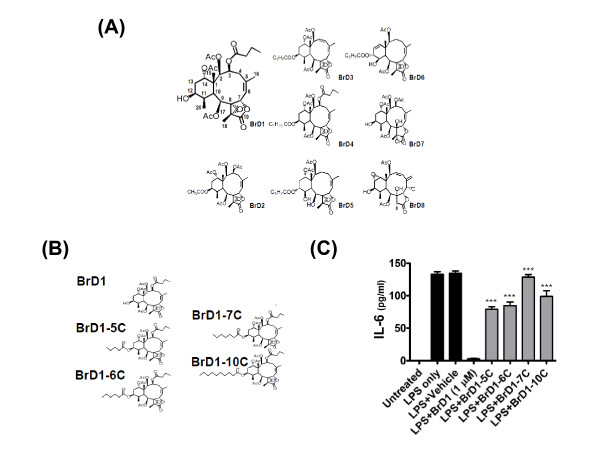
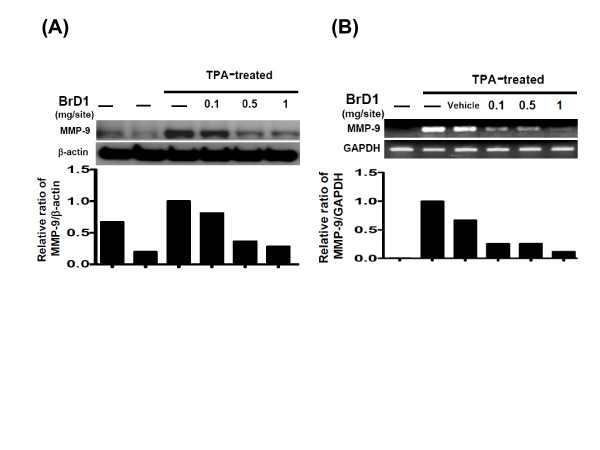
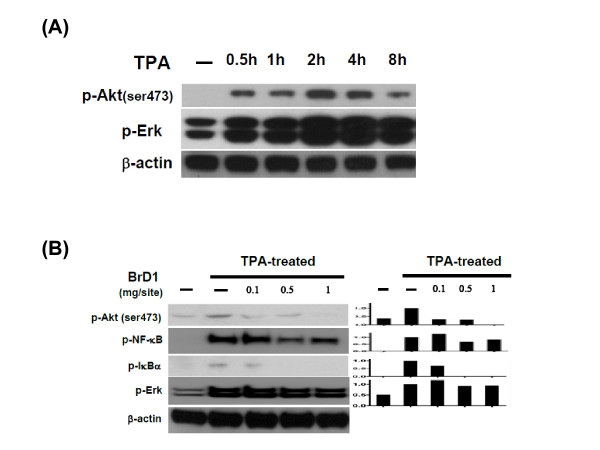
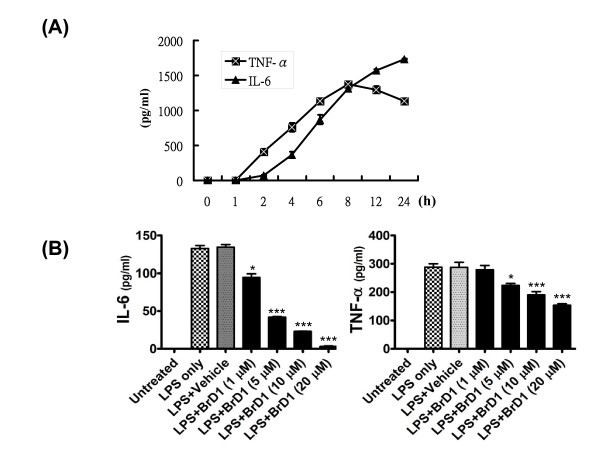
BrD1 remarkably suppressed TPA-induced vascular permeability and edema in skin. At the biochemical level, BrD1 inhibited TPA-induced expression of cyclooxygenase-2, inducible nitric oxide synthase and matrix metalloproteinase-9, the key indicators of cutaneous inflammation. This inhibition was apparently mediated by interference with the Akt/NF-κB-mediated signaling network. BrD1 also inhibited TNF-α and IL-6 expression in LPS-stimulated BMDCs. The 8, 17-epoxide of BrDs played a crucial role in the inhibition of IL-6 expression, and replacement of the C-12 hydroxyl group with longer esters in BrDs gradually decreased this inhibitory activity.
Our results suggest that BrDs warrant further investigation as natural immunomodulatory agents for control of inflammatory skin diseases.
皮肤是人体最大的器官,直接暴露于外在的攻击。因此,皮肤在宿主防御中起着核心作用,皮肤免疫系统能够针对有害刺激引发特定的局部炎症和全身免疫反应。12-O-十四烷酰佛波醇-13-乙酸酯(TPA)可刺激皮肤的急性和慢性炎症以及肿瘤促进。因此,TPA 诱导的皮炎是一种有用的药物发现体内药理学平台。在这项研究中,来自海洋珊瑚 Briareum excavatum 的布里亚烷型二萜(BrD)对 TPA 诱导的皮炎和树突状细胞(DC)功能的抑制作用进行了探讨。
用 Evans 蓝染料渗出来确定血管通透性。用 H&E 染色皮肤切片来确定小鼠腹部皮肤水肿的形成。我们还使用免疫组织化学染色和 Western blot 检测来评估小鼠皮肤中特定炎症标志物和信号通路关键介质的激活。此外,使用小鼠骨髓 DC 来确定 BrD 的化学结构与其调节 DC 功能之间的关系。
BrD1 显著抑制 TPA 诱导的皮肤血管通透性和水肿。在生化水平上,BrD1 抑制 TPA 诱导的环氧合酶-2、诱导型一氧化氮合酶和基质金属蛋白酶-9 的表达,这些是皮肤炎症的关键指标。这种抑制显然是通过干扰 Akt/NF-κB 介导的信号网络来实现的。BrD1 还抑制 LPS 刺激的 BMDC 中 TNF-α 和 IL-6 的表达。BrD 的 8,17-环氧化物在抑制 IL-6 表达中起着至关重要的作用,并且 BrD 中 C-12 羟基被更长的酯取代会逐渐降低这种抑制活性。
我们的结果表明,BrD 作为控制炎症性皮肤病的天然免疫调节剂值得进一步研究。