Department of Molecular Biology and Genetic Engineering, College of Basic Sciences and Humanities, G.B. Pant University of Agriculture and Technology, Pantnagar 263145, India.
Genomics Proteomics Bioinformatics. 2011 Oct;9(4-5):138-50. doi: 10.1016/S1672-0229(11)60017-X.
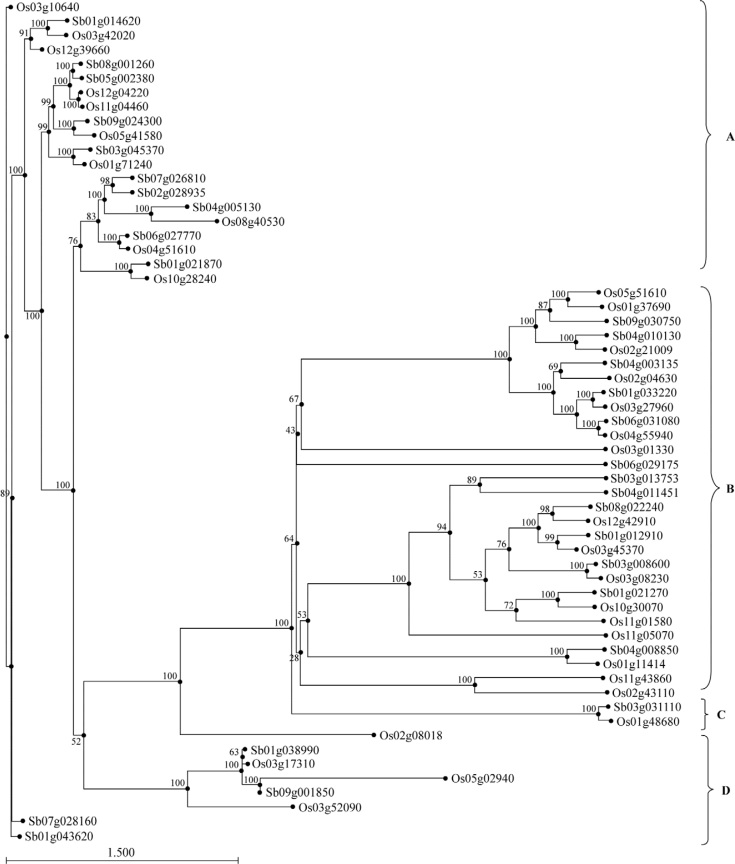
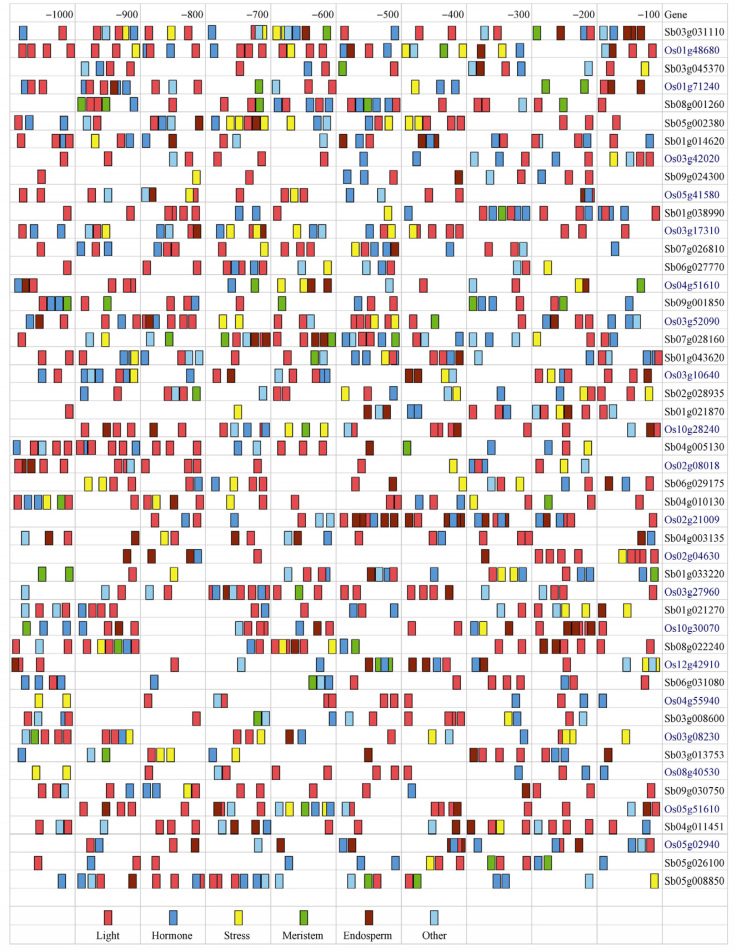
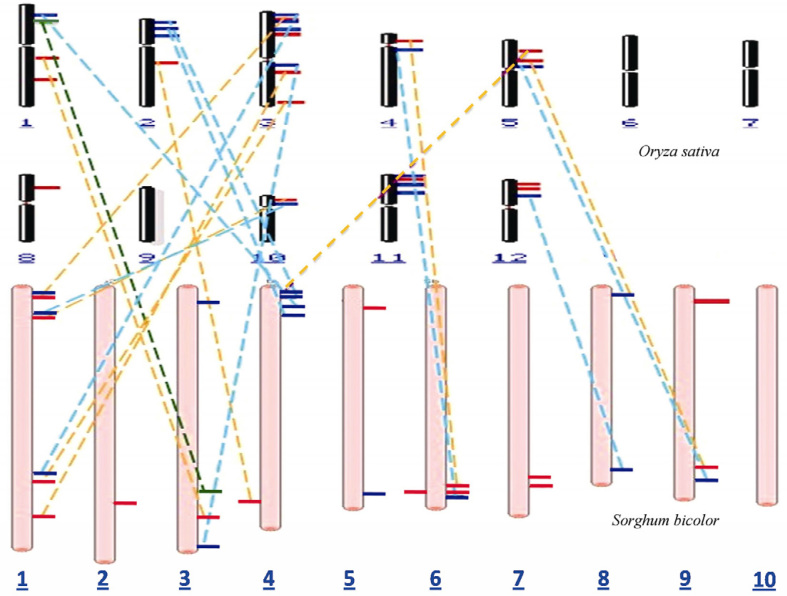
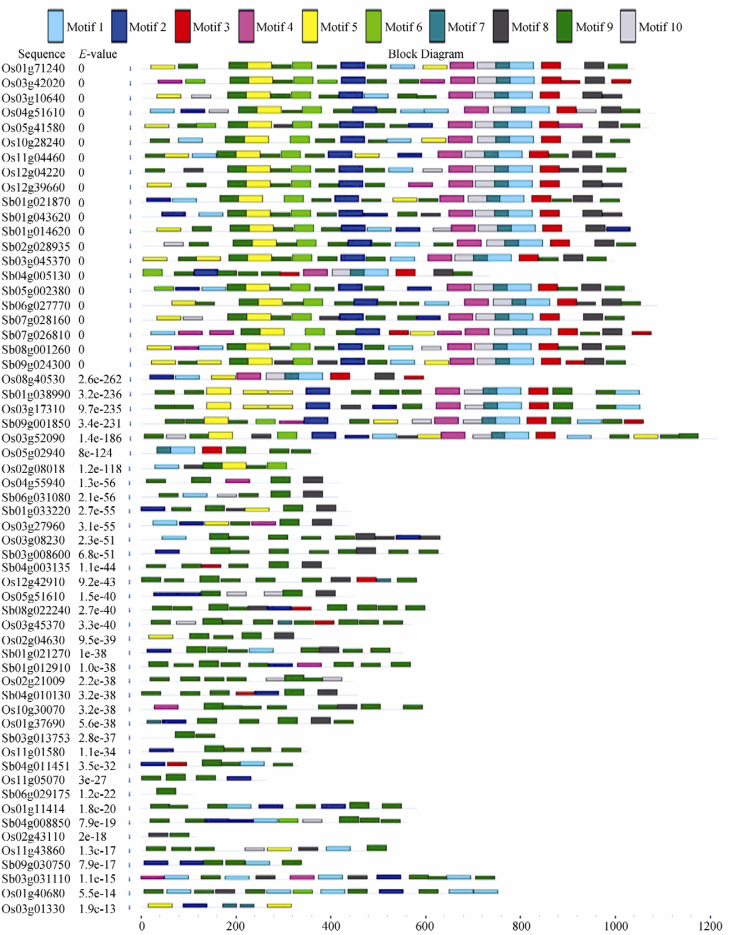
The mechanism of calcium uptake, translocation and accumulation in Poaceae has not yet been fully understood. To address this issue, we conducted genome-wide comparative in silico analysis of the calcium (Ca(2+)) transporter gene family of two crop species, rice and sorghum. Gene annotation, identification of upstream cis-acting elements, phylogenetic tree construction and syntenic mapping of the gene family were performed using several bioinformatics tools. A total of 31 Ca(2+) transporters, distributed on 9 out of 12 chromosomes, were predicted from rice genome, while 28 Ca(2+) transporters predicted from sorghum are distributed on all the chromosomes except chromosome 10 (Chr 10). Interestingly, most of the genes on Chr 1 and Chr 3 show an inverse syntenic relationship between rice and sorghum. Multiple sequence alignment and motif analysis of these transporter proteins revealed high conservation between the two species. Phylogenetic tree could very well identify the subclasses of channels, ATPases and exchangers among the gene family. The in silico cis-regulatory element analysis suggested diverse functions associated with light, stress and hormone responsiveness as well as endosperm- and meristem-specific gene expression. Further experiments are warranted to validate the in silico analysis of the predicted transporter gene family and elucidate the functions of Ca(2+) transporters in various biological processes.
钙在禾本科植物中的摄取、转运和积累机制尚未完全阐明。为解决这一问题,我们对两种作物(水稻和高粱)的钙(Ca(2+))转运体基因家族进行了全基因组的比较计算机分析。使用几种生物信息学工具对基因家族进行了基因注释、上游顺式作用元件识别、系统发育树构建和基因共线性映射。从水稻基因组中预测了 31 个 Ca(2+)转运体,分布在 12 条染色体中的 9 条上,而从高粱中预测了 28 个 Ca(2+)转运体,分布在除第 10 条染色体(Chr 10)以外的所有染色体上。有趣的是,大多数 Chr 1 和 Chr 3 上的基因在水稻和高粱之间呈现出反向共线性关系。这些转运蛋白的多重序列比对和基序分析显示出两个物种之间的高度保守性。系统发育树可以很好地区分基因家族中的通道、ATP 酶和交换器子类。计算机顺式调控元件分析表明,这些基因与光、胁迫和激素响应以及胚乳和分生组织特异性基因表达有关。需要进一步的实验来验证预测的转运体基因家族的计算机分析,并阐明 Ca(2+)转运体在各种生物过程中的功能。