Department of Chemical Sciences, Tata Institute of Fundamental Research, Mumbai, India.
Malar J. 2011 Dec 23;10:384. doi: 10.1186/1475-2875-10-384.
Plasmodium vivax is responsible for the majority of malarial infection in the Indian subcontinent. This species of the parasite is generally believed to cause a relatively benign form of the disease. However, recent reports from different parts of the world indicate that vivax malaria can also have severe manifestation. Host response to the parasite invasion is thought to be an important factor in determining the severity of manifestation. In this paper, attempt was made to determine the host metabolic response associated with P. vivax infection by means of NMR spectroscopy-based metabonomic techniques in an attempt to better understand the disease pathology.
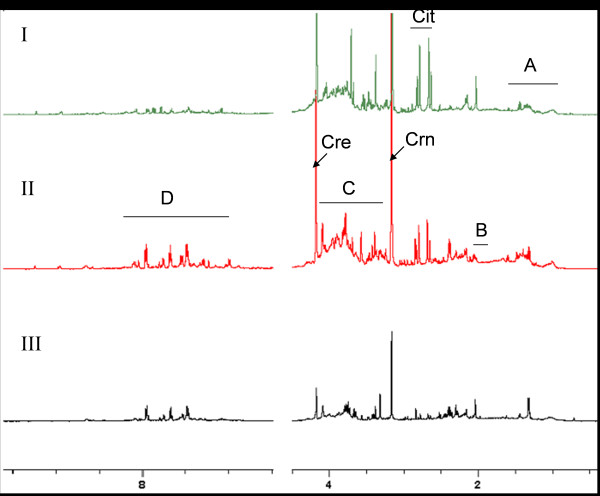
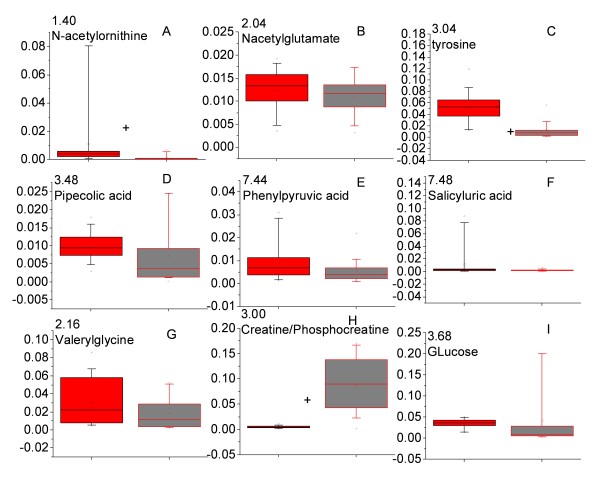
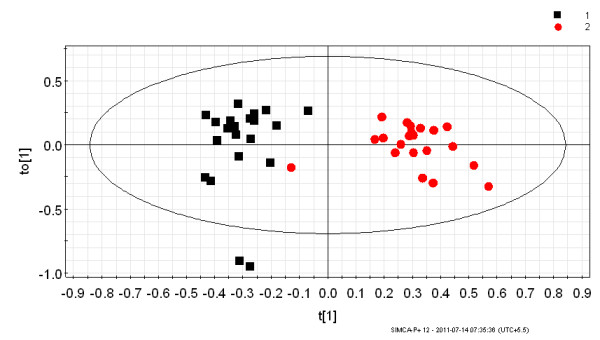
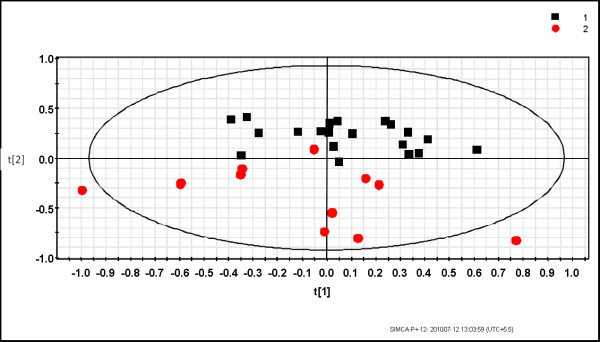
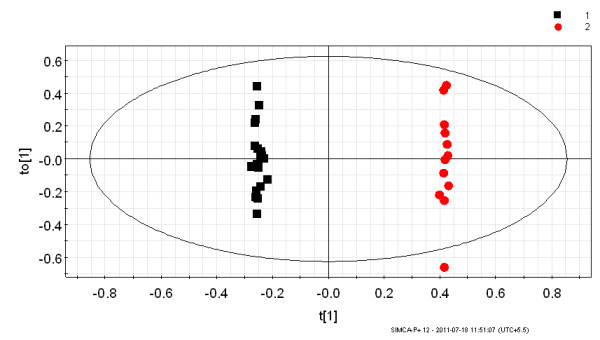
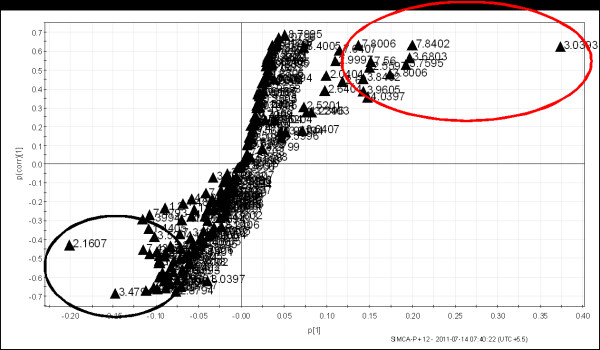
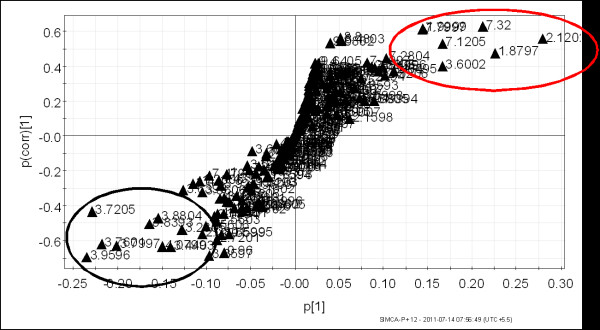
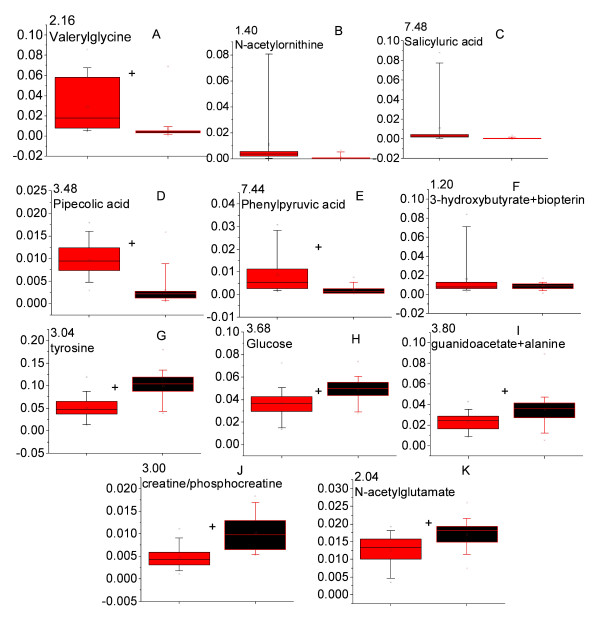
NMR spectroscopy of urine samples from P. vivax-infected patients, healthy individuals and non-malarial fever patients were carried out followed by multivariate statistical analysis. Two data analysis techniques were employed, namely, Principal Component Analysis [PCA] and Orthogonal Projection to Latent Structure Discriminant Analysis [OPLS-DA]. Several NMR signals from the urinary metabolites were further selected for univariate comparison among the classes.
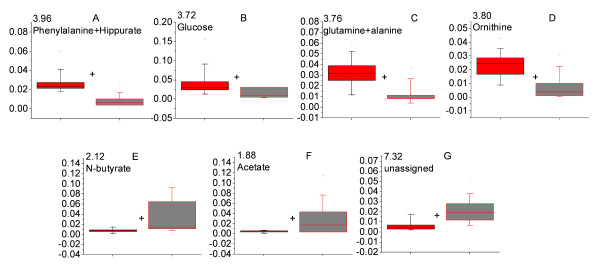
The urine metabolic profiles of P. vivax-infected patients were distinct from those of healthy individuals as well as of non-malarial fever patients. A highly predictive model was constructed from urine profile of malarial and non-malarial fever patients. Several metabolites were found to be varying significantly across these cohorts. Urinary ornithine seems to have the potential to be used as biomarkers of vivax malaria. An increasing trend in pipecolic acid was also observed. The results suggest impairment in the functioning of liver as well as impairment in urea cycle.
The results open up a possibility of non-invasive analysis and diagnosis of P. vivax using urine metabolic profile. Distinct variations in certain metabolites were recorded, and amongst these, ornithine may have the potential of being used as biomarker of malaria. Pipecolic acid also showed increasing trend in the malaria patient compared to the other groups.
间日疟原虫是造成印度次大陆大部分疟疾感染的原因。这种寄生虫通常被认为会导致相对良性的疾病。然而,来自世界各地的最新报告表明,间日疟也可能有严重的表现。宿主对寄生虫入侵的反应被认为是决定表现严重程度的一个重要因素。在本文中,尝试通过基于 NMR 光谱的代谢组学技术来确定与间日疟原虫感染相关的宿主代谢反应,以期更好地了解疾病的发病机制。
对间日疟原虫感染患者、健康个体和非疟疾发热患者的尿液样本进行 NMR 光谱分析,然后进行多变量统计分析。采用两种数据分析技术,即主成分分析(PCA)和正交偏最小二乘判别分析(OPLS-DA)。对尿液代谢物中的几个 NMR 信号进行了单变量比较。
间日疟原虫感染患者的尿液代谢谱与健康个体和非疟疾发热患者的尿液代谢谱明显不同。从疟疾和非疟疾发热患者的尿液谱中构建了一个高度预测的模型。发现几个代谢物在这些队列中差异显著。尿液中的鸟氨酸似乎有可能成为间日疟的生物标志物。还观察到吡咯烷酸的含量呈上升趋势。结果表明,肝脏功能受损以及尿素循环受损。
这些结果为使用尿液代谢谱进行非侵入性分析和诊断间日疟原虫感染开辟了可能性。记录到某些代谢物存在明显差异,其中鸟氨酸可能有潜力成为疟疾的生物标志物。与其他组相比,吡咯烷酸在疟疾患者中也呈上升趋势。