Abdelrazig Salah, Ortori Catharine A, Davey Gail, Deressa Wakgari, Mulleta Dhaba, Barrett David A, Amberbir Alemayehu, Fogarty Andrew W
Centre for Analytical Bioscience, School of Pharmacy, University of Nottingham, Nottingham, NG7 2RD, UK.
Wellcome Trust Centre for Global Health Research, Brighton and Sussex Medical School, Brighton, UK.
Malar J. 2017 May 30;16(1):229. doi: 10.1186/s12936-017-1875-z.
Currently available diagnostic techniques of Plasmodium falciparum infection are not optimal for non-invasive, population-based screening for malaria. It was hypothesized that a mass spectrometry-based metabolomics approach could identify urinary biomarkers of falciparum malaria.
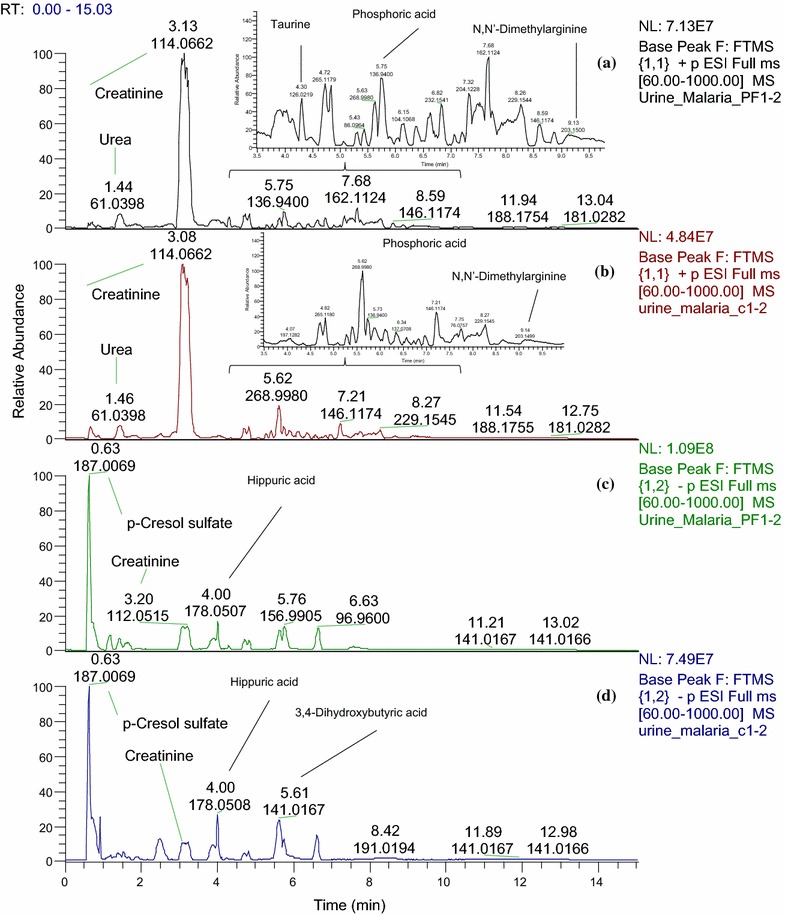
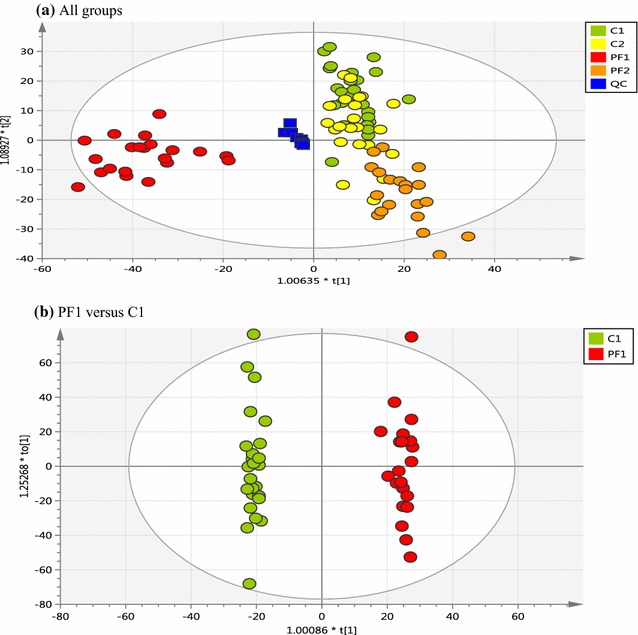
The study used a case-control design, with cases consisting of 21 adults in central Ethiopia with a diagnosis of P. falciparum infection confirmed with microscopy, and 25 controls of adults with negative blood smears for malaria matched on age and sex. Urinary samples were collected from these individuals during presentation at the clinic, and a second sample was collected from both cases and controls 4 weeks later, after the cases had received anti-malarial medication. The urine samples were screened for small molecule urinary biomarkers, using mass spectrometry-based metabolomics analyses followed by multivariate analysis using principal component analysis and orthogonal partial least square-discriminant analysis. The chemical identity of statistically significant malaria biomarkers was confirmed using tandem mass spectrometry.
The urinary metabolic profiles of cases with P. falciparum infection were distinct from healthy controls. After treatment with anti-malarial medication, the metabolomic profile of cases resembled that of healthy controls. Significantly altered levels of 29 urinary metabolites were found. Elevated levels of urinary pipecolic acid, taurine, N-acetylspermidine, N-acetylputrescine and 1,3-diacetylpropane were identified as potential biomarkers of falciparum malaria.
The urinary biomarkers of malaria identified have potential for the development of non-invasive and rapid diagnostic test of P. falciparum infection.
目前可用的恶性疟原虫感染诊断技术对于基于人群的疟疾非侵入性筛查并非最佳选择。据推测,基于质谱的代谢组学方法可识别恶性疟的尿液生物标志物。
本研究采用病例对照设计,病例组包括21名埃塞俄比亚中部经显微镜确诊为恶性疟原虫感染的成年人,对照组为25名年龄和性别匹配、疟疾血涂片阴性的成年个体。在这些个体就诊时采集尿液样本,病例组在接受抗疟药物治疗4周后,病例组和对照组均采集第二份样本。使用基于质谱的代谢组学分析对尿液样本进行小分子尿液生物标志物筛查,随后使用主成分分析和正交偏最小二乘判别分析进行多变量分析。使用串联质谱确认具有统计学意义的疟疾生物标志物的化学特性。
恶性疟原虫感染病例的尿液代谢谱与健康对照不同。经抗疟药物治疗后,病例组的代谢组学谱与健康对照相似。发现29种尿液代谢物水平有显著变化。尿中哌啶酸、牛磺酸、N-乙酰亚精胺、N-乙酰腐胺和1,3-二乙酰丙烷水平升高被确定为恶性疟的潜在生物标志物。
所识别的疟疾尿液生物标志物具有开发恶性疟原虫感染非侵入性快速诊断测试的潜力。