Department of Genome Dynamics, Lawrence Berkeley National Laboratory, University of California, Berkeley, Berkeley, CA 94720, USA.
Mol Cell. 2012 Jan 27;45(2):263-9. doi: 10.1016/j.molcel.2011.12.010. Epub 2011 Dec 29.
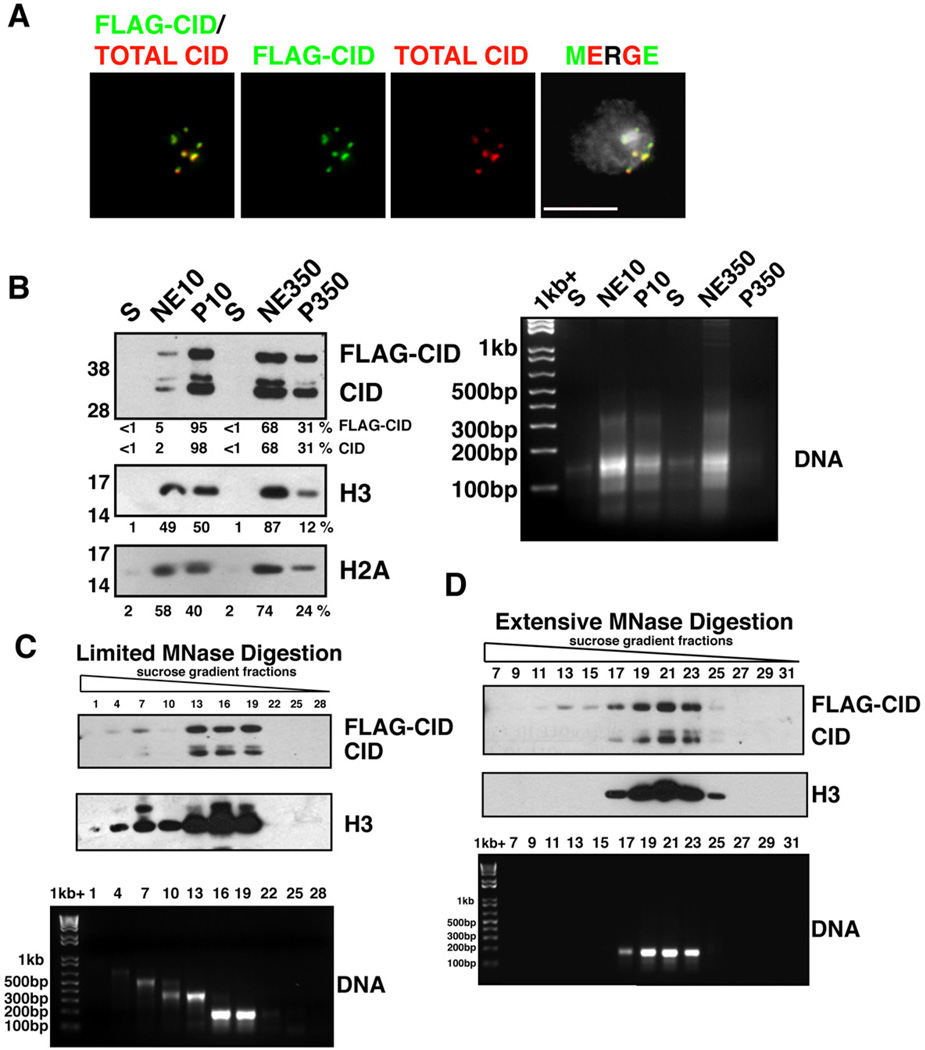
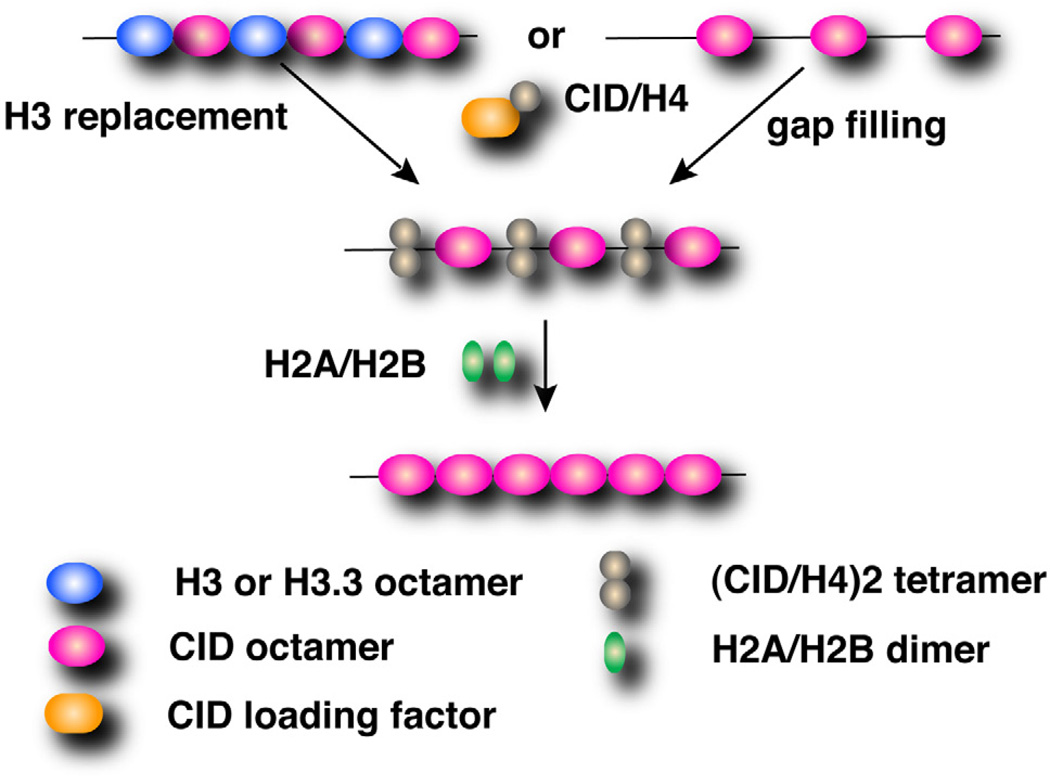
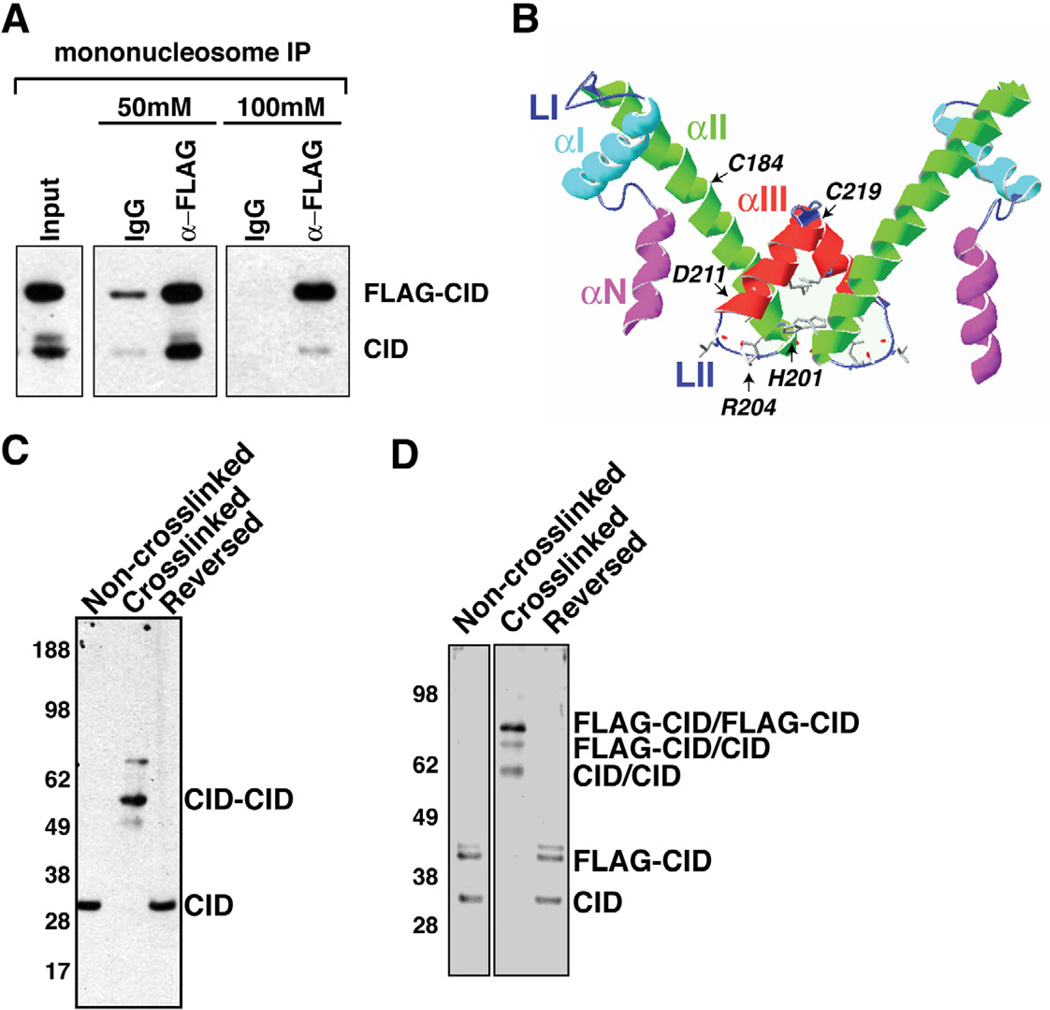
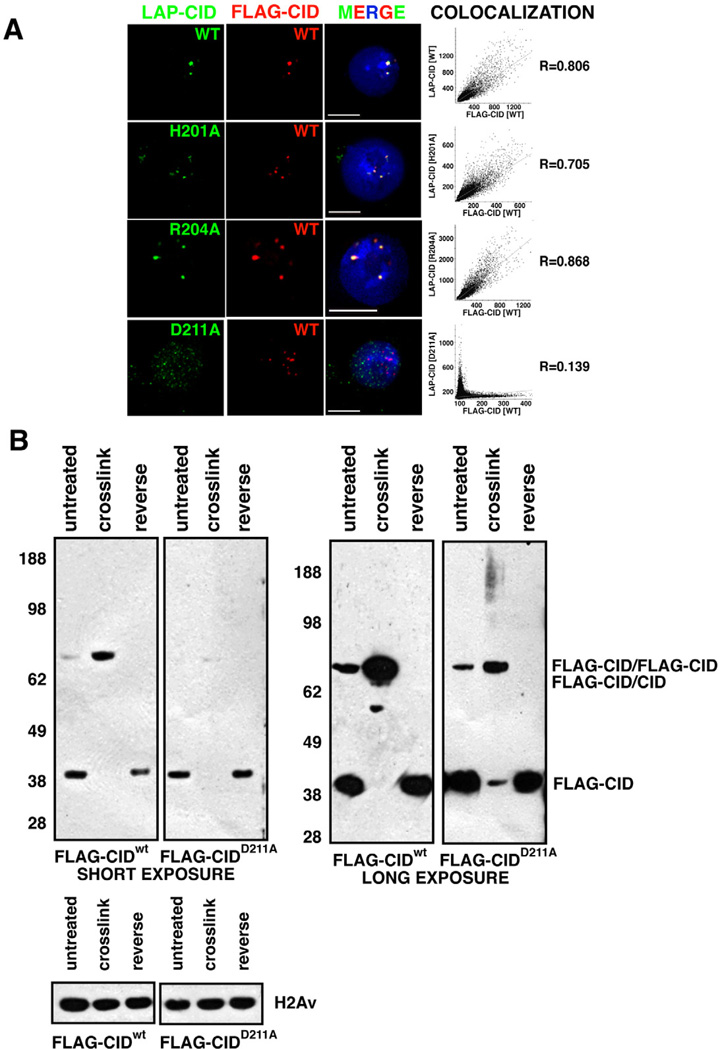
Centromeres are essential chromosomal regions required for kinetochore assembly and chromosome segregation. The composition and organization of centromeric nucleosomes containing the essential histone H3 variant CENP-A (CID in Drosophila) is a fundamental, unresolved issue. Using immunoprecipitation of CID mononucleosomes and cysteine crosslinking, we demonstrate that centromeric nucleosomes contain CID dimers in vivo. Furthermore, CID dimerization and centromeric targeting require a residue implicated in formation of the four-helix bundle, which mediates intranucleosomal H3 dimerization and nucleosome integrity. Taken together, our findings suggest that CID nucleosomes are octameric in vivo and that CID dimerization is essential for correct centromere assembly.
着丝粒是有丝分裂中纺锤体微管附着的位点,对于染色体的正确分离至关重要。着丝粒的组成和结构对于有丝分裂中纺锤体微管的附着以及染色体的正确分离具有重要作用。组成着丝粒的核心组蛋白 H3 的变体 CENP-A(在果蝇中称为 CID)的组装和定位是一个基本但尚未解决的问题。本研究利用 CID 单倍体的免疫沉淀和半胱氨酸交联实验,证明了 CID 二聚体在体内存在。此外,CID 二聚化和着丝粒靶向需要一个残基,该残基与四螺旋束的形成有关,介导核小体 H3 二聚化和核小体的完整性。综上所述,这些结果表明 CID 核小体在体内是八聚体,CID 二聚化对于正确的着丝粒组装是必需的。