Department of Pulmonary Medicine, The University of Texas MD Anderson Cancer Center, Houston, Texas, USA.
Mol Cancer. 2012 Jan 12;11:4. doi: 10.1186/1476-4598-11-4.
Although cigarette smoking is the principal cause of lung carcinogenesis, chronic obstructive pulmonary disease (COPD), an inflammatory disease of the lung, has been identified as an independent risk factor for lung cancer. Bacterial colonization, particularly with non-typeable Haemophilus influenzae (NTHi), has been implicated as a cause of airway inflammation in COPD besides cigarette smoke. Accordingly, we hypothesized that lung cancer promotion may occur in a chronic inflammatory environment in the absence of concurrent carcinogen exposure.
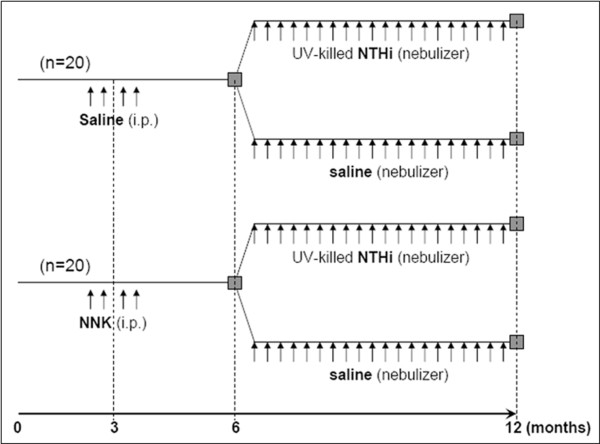
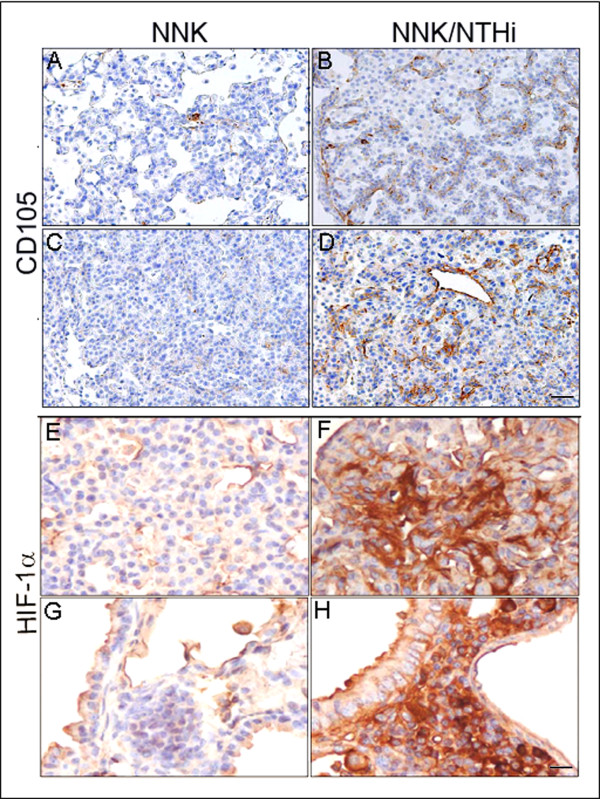
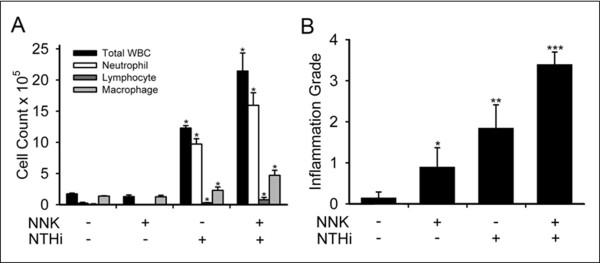
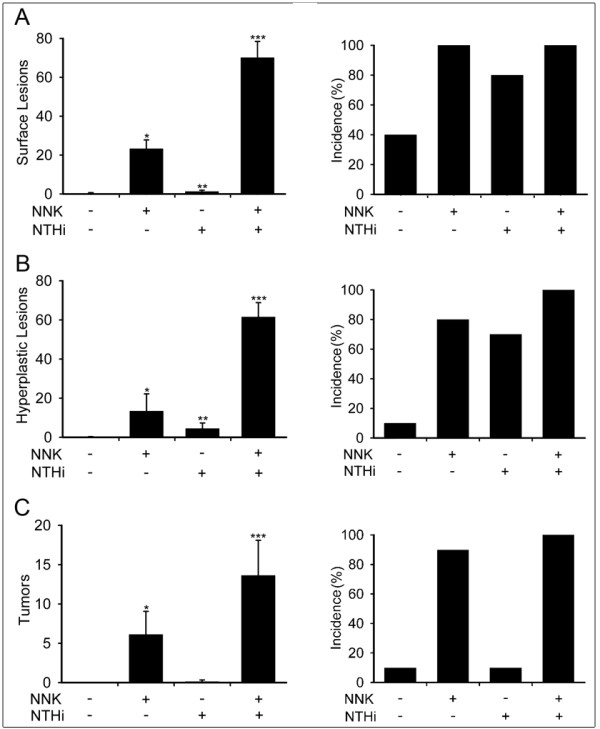
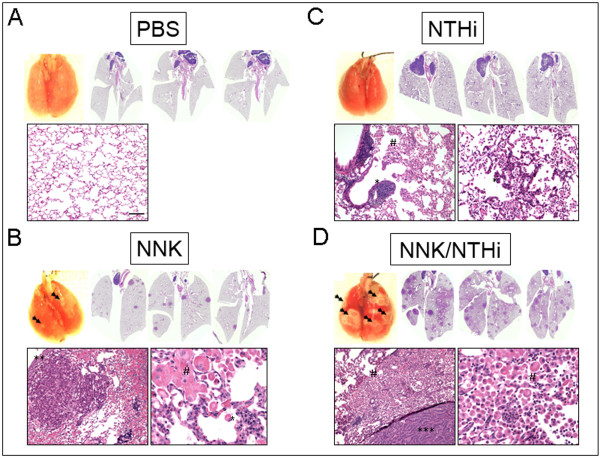
Herein, we investigated the effects of bacterial-induced COPD-like inflammation and tobacco carcinogen-enhanced tumorigenesis/inflammation in the retinoic acid inducible G protein coupled receptor knock out mouse model (Gprc5a-/- mouse) characterized by late-onset, low multiplicity tumor formation. Three-month-old Gprc5a-/- mice received 4 intraperitoneal injections of the tobacco-specific carcinogen, NNK, followed by weekly exposure to aerosolized NTHi lysate for 6 months. The numbers of inflammatory cells in the lungs and levels of several inflammatory mediators were increased in Gprc5a-/- mice treated with NTHi alone, and even more so in mice pretreated with NNK followed by NTHi. The incidence of spontaneous lung lesions in the Gprc5a-/- mice was low, but NTHi exposure led to enhanced development of hyperplastic lesions. Gprc5a-/- mice exposed to NNK alone developed multiple lung tumors, while NTHi exposure increased the number of hyperplastic foci 6-fold and the tumor multiplicity 2-fold. This was associated with increased microvessel density and HIF-1α expression.
We conclude that chronic extrinsic lung inflammation induced by bacteria alone or in combination with NNK enhances lung tumorigenesis in Gprc5a-/- mice.
虽然吸烟是肺癌发生的主要原因,但慢性阻塞性肺疾病(COPD)作为一种肺部炎症性疾病,已被确定为肺癌的独立危险因素。细菌定植,特别是非分型流感嗜血杆菌(NTHi),除了香烟烟雾外,还被认为是 COPD 气道炎症的原因。因此,我们假设在没有同时暴露于致癌剂的情况下,慢性炎症环境可能会促进肺癌的发生。
在此,我们研究了细菌诱导的 COPD 样炎症和烟草致癌剂增强肿瘤发生/炎症在视黄酸诱导的 G 蛋白偶联受体敲除小鼠模型(Gprc5a-/- 小鼠)中的作用,该模型以迟发性、多发性肿瘤形成为特征。3 月龄的 Gprc5a-/- 小鼠接受 4 次腹腔注射烟草特异性致癌剂 NNK,随后每周雾化 NTHi 裂解物 6 个月。单独用 NTHi 处理的 Gprc5a-/- 小鼠肺部炎症细胞数量和几种炎症介质水平增加,而用 NNK 预处理后再用 NTHi 处理的小鼠增加更多。Gprc5a-/- 小鼠自发性肺病变的发生率较低,但 NTHi 暴露导致增生性病变的发展增强。单独暴露于 NNK 的 Gprc5a-/- 小鼠发生多发性肺肿瘤,而 NTHi 暴露使增生灶数量增加 6 倍,肿瘤多发性增加 2 倍。这与微血管密度和 HIF-1α表达增加有关。
我们得出结论,细菌单独或与 NNK 联合引起的慢性外源性肺炎症增强了 Gprc5a-/- 小鼠的肺肿瘤发生。