Howard Hughes Medical Institute, Departments of Physiology, Biochemistry, and Biophysics, University of California, San Francisco, San Francisco, CA 94158, USA.
Neuron. 2012 Jan 12;73(1):64-78. doi: 10.1016/j.neuron.2011.10.036.
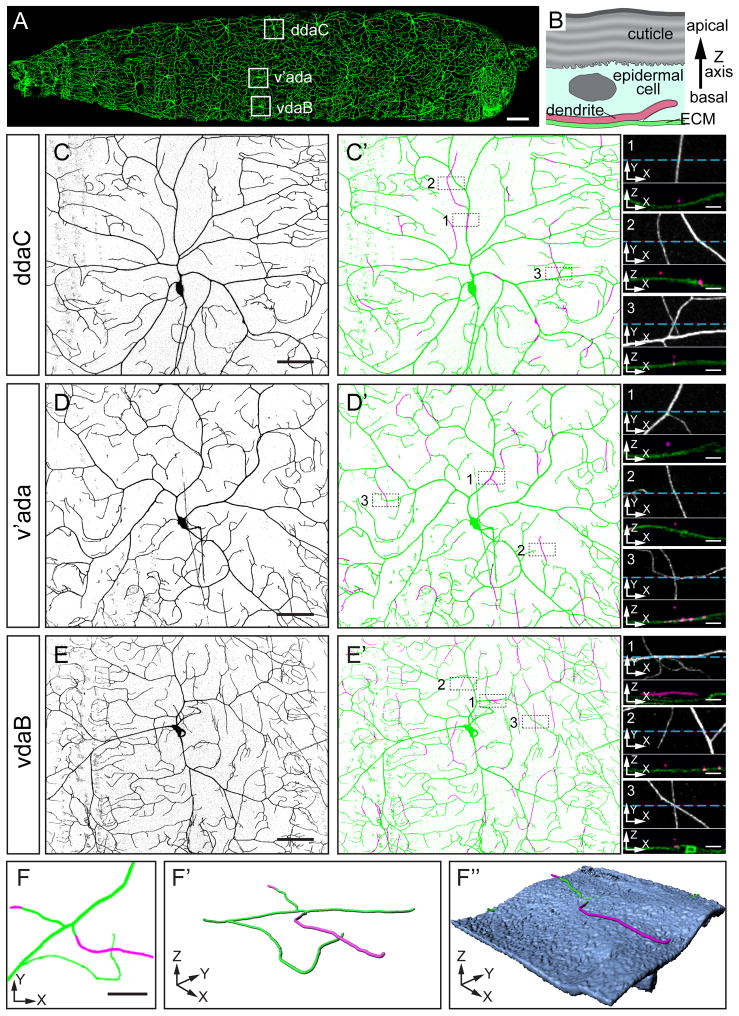
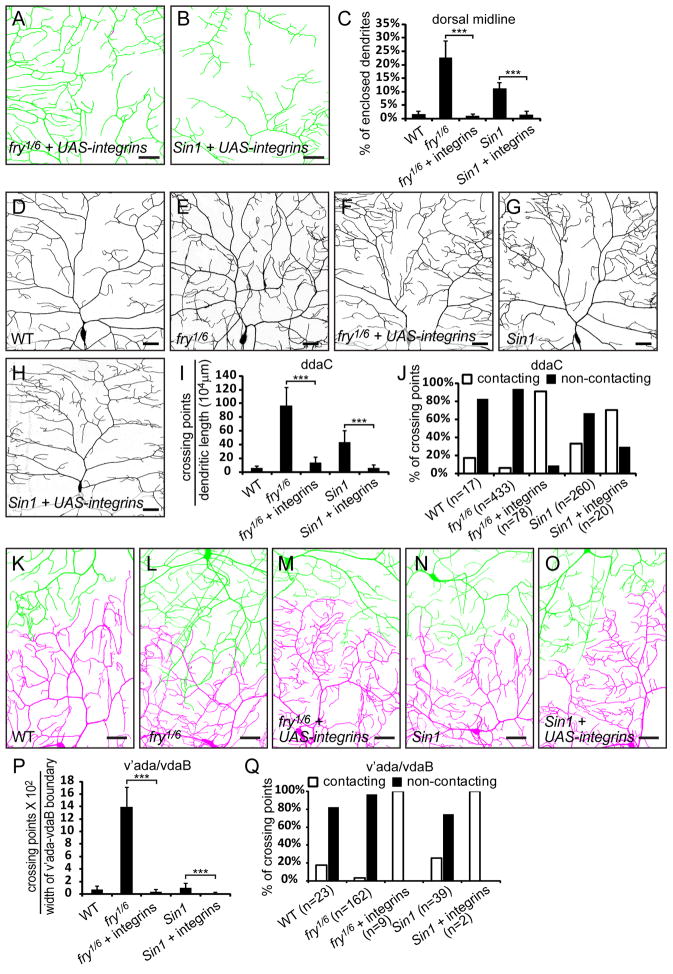
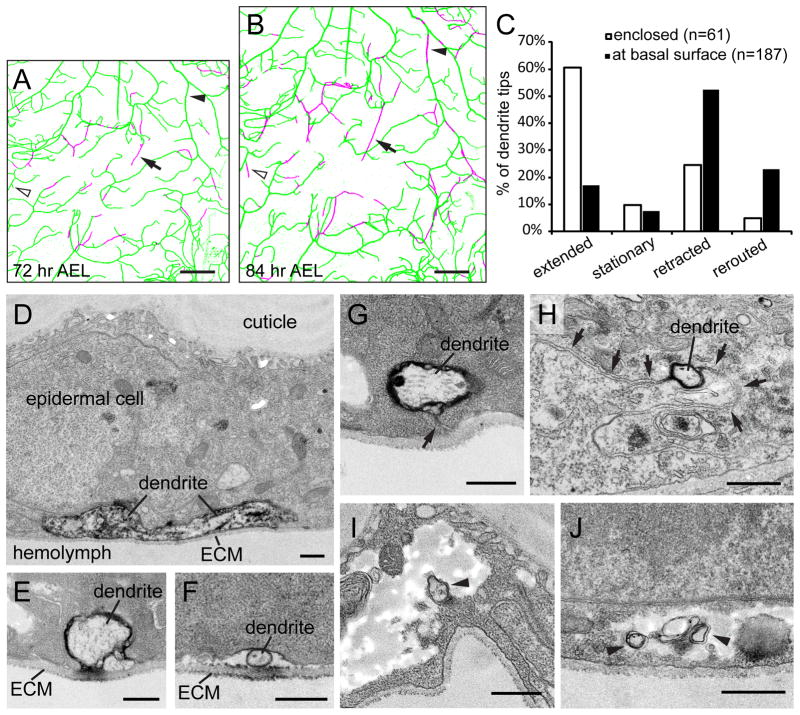
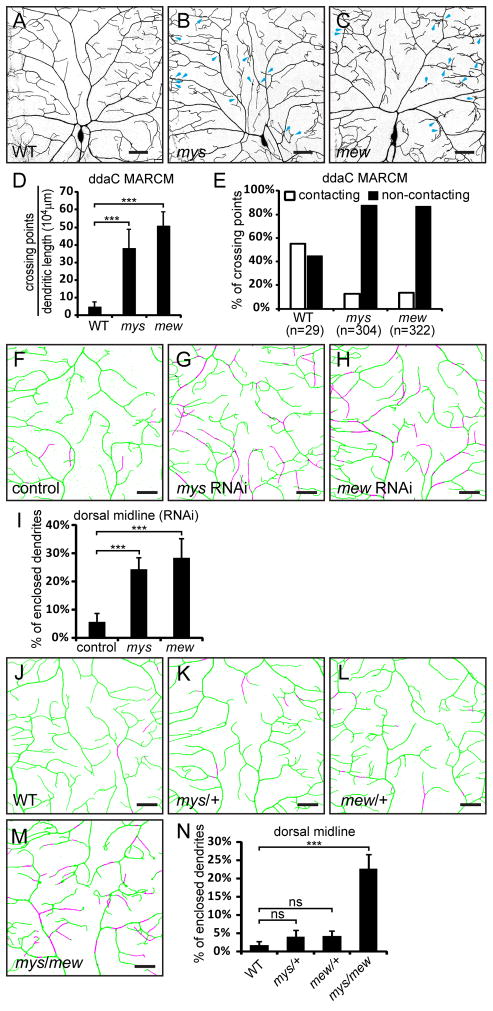
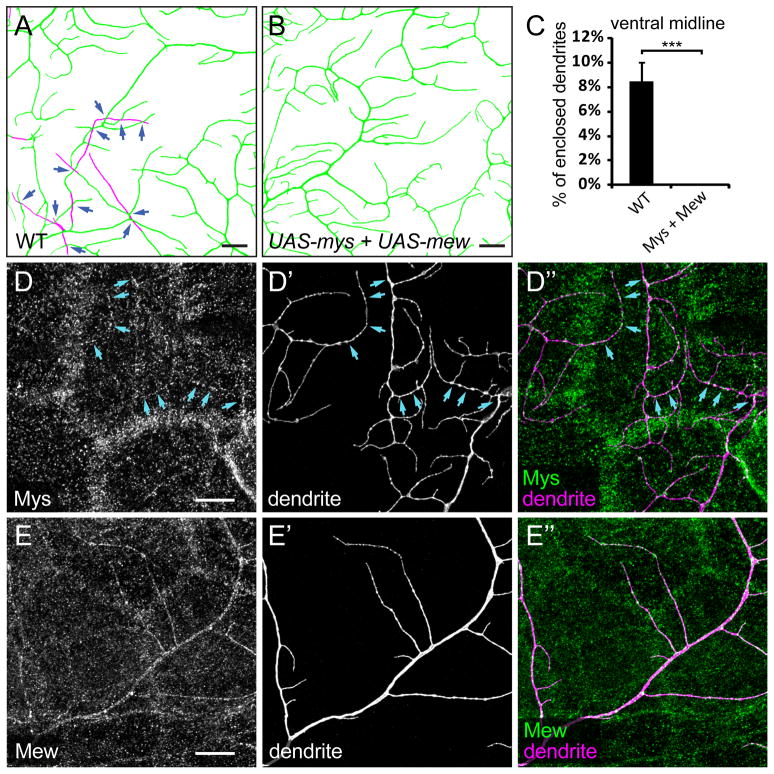
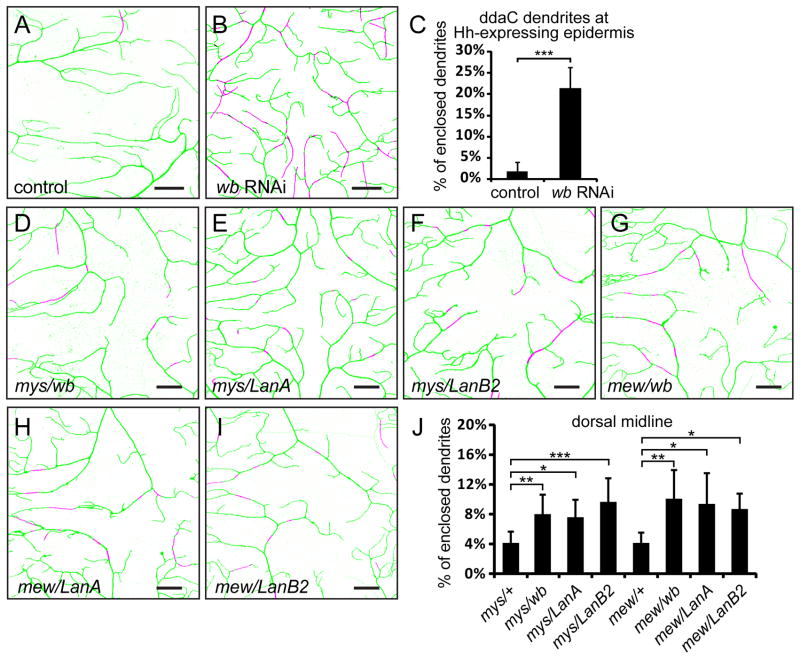
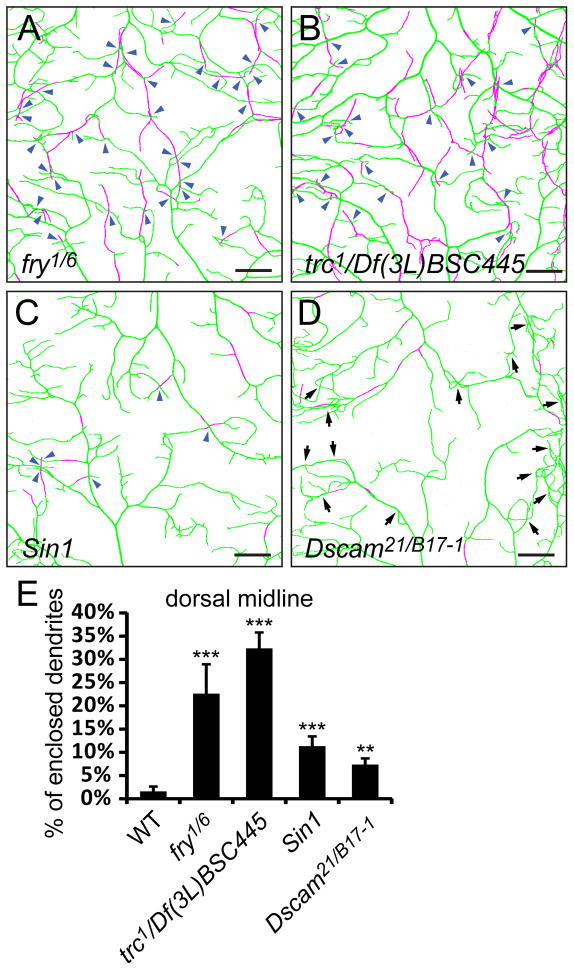
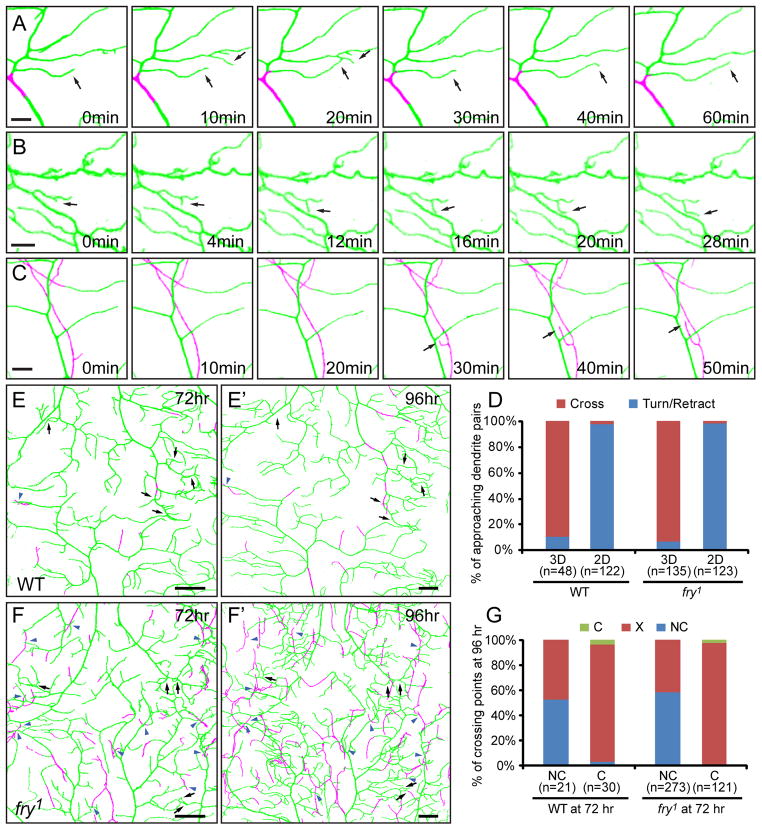
Dendrites of the same neuron usually avoid each other. Some neurons also repel similar neurons through dendrite-dendrite interaction to tile the receptive field. Nonoverlapping coverage based on such contact-dependent repulsion requires dendrites to compete for limited space. Here we show that Drosophila class IV dendritic arborization (da) neurons, which tile the larval body wall, grow their dendrites mainly in a 2D space on the extracellular matrix (ECM) secreted by the epidermis. Removing neuronal integrins or blocking epidermal laminin production causes dendrites to grow into the epidermis, suggesting that integrin-laminin interaction attaches dendrites to the ECM. We further show that some of the previously identified tiling mutants fail to confine dendrites in a 2D plane. Expansion of these mutant dendrites in three dimensions results in overlap of dendritic fields. Moreover, overexpression of integrins in these mutant neurons effectively reduces dendritic crossing and restores tiling, revealing an additional mechanism for tiling.
同一神经元的树突通常会相互避开。一些神经元还通过树突-树突相互作用排斥相似的神经元,以平铺感受野。基于这种基于接触的排斥的不重叠覆盖范围要求树突竞争有限的空间。在这里,我们展示了果蝇 IV 类树突状分支(da)神经元,它平铺在幼虫体壁上,其树突主要在由表皮分泌的细胞外基质(ECM)上的 2D 空间中生长。去除神经元整联蛋白或阻断表皮层粘连蛋白的产生会导致树突生长到表皮中,这表明整联蛋白-层粘连蛋白相互作用将树突附着在 ECM 上。我们进一步表明,一些先前鉴定的平铺突变体无法将树突限制在 2D 平面内。这些突变体树突在三维空间中的扩展导致树突场的重叠。此外,在这些突变神经元中过表达整联蛋白可有效减少树突交叉并恢复平铺,揭示了平铺的另一种机制。