Department of Chemistry and Biochemistry, University of Colorado Boulder, Boulder, CO 80309, USA.
Structure. 2012 Jan 11;20(1):28-39. doi: 10.1016/j.str.2011.10.017.
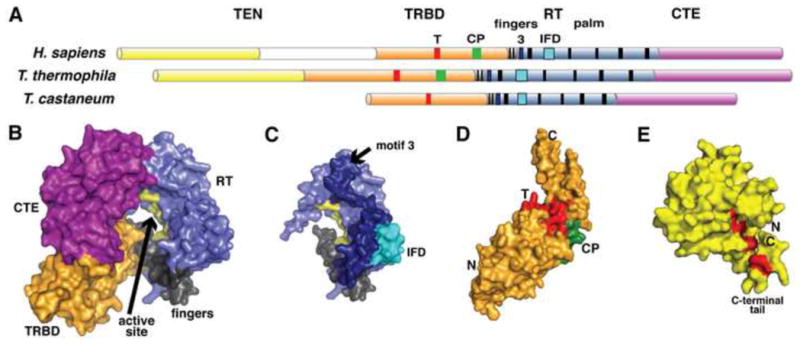
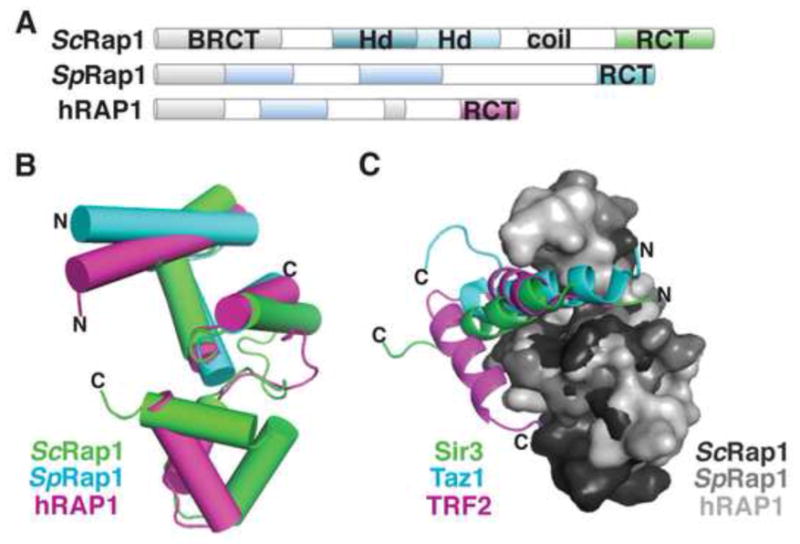
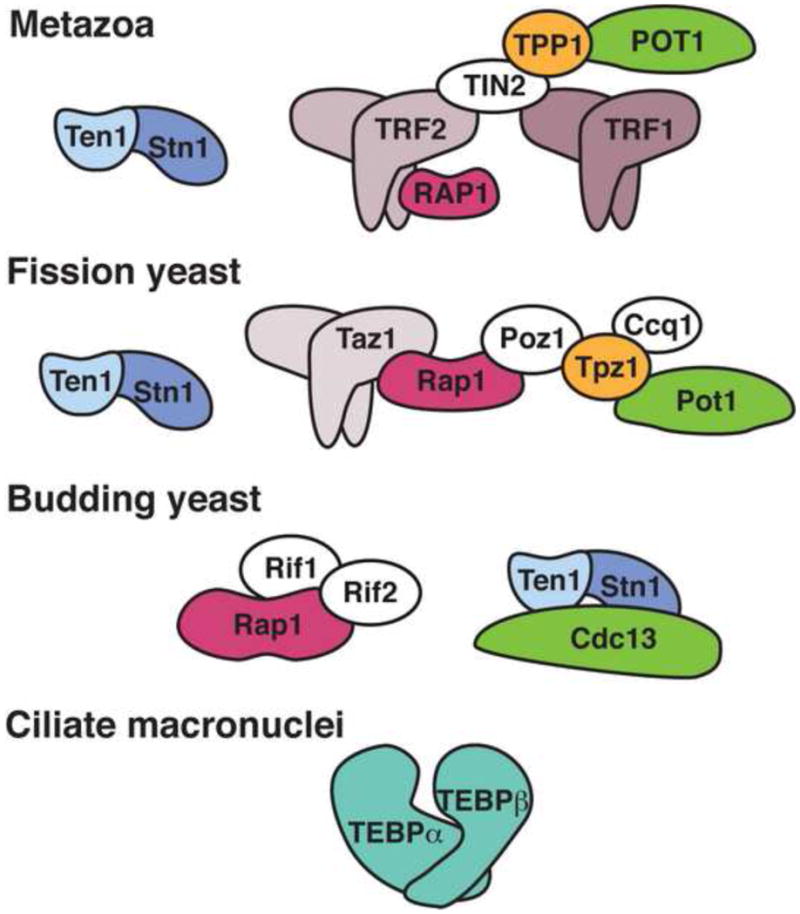
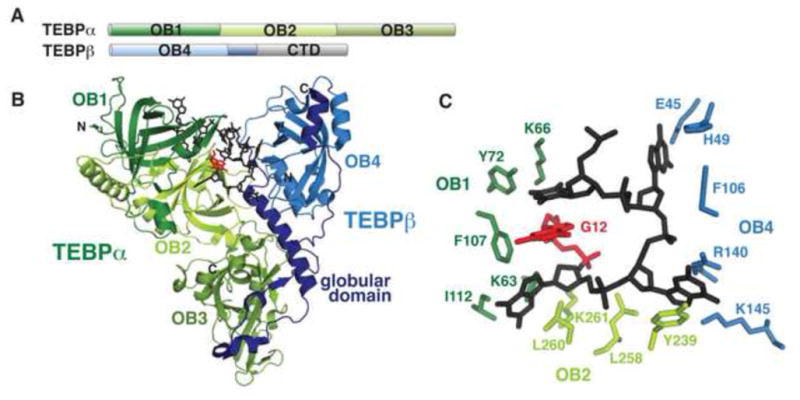
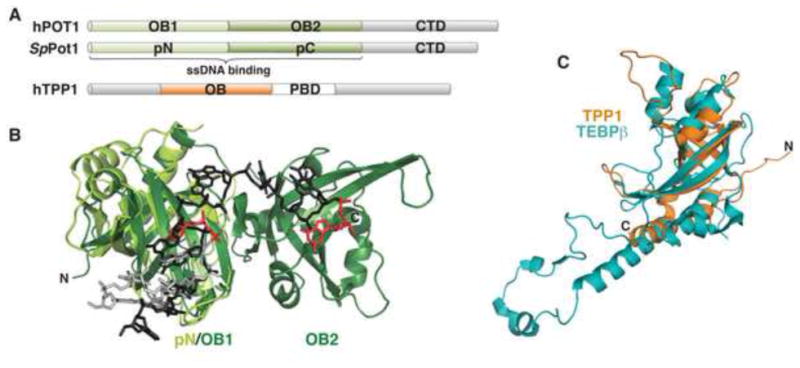
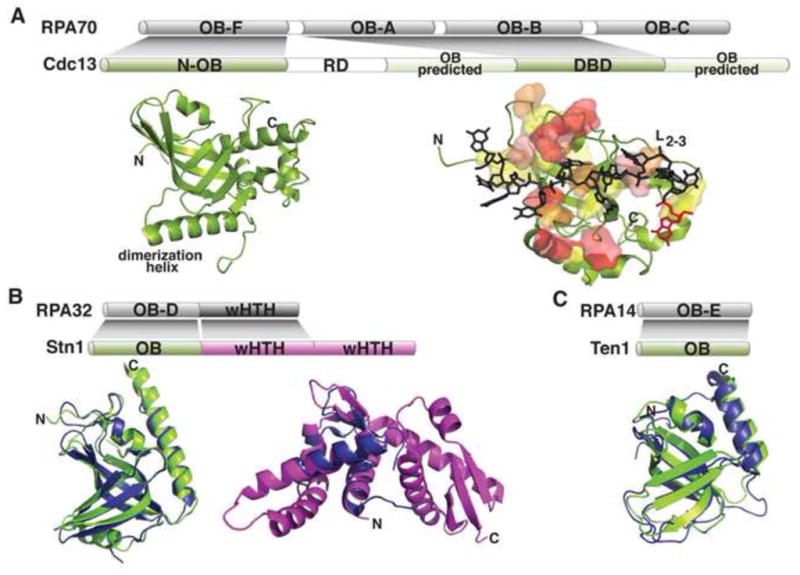
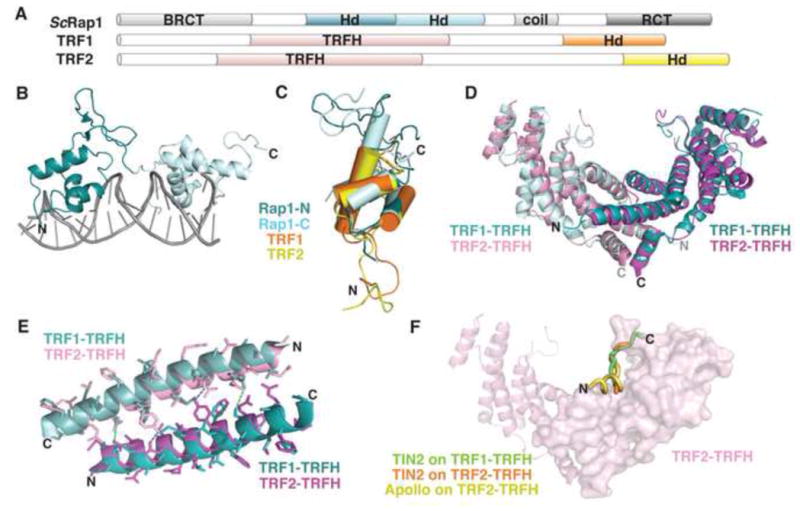
Recent advances in our structural understanding of telomerase and telomere-associated proteins have contributed significantly to elucidating the molecular mechanisms of telomere maintenance. The structures of telomerase TERT domains have provided valuable insights into how experimentally identified conserved motifs contribute to the telomerase reverse transcriptase reaction. Additionally, structures of telomere-associated proteins in a variety of organisms have revealed that, across evolution, telomere-maintenance mechanisms employ common structural elements. For example, the single-stranded 3' overhang of telomeric DNA is specifically and tightly bound by an OB-fold in nearly all species, including ciliates (TEBP and Pot1a), fission yeast (SpPot1), budding yeast (Cdc13), and humans (hPOT1). Structures of the yeast Cdc13, Stn1, and Ten1 proteins demonstrated that telomere maintenance is regulated by a complex that bears significant similarity to the RPA heterotrimer. Similarly, proteins that specifically bind double-stranded telomeric DNA in divergent species use homeodomains to execute their functions (human TRF1 and TRF2 and budding yeast ScRap1). Likewise, the conserved protein Rap1, which is found in budding yeast, fission yeast, and humans, contains a structural motif that is known to be critical for protein-protein interaction. In addition to revealing the common underlying themes of telomere maintenance, structures have also elucidated the specific mechanisms by which many of these proteins function, including identifying a telomere-specific domain in Stn1 and how the human TRF proteins avoid heterodimerization. In this review, we summarize the high-resolution structures of telomerase and telomere-associated proteins and discuss the emergent common structural themes among these proteins. We also address how these high-resolution structures complement biochemical and cellular studies to enhance our understanding of telomere maintenance and function.
最近,我们在端粒酶和端粒相关蛋白的结构理解方面取得了重大进展,这为阐明端粒维持的分子机制做出了重要贡献。端粒酶 TERT 结构域的结构为我们提供了宝贵的见解,说明实验确定的保守基序如何有助于端粒酶逆转录酶反应。此外,各种生物体中端粒相关蛋白的结构揭示了在进化过程中,端粒维持机制采用了共同的结构元件。例如,端粒 DNA 的单链 3'突出端被近所有物种(包括纤毛虫(TEBP 和 Pot1a)、裂殖酵母(SpPot1)、芽殖酵母(Cdc13)和人类(hPOT1))中的一个 OB 折叠结构特异性且紧密地结合。酵母 Cdc13、Stn1 和 Ten1 蛋白的结构表明,端粒维持受到一个与 RPA 异源三聚体具有显著相似性的复合物的调控。同样,在不同物种中特异性结合双链端粒 DNA 的蛋白质利用同源结构域来执行其功能(人类 TRF1 和 TRF2 和芽殖酵母 ScRap1)。同样,在芽殖酵母、裂殖酵母和人类中发现的保守蛋白 Rap1 含有一个已知对蛋白-蛋白相互作用至关重要的结构基序。除了揭示端粒维持的共同主题外,这些结构还阐明了许多这些蛋白质的特定功能机制,包括确定 Stn1 中的端粒特异性结构域以及人类 TRF 蛋白如何避免异二聚化。在这篇综述中,我们总结了端粒酶和端粒相关蛋白的高分辨率结构,并讨论了这些蛋白质之间出现的共同结构主题。我们还讨论了这些高分辨率结构如何补充生化和细胞研究,以增强我们对端粒维持和功能的理解。